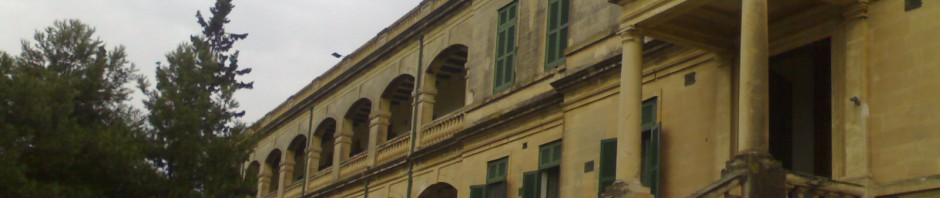
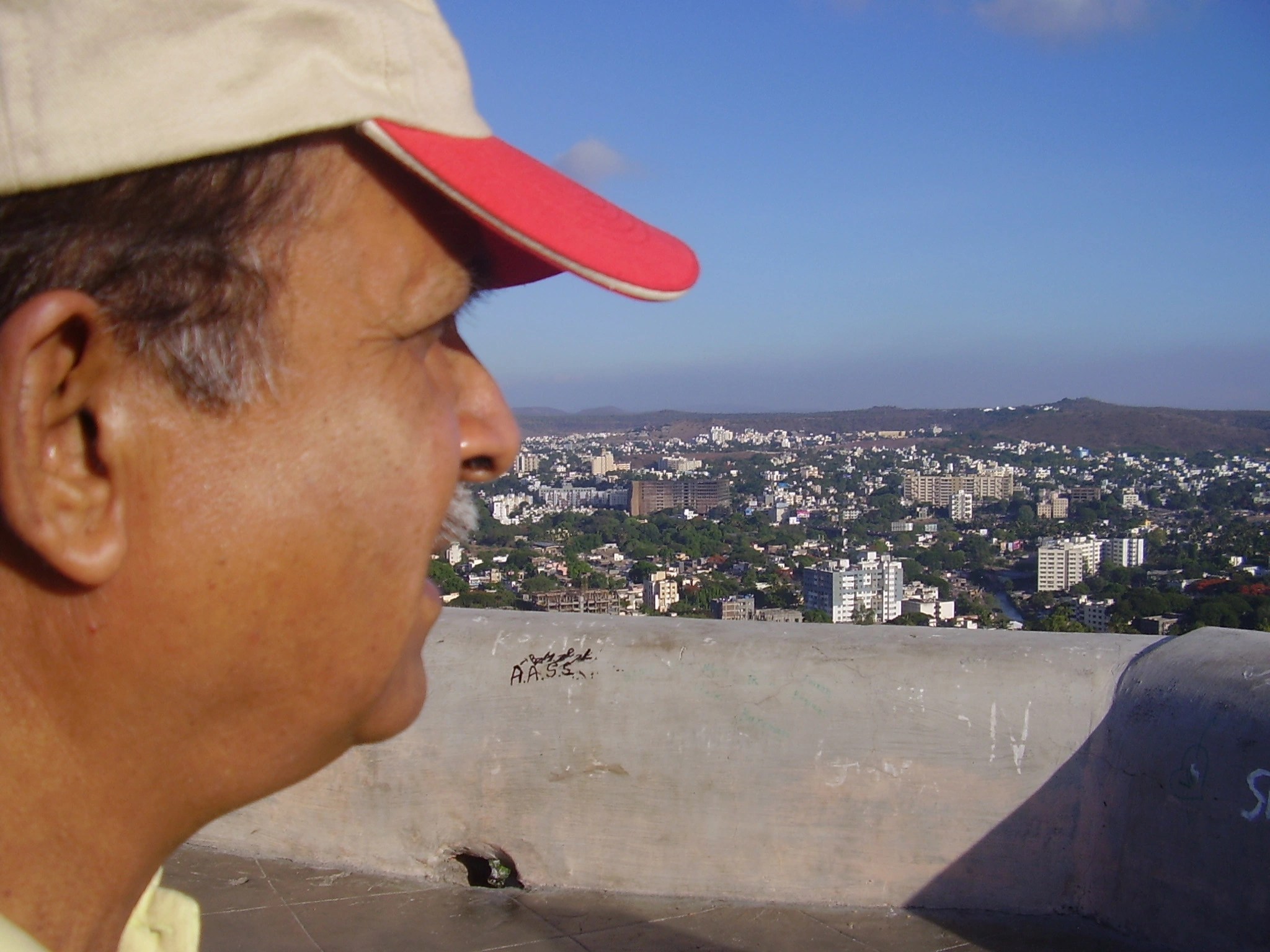
July 23-we first landed in Canada in 2012. After two years in Malta, the passing away of my mother in Delhi, we took the risk of Canada.
Rathburn Road Walks to Drives through Binghamton- Susquehanna River area
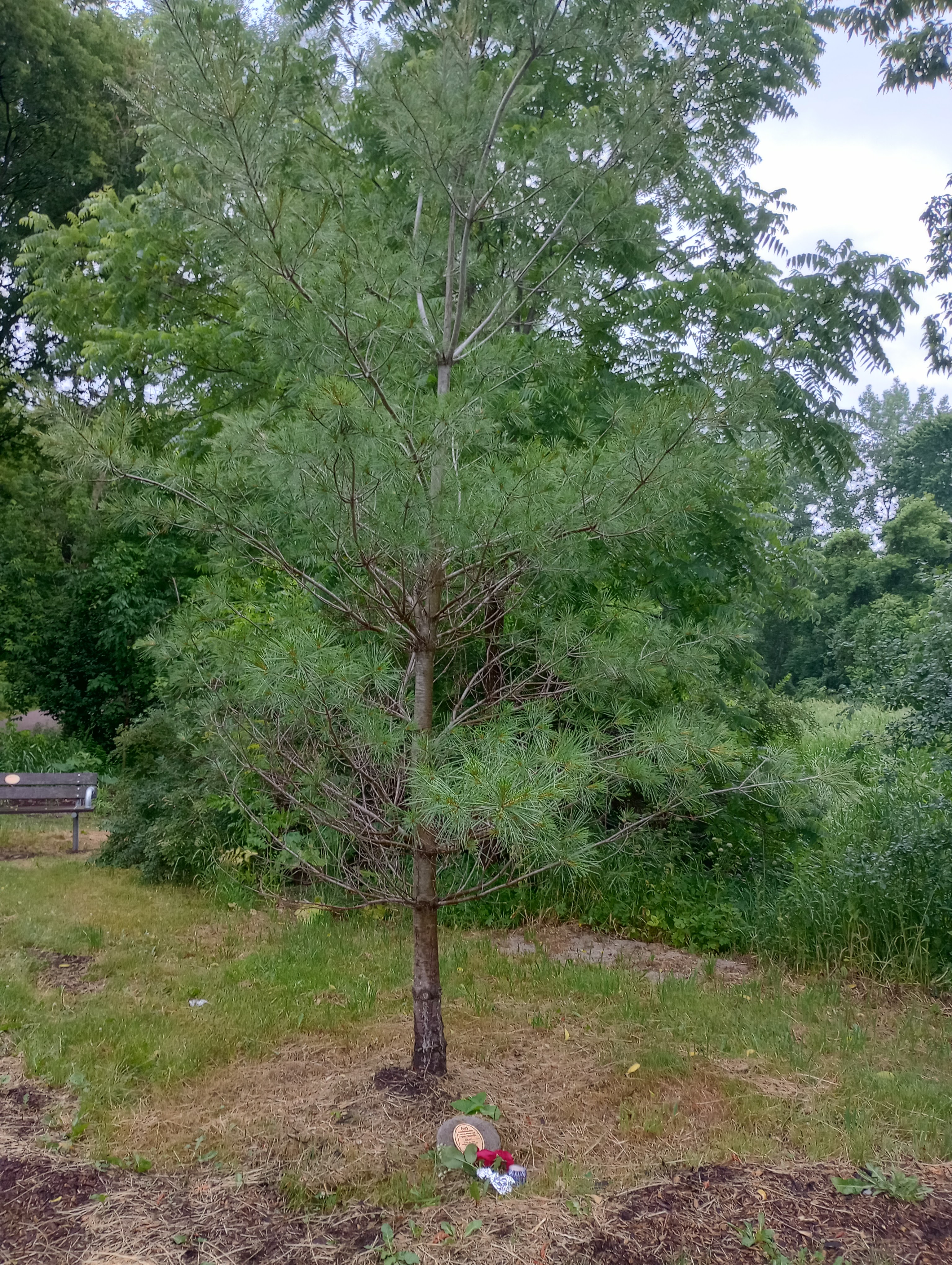
Three years ago, (July 2022) our elder son left Mississauga to try out his life in New York City. The first time I returned from NY City, I had to walk around midnight from Square one to my house after waiting for a bus for a long time.
Over the years, have made several trips to New York city, New Jersey and Rochester to meet different family members.
This has led to walks and discussions in Marble Collegiate Church (first started following the works of Dr.Norman Vincent Peale in 1980s in India) and hearing sermons of Dr.Michael Bos who helps integrate different faiths.
We walked through the botanical gardens of New York Bronx and came to know of the local histories which helped evolve the wildflower societies of the 19th century into the institution which it has become today.
The road trips have taken us through Binghamton and know the natural beauty of upstate New York in a more personal direct way.
Bronx- New York City area- NY Botanical Gardens-Exploring local histories
Fellow Walkers
In the Ovation years, (2012-16) we came to know of health care practitioners who took allied licenses and worked their way through the Canadian system.
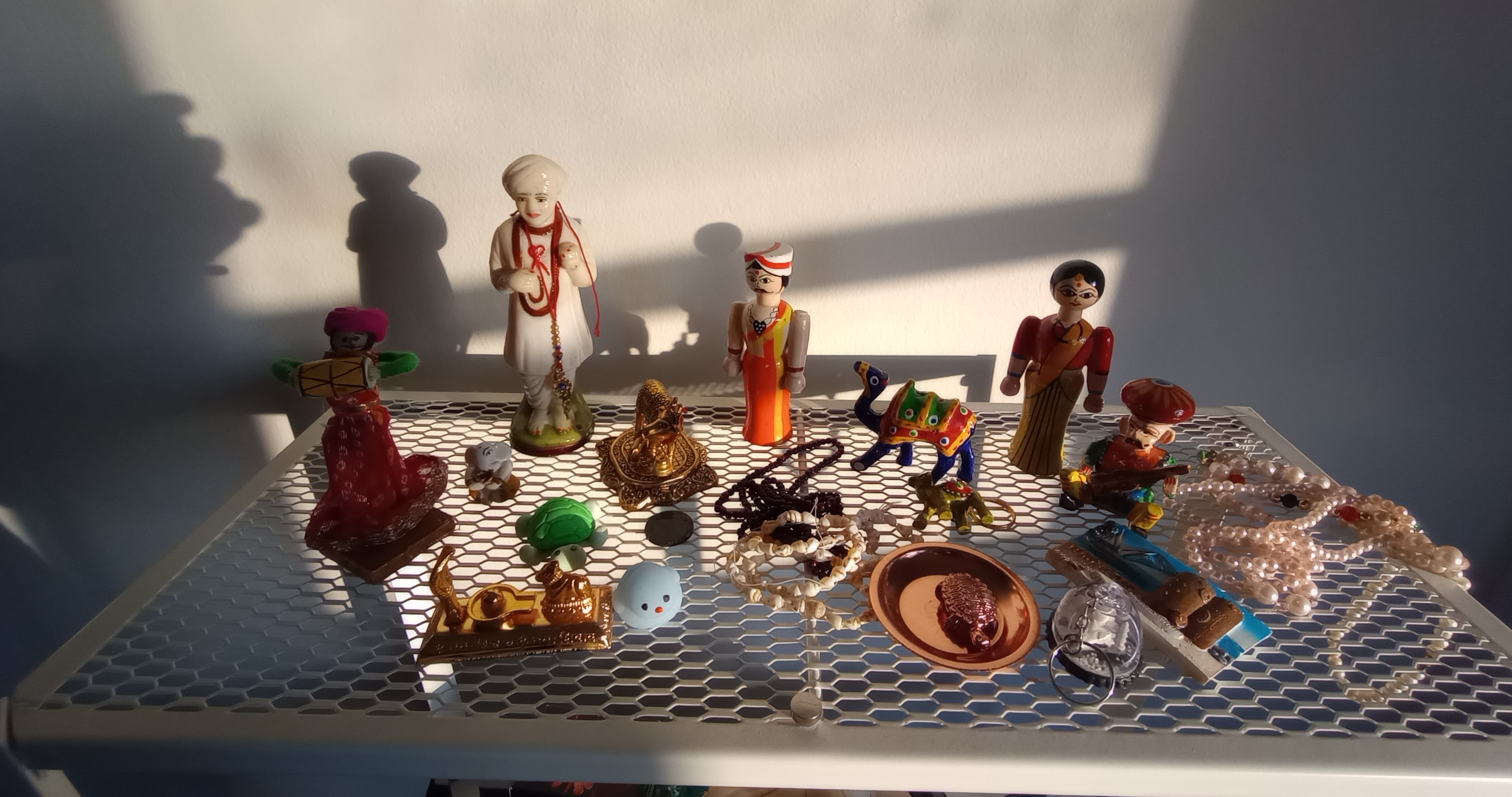
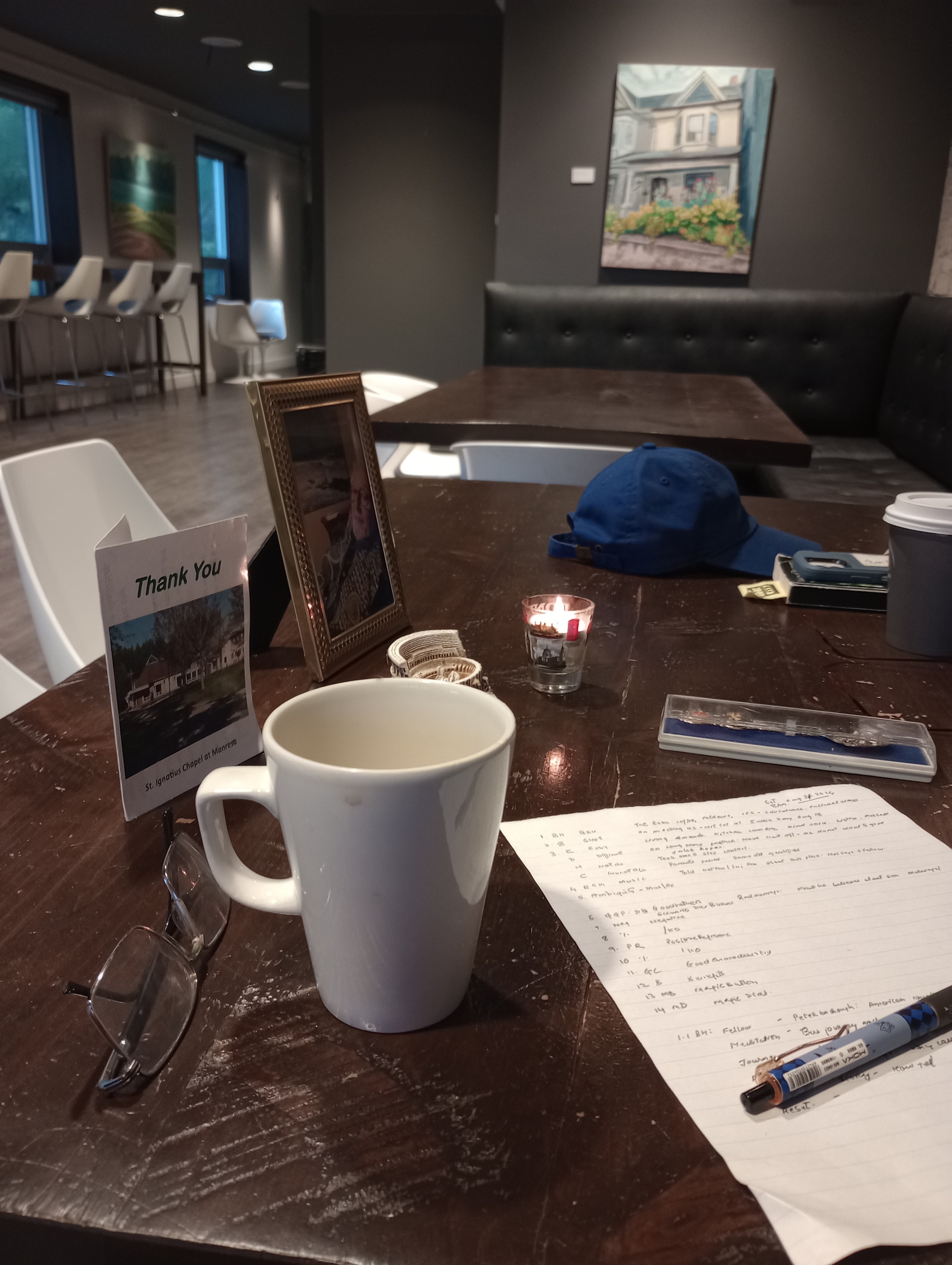
One such person – who unfortunately passed away in 2018- (his memorial service cap -I have kept in our family prayer relics room) – taught us how to break things into manageable parts and navigate the maze of registrations, exams, instructors, peers and work on building a community of fellow practitioners.
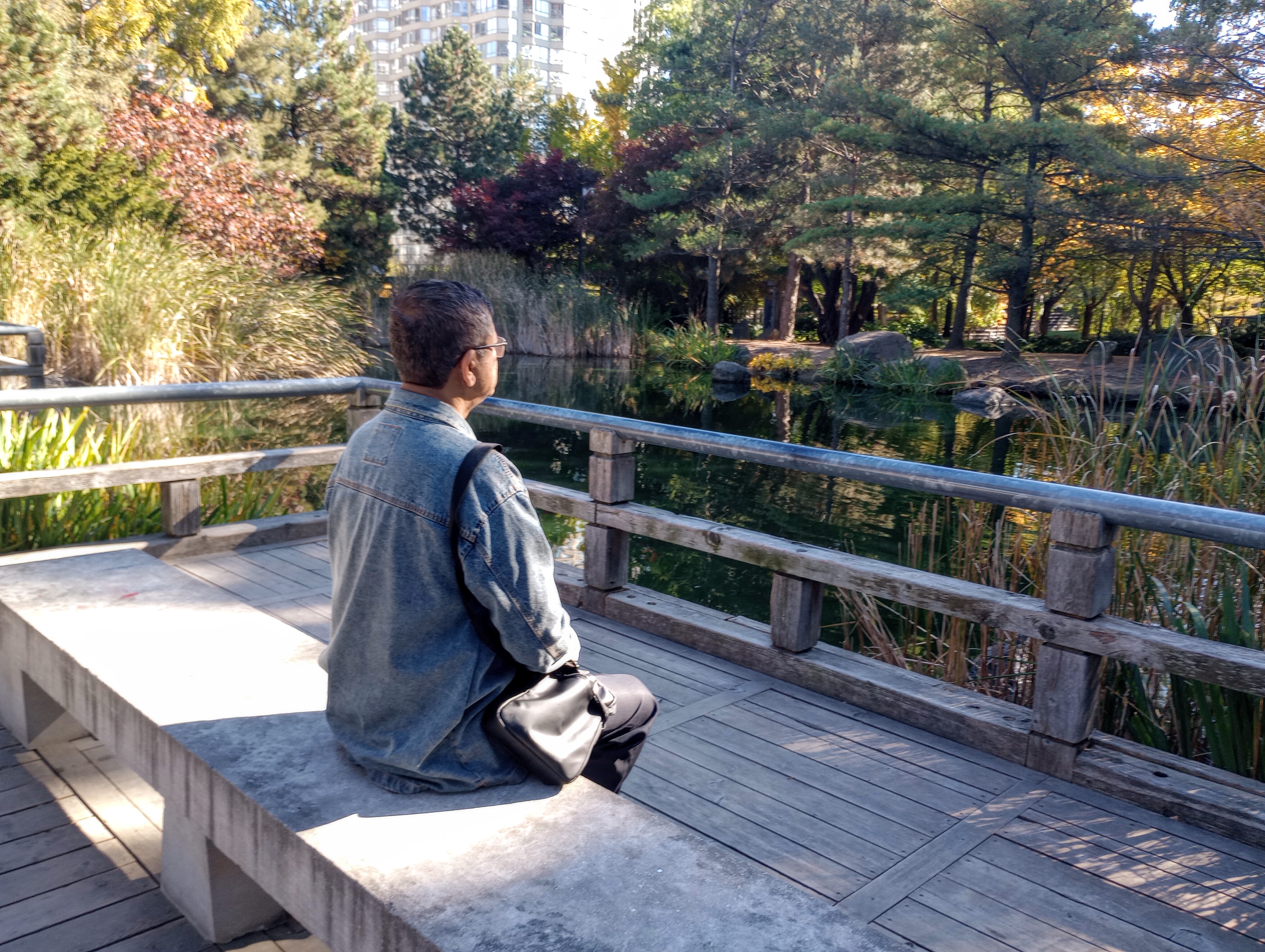
2018 September- Lake Ontario Musings- Port Credit area Missisauga
This approach, refined over the years, has helped build a community of fellow travelers and fellow healers and find meaning, productivity and dignity in life in Canada.
Reflection
What risks defined your life? Who were your fellow travelers? What local histories shaped you? Which institutions helped forming your new identities
My example- the risk of starting a new life in Canada (2012), and the way my son took the risk of trying New York City (2022) shaped our identity in many ways. The fellow travelers were people like the manual medicine college teacher and books- such as those of Dr.Peale and Dr.Bos- which helped us shape our view of how the world works, who we are and making meaning of why we are here.
Earlier Perspectives
2022-July-Rathburn Road Walks
2024-May
Kindness, Initiative, Eagerness, Confidence and Pride are the ways to build Optimism according to Martin Seligman
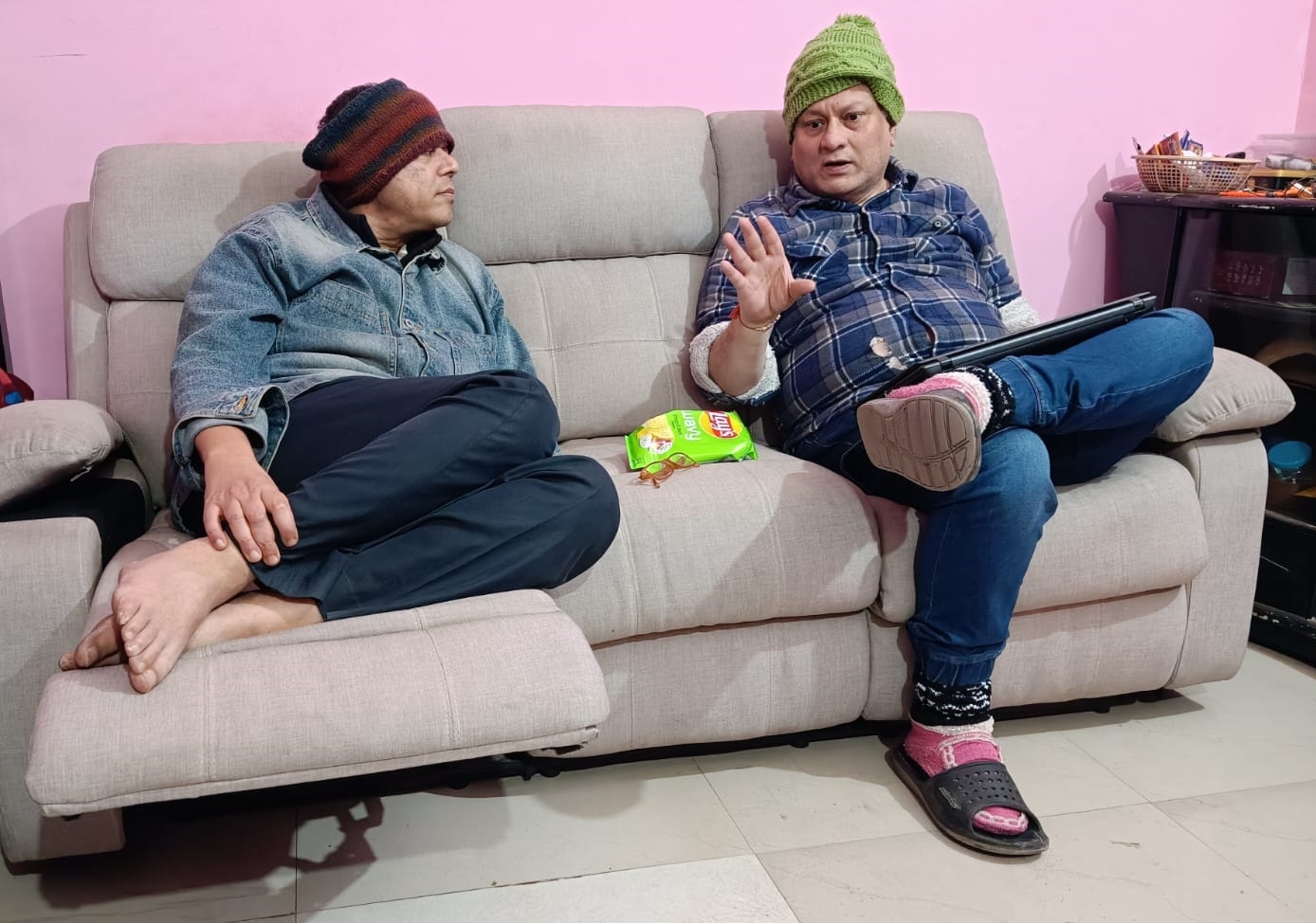
Walks and meals together open many windows. In this blog, around Father’s day, remembering family dreams, talks around coffee at Bloor -Toronto, Adyar New Jersey
A Dream- by Divya-(grand daughter of PNB-NB)
Gaps do not fill, they fade away
Letter from Jasola- Delhi by Divya- in June 2021- on ten years of the passing away of her Nani-ji (Nirja Bhatt nee Uniyal), she remembered what Mausa-ji (Dr.Ram Prasad Nawani-RPN) told her about gaps on her passing away
In these years, Divya, has become a doctor, now works as a house officer in Apollo Delhi .
She recalled a dream, seeing her grandfather-PNB in the ward. She is apprehensive and uncertain that he will not recognize her as he last saw her when she was just one year old. In the dream, she also sees her parents, uncles, aunts and that reassures her a bit, as they would be able to tell PNB who Divya is.
Sigmund Freud called dreams the royal road to the unconscious, offering a unique and symbolic glimpse into the hidden desires, fears, and conflicts that lie beneath the surface of conscious awareness. In The Interpretation of Dreams (1900), Freud said dreams are manifestations of repressed wishes—often rooted in childhood experiences—that find expression through disguised forms in the dream state.
In the case of our family, recurrent dreams about my father PNB, who passed away suddenly, one day after his 60 th birthday may represent hidden desires, conflicts, processing of grief . One psychotherapist even said these could be spiritual messages from beyond.
2025-June 26- In memory PNB- Erindnale Walks: Connection with Self, Others, Nature, Spirit, and mapping
Bloor-Toronto
What was satisfying, what are you proud of, what did you find challenging?
A mentor and fellow-traveler asked me several questions based on the above three themes around Father’s Day. The Bloor street -High Park area of Toronto is one of my thinking places. As we sifted through the nuances (too many and too personal to write in a blog) the mind’s eye went back to the museum trips my father would take us to, how my parents imbibed the love of the written word in us, and built a home library. I still have, in a modified form, the habit which Mausaji-RPN imbibed in me, to make notes (Purchi) of important passages. It has been satisfying to note that some of that intellectual curiosity has been imbibed in my sons in their own ways. It is also satisfying to watch them grow into their early careers after graduation. Sagar going the corporate route in New York City, Sahil going the academic root-finished his Masters in Industrial Mechanical Engineering and became a Doctorate (PhD) candidate in Toronto Metropolitan University. Challenges have been to connect my sons to the extended family, given the international life we have lived, being out of India since 2003. Last December, (2024) made it a point to visit Chachaji- (Shri Rakesh Bhatt) in Agra and introduce the families to each other. We also connected to families in Jasola Delhi, Bhiwandi Mumbai region.
Walks and Perspectives: History of New York Botanical Gardens-June 22,2025- we did painting of Native plants, explored Natural History and also the evolution of this gardens. Remembered my mother-who was a Botanist. The Britton Family -Nathaniel Lord Britton and Elizabeth Knight Britton were founding members of NYBG https://www.nybg.org/blogs/science-talk/2015/03/roots-where-the-gardens-founder-found-his-love-of-plants/
Earlier Perspectives:2014- A letter from a Family friend of Benares-Days 1950s, Pune 1980s
Then I received a unique letter “from yesterday” from an old friend, with whom I used to go for motorcycle rides in Pune, with my parents sometimes chasing us- Where are you off to? Those were the college days – and I was visiting the same streets where I had grown up as a small school boy-studying in Vincent’s , in a very different way
As we drove to 216 again, remembered the last trip in June 2024 and how the cat-Chakoo recognizes us now. The year before (2023) parents had come with us. Meals together are moments to remember family and community journeys
“Once my parents passed, we decluttered the house, gave away his clothes” we remembered a family loved one whose poems, short stories, songs still inspire us. I remember going to Pune in 2007, and he read his short stories. “Papa will pay” was a poem on how a young carefree teenager jumps red lights and then says- Papa will pay. It brings a smile to remember him singing the songs of Sambhaji and Tanaji – folk songs of Maharashtra, as we sat on the walls of Parvati temple. Later we went to Shaniwar wada- and recalled the times of the Peshwas, the haunted walls and associated stories.
Mr.Kathavate- 2008- From Parvati Temple-Pune- He sang songs, told about history of the Peshwas and also shared his short stories and poems and many insights
Kaka Mala Vachva- Uncle Save me- (said to be by the ghost of Narayanrao-1773)
As we ate South Indian delicacies in New Jersey, I remembered some stories of Pune, Maharashtra (where I spent my formative years-studying in Loyola, Vincents and Kendriya Vidyalaya-Southern Command-KVSC from 1970-1982).
Meals and Memories made the mind’s eye go back to one of India’s most famous haunted places- Shaniwarwada of Pune.
History and Haunting
History In 1773, it is believed that Raghunathrao and his wife Anandibai conspired to eliminate Narayanrao. According to popular lore, Raghunathrao had originally sent a message to the palace guards to “capture” (in Marathi: dharaava) Narayanrao, but Anandibai allegedly changed the letter to say “kill” (in Marathi: maaraava). As a result, guards stormed into Narayanrao’s chamber and murdered him brutally, dismembering his body.
Haunting:
Locals and visitors claim that on full moon nights, they can hear the terrified screams of Narayanrao echoing through the fort, especially the cry:
“Kaka! Mala Vachva!” (“Uncle! Save me!”)
Afterthoughts
Conversations around the anniversary of my parents, prayers and shared meals together at New Jersey and Elmhurst New York city and walks -discussions made for many rich nuances. Later we went to Riverwood Erindale area and did readings from the diary of Sophia Mcnab (1832-1917). Written in Dundurn castle -around 1845-1846, the diary brings alive the day to day life of the McNab family, writes about the sadness around the sickness and passing away of Sophia’s mother and how the daily rhythm helps bond people.
Remembering Sophia McNab-at Erindale Riverwood
Download a Worksheet on Family Meals, Shared Moments, Meanings and Identity
This Mother’s Day, I used the tools of indexing and Episodic memory to go back to the Shimla of 1940s, Benares of 1950s, Pune of 1970s, while also talking about museum diaries and joint prayers at Dhari Devi Temple – Srinagar Garhwal in more recent times( 2011 with Joshi Khanduri family – 2023 with Rakesh Chacha ji ) , and conversations in identity in Ontario and New York area. My parents instilled the love of the written word in me, helped start a home library and write letters, diaries and personal reflections which have enriched life in various ways
. Indexing
Principle:Collective Memory
Tool : Indexing
Short Version : a store house of family memories
Long Version : The family members carries out the indexing after a trip, meeting or significant event . Observations and Vignettes, Thoughts , Feelings, Sensations , Memories are used to illustrate the different categories. The accumulation of these indexed materials provides the family members a ” Collective Family Memory ” . ( CFM )
This can be viewed as a storehouse of memories and materials which place at the disposal of other family an abundance of facts gathered by many , thereby transcending the narrow confines of individual experience and extending the possibilities of insightful study, identity development, constructive comparisons, learning and growth .
Application
Around Mother’s Day 2025
Looking back at the mother energies , I remember my grandmother ( Nani ji – Kamla Uniyal nee Bahuguna) and our trips to Benares as children. My sister Shailu ji stayed there for a year in her early childhood. Nani ji was a devout Hindu, who followed the Ramcharitramanas .
When she would visit Khadki cantonment Pune area, Maharashtra she would go to ashrams and temples .
Through associations of marriage, my father PNB ( Prem Narain Bhatt) found a structure of a family which was different from his own reality, as his mother had passed away when he was less than five years ago. Viewing those pictures of Shimla of early 1940 s, – and seeing her sit on a table for the photographs – most likely tuberculosis of hip area ( Bone TB).
The age at which one loses one’s parents physically , impacts the way one grieves . My father PNB would often tell about the loss of his mother. Those memories taught me the truth in the words that one a loved one passes away physically, our relationship with them does not end , but changes from the day to day physical immediate to a spiritual dimension.
My mother Nirja Bhatt nee Uniyal ( NB) was one of my first teachers . She studied the school materials , especially science and languages , and along with my father, instilled the love of the written word in me. We grew up in Khadki cantonment and Golibar Maidan of Pune area . Biology and landscapes – in different hours of the day, in different seasons was a concept I learned from them, and have applied it in many travels and walks . Our walks in Rishikesh area, dinners at Ram jhula area are a part of those memories.
Principle – Semantic Versus Episodic Memory
Tool : Diaries
Short Version : Retrieval of information about Dinner last night is different from retrieval of information about summer capital of British India
Long Version :
The psychologist Endel Tuvling of University of Toronto made this distinction in the 1970 s.
Remembering childhood trips to Rishikesh or Shimla , morning walks in Sahyadris of Western Maharashtra is different from retrieving information of the capital of the Peshwas, the origins of the Ganga, or the year Uttarakhand became a state . This involves a autobiographical memory, a reliving of the past, and is rich in taste ,smells, sounds , feelings which are personal ,unique and concrete which we can retrieve from our own past. It is timeless knowledge we share with the world about the world .
Application
Around Mother’s Day I also remember how my father PNB renewed contacts with his mother’s side of the family, visited his Mama Ji in Srinagar area of Garhwal – Uttarakhand.
The trips to Dhari Devi and Bilu Kedar Temples of Srinagar Garhwal are part of those episodic memories . After my mother passed away physically, I went to pray by the Ganga ( Alaknanda) and met the family of my father’s Mama Ji – and was guided by them – local knowledge. A trip to Dhari Devi (2011- October) with the Khanduri Joshi family reminded me of the conversations which my mother would have with them on her six monthly trips to that area . After my father PNB passed away suddenly in a car accident, my mother went through a lot of unprocessed grief. Visits to Rishikesh, prayers in Srinagar Garhwal – and talks with the Khanduri Joshi family helped her come out of that down phase. Another application was the weekly visits to Sai Mandir of New Palam Vihar with Saraswati bua ji ( Dabral family of B block ).
Those episodic memories were renewed when I went to Dhari Devi with Rajesh Chacha ji ( Rakesh Bhatt RB) in February 2023. That was the month I visited India after long and went to meet Sabu Bua ji – first time after passing away of Surinder Mama Ji ( Surendra Thapliyal- Aug 2022)
We did trips to Rishikesh and Srinagar Garhwal from Dehradun and had breakfast after praying at Dhari Devi temple.
Getting Current ( May 2025)
Talked to Sagar about his trips to Jaisalmer, Gir in Western India last November December (2024). Now that front has become very active. Remember going there in 1986-87 – Jodhpur area with my father after my first professional.
Sagar told of his staying inside the Jaisalmer fort , and in a camp in the Thar desert. We later went for a walk to Elmhurst area and witnessed a community song and dance sequence by the Chinese American community..
Museums with children has been a theme which my father PNB imbibed in me, which I passed on to my sons.
Sagar talked about the culture he experienced in Rajasthan. We remembered the visits to Bhiwandi and Thane area. I told of how my mother in law – Meena Karia took me to a temple in Bhiwandi where her marriage ceremonies were done on May 12-1966.
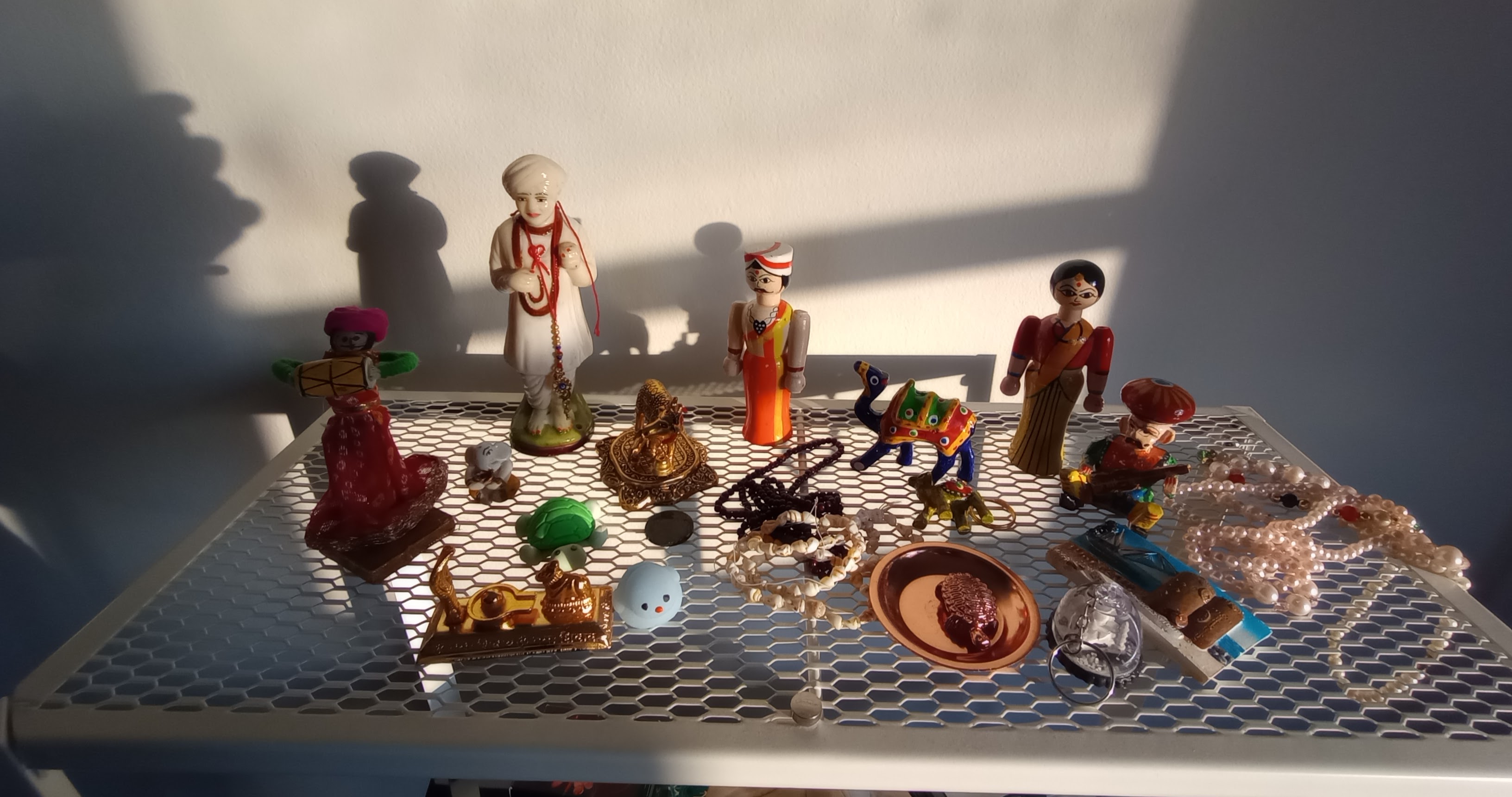
The trip to NYC – first one of this year (2025) reminded me of last year trip in July (2024) when we had met Meena Mousi ji – and prayed together at her house. Seeing a picture of Nana ji – Ganesh Pradesh Uniyal ( GPU) and his eye cleaner was a high point of that trip of 2024- July. After my mother passed away I gave the eye cleaner of GPU which my mother had kept , to her sister. I also passed on a Bodhisattva statue – my last gift to my mother ( 2009- September) to Sabu Bua ji – which she says is now with Jyoti( Jyoti Bhatt nee Thapliyal) .
. Family Relics – to build Episodic Memories
Tyre burst memories – had some uneasy moments in the evening of May 9- (2025) as smoke came out of a burst tyre . It was drizzling in that hilly area. Managed to change the tyre on my own.( Last time I had done it around 1998 – on a scooter in New Delhi)
Summary Reflections
Road trips, night stayovers, diaries, museum journals, family discussions, gifting of family relics and momentoes , praying together at Temples where our family has prayed for generations are some ways I which I try to build the Collective Family Memories and Episodic Memories .
These help to deepen one’s autobiographical memory and build a sense of family cohesion. Indexing helps to add further nuances to my diaries and journals, as I revisit whom I met, what did we eat, what we discussed and when was the previous time we had met.
For example, meetings at Dhari Devi and meals together at , Srinagar Garhwal with the Khanduri Joshi family (2011- October) and with Rakesh Chacha ji ( 2023-Feb) helped renew many previous associations.
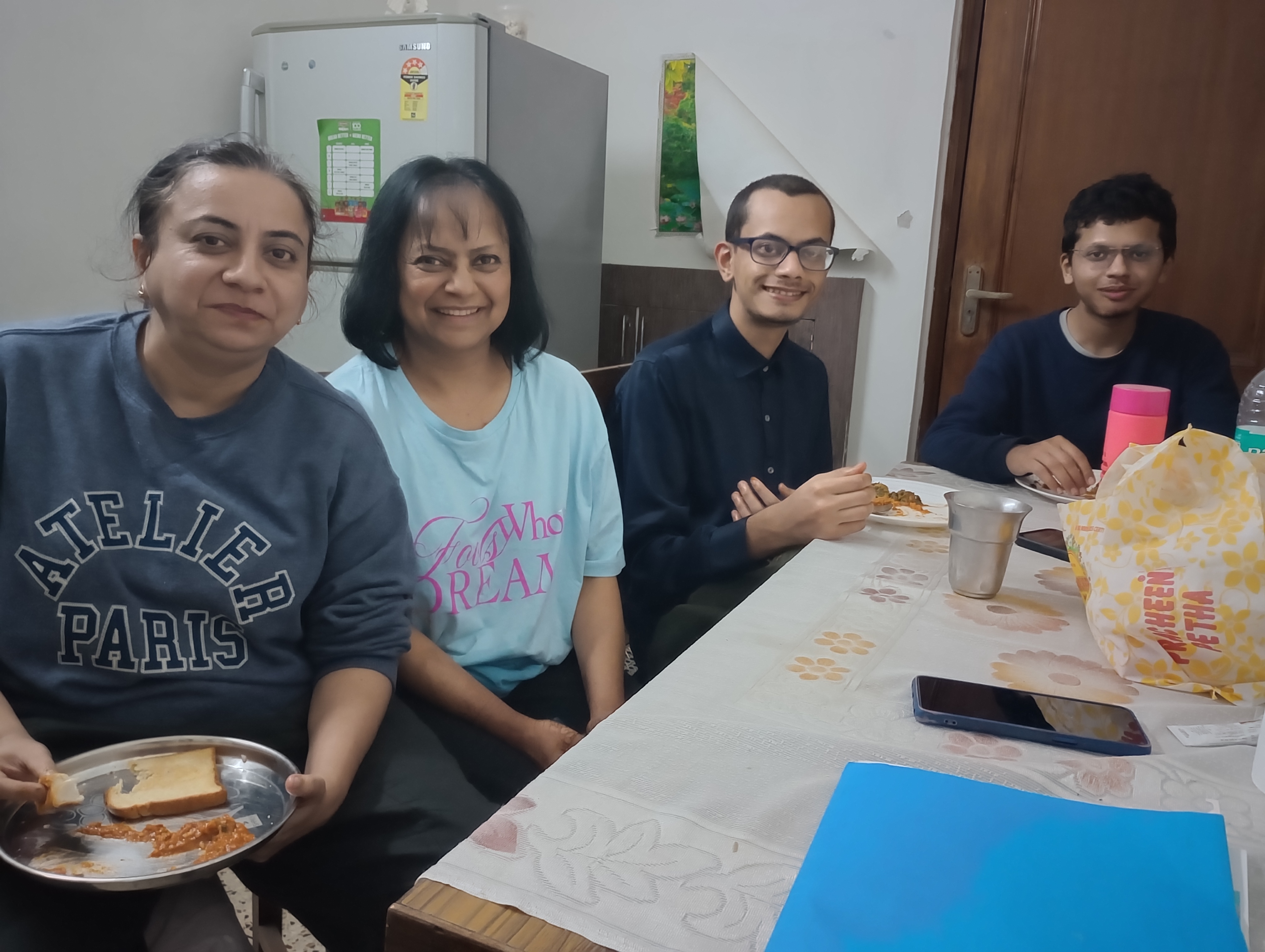
Meals with Meena Mousi ji ( June 2024) in New York city, helped renew many memories.
Question For Reflection
Which museum, monument, place of worship or park has a special link to your family journeys? Who was there with you or who did you particularly remember when you visited that place ?