Musings around Easter-Remembering St.Augustine of Hippo

In no wise are the bodies themselves to be spurned. (…) For these pertain not to ornament or aid which is applied from without, but to the very nature of man.

St.Augustine of Hippo

13th November 354 to 28th August 430

Hippo is present-day Annaba, Algeria

This Friday, the mass in Dahra’s San Francisco church was addressed by Father Daniel who talked about St.Augustine who lived in North Africa in what is today Algeria.

Christ on the Hilltop-Gozo-Mediterranean Christianity

Education

St.Augustine made many interesting contributions in different fields. One of them was education, in which he talked about different approaches to education and the different types of students.

Well educated

Who has no education

One who has  poor education

Augustine is considered an influential figure in the history of education. He introduced the theory of three different categories of students, and instructed teachers to adapt their teaching styles to each student’s individual learning style. The three different kinds of students are: the student who has been well-educated by knowledgeable teachers; the student who has had no education; and the student who has had a poor education, but believes himself to be well-educated. If a student has been well educated in a wide variety of subjects, the teacher must be careful not to repeat what they have already learned, but to challenge the student with material which they do not yet know thoroughly. With the student who has had no education, the teacher must be patient, willing to repeat things until the student understands, and sympathetic. Perhaps the most difficult student, however, is the one with an inferior education who believes he understands something when he does not. Augustine stressed the importance of showing this type of student the difference between “having words and having understanding,” and of helping the student to remain humble with his acquisition of knowledge. http://en.wikipedia.org/wiki/Augustine_of_Hippo


Present day reality
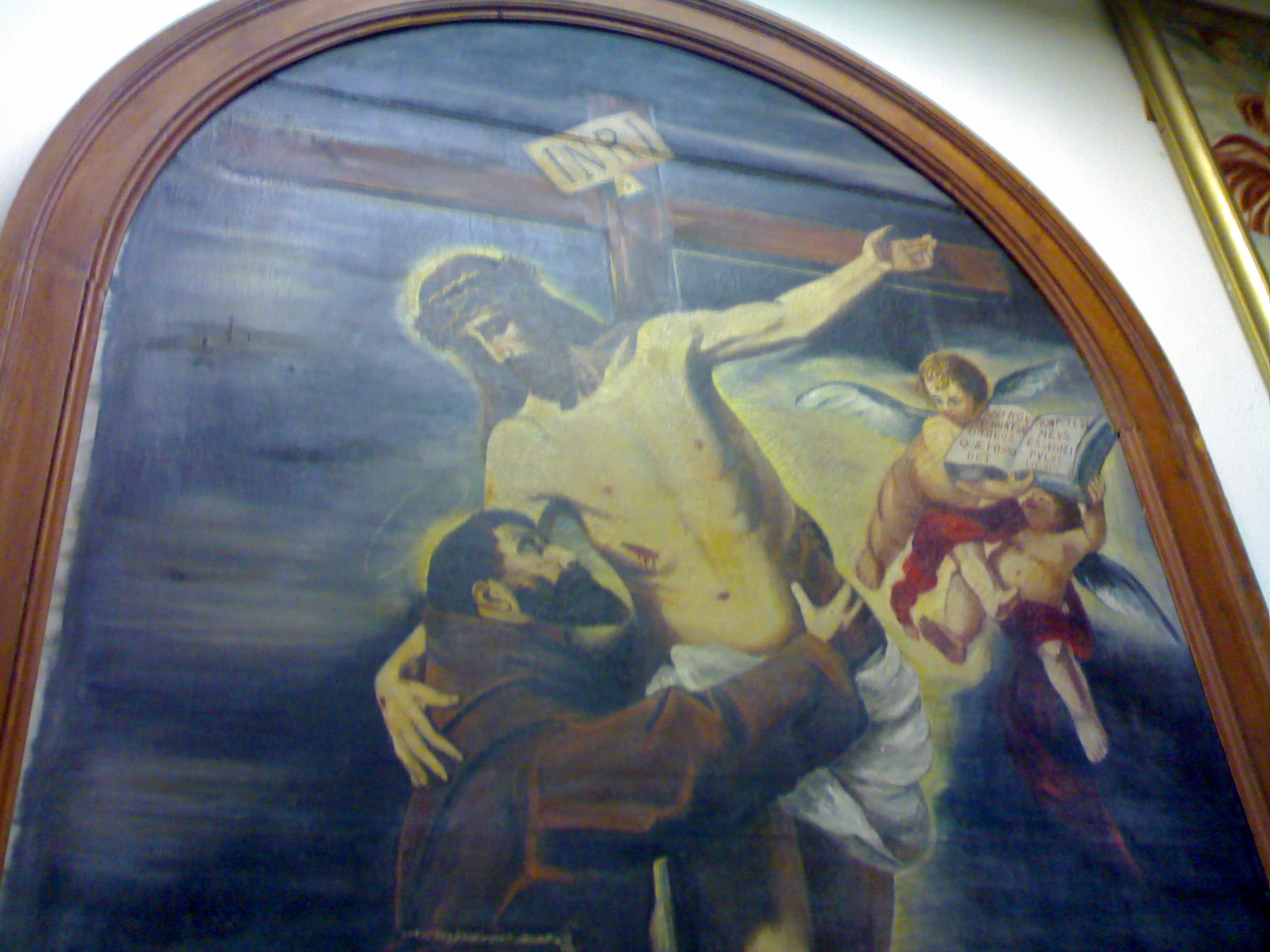
In San Francisco Church-Dahra-Tripoli

In present day North Africa education has become an important aspect for expatriate communities caught in the conflicts and revolutions. One veteran summed it up like this-In first year the workers will return, in the second year the families will return, in the third year the teachers will return. The community has gone back by three years.

What type of student are you dealing with? I asked one parent.

My son has enrolled in the virtual school from his home country, one Indian father whose son has enrolled into the Philippino system told.

Do you have any experience in this? Are you living in this region?

If you are we will be interested in learning from you.

Other issues discussed in Mass observation are as follows

https://prashantbhatt.com/2012/04/13/conversations-on-faith-and-belief/

https://prashantbhatt.com/2012/04/06/around-good-friday/

https://prashantbhatt.com/2012/03/02/conversations-on-identity/

Curriculum versus Restrained style?
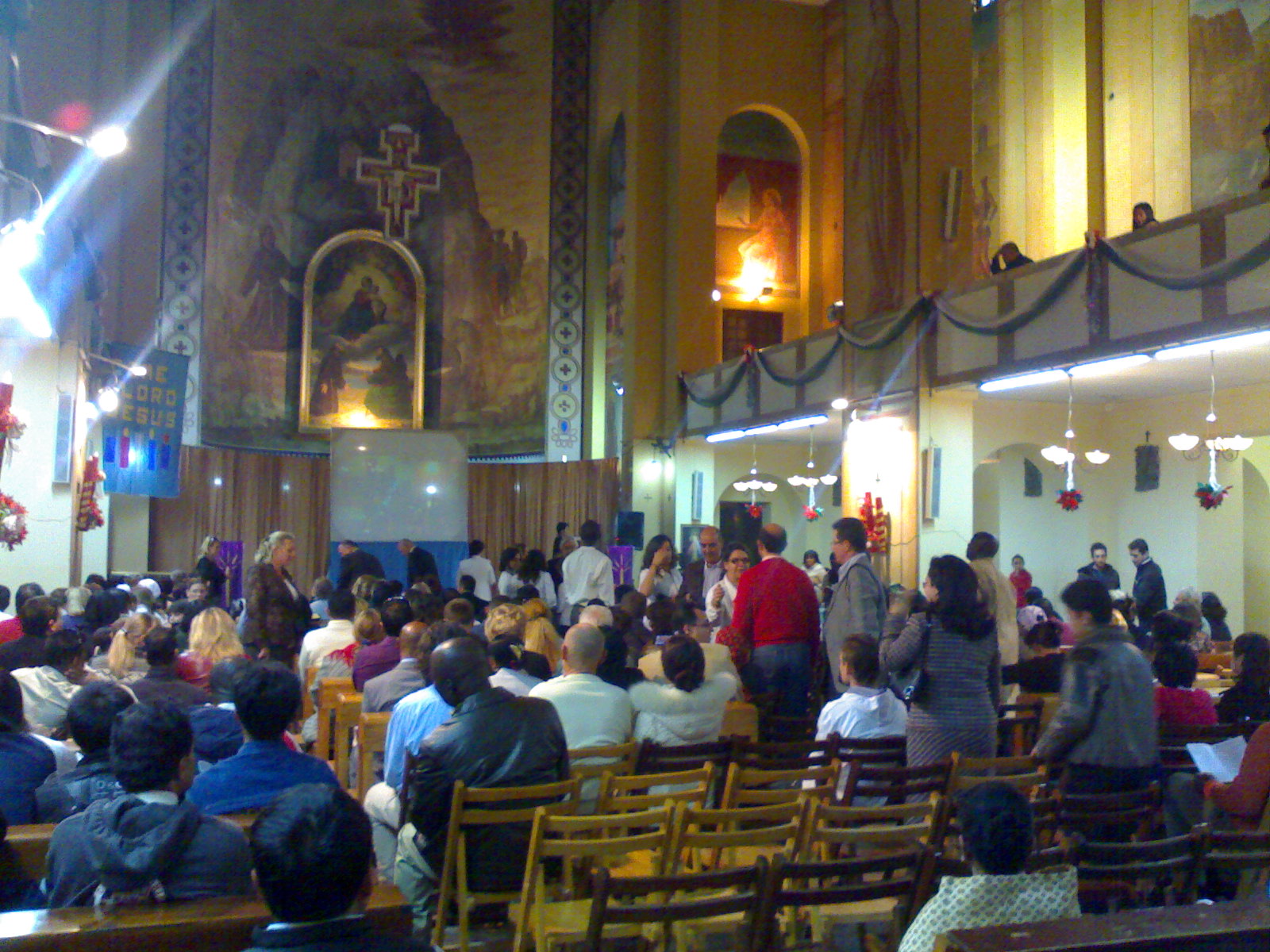
The expatriate community faces complex issues relating
to education in the conflict ridden Libya of today.

Another radical idea of St.Augustine was the restrained style of education. This teaching style ensures the students’ full understanding of a concept because the teacher does not bombard the student with too much material; focuses on one topic at a time; helps them discover what they don’t understand, rather than moving on too quickly; anticipates questions; and helps them learn to solve difficulties and find solutions to problems. http://en.wikipedia.org/wiki/Augustine_of_Hippo

How does one blend the concept of restrained style of education with the pressures of covering different subjects in the curriculum in present day world?

–          –  –   –

Father Daniel talked inspiringly on the experiences of St.Augustine of Hippo in the context of the concept of the good shepherd, recalled how the Bishop and other priests stayed behind in Libya during the conflict in 2011.

The seed of love starts with God, the priest told

Doing some reading on the educational concepts of St.Augustine raised some interesting issues.

Posted in Arab Spring-Libya, Diary, Learning | Tagged , , , , , , , , , | 7 Comments

Some musings on Art

Byzantine Time -5th century mosaics in Eastern Libya

Today, 15th April, is the birthday of Leonardo Da Vinci, one of the most innovative thinkers of all time. Hence I thought of revisiting some journeys in art, while remembering Vinci who has given the world some of the most recognizable faces of art.

While reading a write up about “ An exhibition at St.Edward’s college,Cottonera Malta”  http://www.timesofmalta.com/articles/view/20120401/education/Exhibition-by-St-Edward-s-6th-formers.413564  I had some discussions with my sons regarding Art and Aesthetics and remembered some trips in Libya

The Exhibition

Two sixth formers at St Edward’s College, Cottonera – Asma Dekna and Rebecca Xuereb – recently exhibited about 30 works of art at the college.

The exhibition formed part of their assessment at the end of their two-year International Baccalaureate in Visual Arts course at the college under the direction of art teacher Denise Papagiorcopulo.

Longing 1 is a romantic sunrise of great beauty that the student retrieved from the subconscious of Asma’s childhood in Libya.

Rebecca Xuereb makes her mark with Music Within, an autobiographical work showing the artist passionately playing the piano. This canvas painting is in strong contrast of black standing bold against white inspired by piano keys. This sharp contrast is complemented by a colourful palette scheme reserved for the outburst of surreal musical forms emerging from the piano’s interior.

http://www.timesofmalta.com/articles/view/20120401/education/Exhibition-by-St-Edward-s-6th-formers.413564

Art work on trips around Libya

These journeys made me remember the person who is generally regarded as the first systematic art historian- the German art historian-critic Johann Winckelmann. He was an archeologist by training with a deep knowledge of antiquity. I works such as

“Reflections on the Painting and Sculpture of the Greeks (1765)) http://archive.org/stream/reflectionsonpai00winc#page/6/mode/2up

And The History of Ancient Art-(1764)

Another interesting perspective is given in this article

Winckelmann divided: mourning the death of art history.

 http://www.ncbi.nlm.nih.gov/pubmed/7798600

Winckelmann idealized Greek art for its “Noble simplicity and quiet grandeur” and in the process he helped bring about the rise of neoclassicism in the arts.

Greek time sculptures in Cyrene-(Modern day Shahat-Eastern LIbya) Winckelmann idealized Greek art for its “Noble simplicity and quiet grandeur” and in the process he helped bring about the rise of neoclassicism in the arts.
October 2006


The ancient Greek city of Cyrene- A lovely afternoon walk in the Green Mountains of Eastern Libya


Discussion revisiting issues of aesthetics

I got more involved into the meanings of aesthetics after taking a basic course in photography from School of Fototechik, Delhi under the photographer and teacher, Tirtha Das Gupta, who has evolved a rich community of artists, photographers, around his school which he has sustained against great odds through the years.

Aesthetics is the  science of how things are known by and through the senses (defined by Alexander Gottlieb Baumgarten in 1735)  taste using different perspectives, of geography, landscape, the written and spoken word, imagery-art, paintings, history and numbers to name a few headings under which we can concentrate on the beauty around us.

In 1790, Immanuel Kant defined Aesthetics in his essay-Critique of Reason. For Kant, ‘enjoyment is the result when pleasure arises from sensation, but judging something to be ‘beautiful’ has a third requirement; sensation must give rise to pleasure by engaging our capacities of reflective contemplation. Judgments of beauty are sensory, emotional and intellectual all at once.

For a more detailed perspective read the following blog

https://prashantbhatt.com/2008/08/10/some-notes-on-aesthetics/

Apart from Tirtha Das Gupta, one person who opened many new windows for me in visual and literary art was a senior diplomat Mr.Deshbandhu Snehi.

https://prashantbhatt.com/2009/03/15/charming-evenings-at-tripoli/

I still fondly remember the many charming evenings we had together in Tripoli, reading, discussing and reflecting.

Here are links to some recent and old blogs covering the theme of art

Evening Walk in Rome

https://prashantbhatt.com/2011/11/26/evening-walk-in-rome/

Some Field Notes

https://prashantbhatt.com/2011/02/01/some-field-notes/

Remembering Bijender

https://prashantbhatt.com/2009/02/24/remembering-bijender/

Flowers for all occasions

https://prashantbhatt.com/2008/08/19/flowers-for-all-occasions/

Museum Imaging Malta

https://prashantbhatt.com/2009/01/28/museum-imaging-malta/

https://prashantbhatt.com/2009/01/28/museums-imaging-malta-2/

Year End Diary

https://prashantbhatt.com/2011/12/23/year-end-diary/

A sketch a day

Exploring the Libyan Coastline

Sketch-study of works of art is an interesting way to increase  knowledge

about these works which have come to us through time.

Posted in Art, life | Tagged , , , , | Leave a comment

Conversations on Faith and Belief

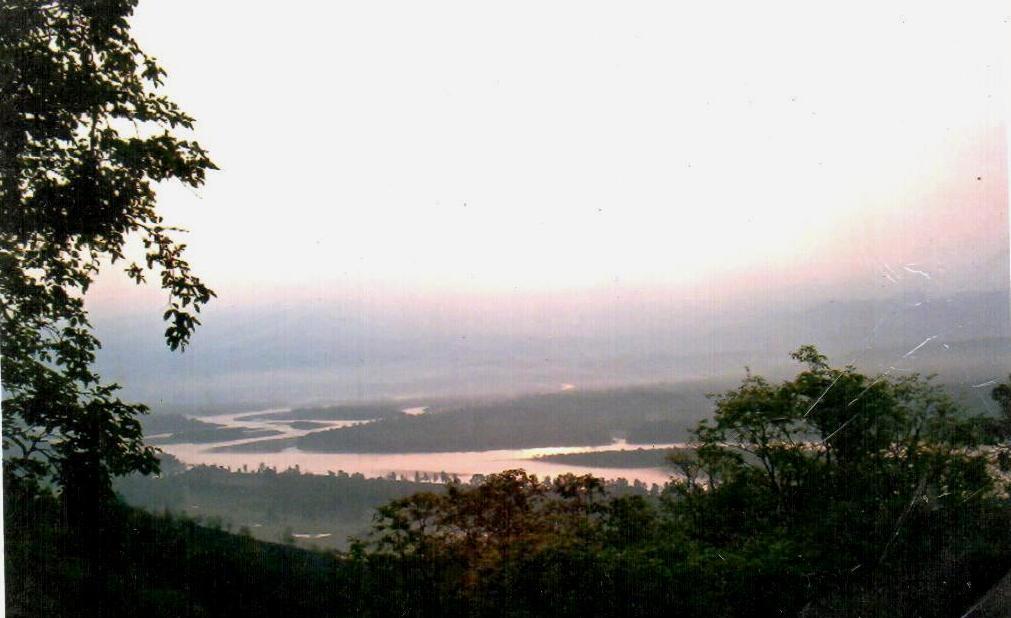
Walks that help me think: Sunrise from Mansa Devi Haridwar. Ganga as it reaches the planes from the Himalayas June 2003t help me think: Sunrise from Mansa Devi Haridwar June 2003

Walks that help me think: Sunrise from Mansa Devi Haridwar.                              Ganga as it reaches the planes from the Himalayas June 2003

In the past 6 months (October 2011 to March 2012) I have had some interesting walks and conversations on faith and belief which I would like to share with you.

One of my keen readers, my elder son Sagar expresses surprise at my interest in Christianity while staying in a Muslim country and born in a Hindu family.

For me , observing working people in different situations has been a life long interest and hence  I engage in conversations with them about faith and belief.

To quote from Frederick  Engels’s work

“The history of early Christianity has notable points of resemblance with the modern working-class movement. Like the latter, Christianity was originally a movement of oppressed people: it first appeared as the religion of slaves and emancipated slaves, of poor people deprived of all rights, of peoples subjugated or dispersed by Rome. Both Christianity and the workers’ socialism preach forthcoming salvation from bondage and misery; Christianity places this salvation in a life beyond, after death, in heaven; socialism places it in this world, in a transformation of society.”

Suggested further reading.

http://www.marxists.org/archive/marx/works/1894/early-christianity/index.htm

In the past 6 months (October 2011 to March 2012) I have had some interesting walks and conversations on faith and belief which I would like to share with you.


WALKS BY ALAKNANDA-COMMUNIONS DURING WALKS IN THE HIMALAYAS

Someone told me that XYZ  is my only remaining link to a particular place.

I listened quietly, as one has to , when one has stayed out for long. Many opinions come, trying to pull you in their direction, push you into taking a particular stand. After all these pulls, pressures were over, I went for a walk.

And I realized more than ever..that my links with these places go beyond a few individuals.

https://prashantbhatt.com/2011/10/18/walks-by-alaknanda/

EVENING WALK IN ROME

WALKERS AND SPIRITUALITY

The Spanish steps were the first landmark, followed by Fontana Trevi, Piazza Venezia and then as the night became more mature I traced the steps past Foro Cesar to the Colosseum.

https://prashantbhatt.com/2011/11/26/evening-walk-in-rome/

WHAT IS SATSANG-

EXPLORING BELIEF, SPIRITUALITY CULTURAL MYTHOLOGY

Right from school (studied in a convent St.Vincent’s High School, Pune where there used to be moral science classes and a chapel where Catholics used to do confessions), to the Mass observations of the expatriate community of San Francisco Church of Dahra Tripoli where I went last Friday-(2/12/2011) the first holiday after coming back from a journey which made me revisit, reconnect and observe some traditions of Satsang-I have observed the different cultural mythology found in religious practices and its differences with spirituality.

https://prashantbhatt.com/2011/12/06/what-is-satsang/

A BOOK IN DEVANAGRI-EXPLORING LINKS AND MEMORIES

LIBYAN INDIAN HINDU EXPATRIATE WORKERS

 If the various Christian communities of different churches-Catholics, Orthodox, Anglicans can petition and acquire premises for churches why can the Indian community not acquire a premise?

“Will it be secular, or will there be religious connotations?” was the immediate next question.

“We will have a library with a wide range of books, ranging from history of the mutinies to conditions of Working class to the classic religious texts.”

https://prashantbhatt.com/2012/01/24/a-book-in-devnagri-script-exploring-links-and-memories/

WHAT IS SELF ESTEEM

YOGA WORKSHOPS IN MALTA

Partnership as self-esteem

One can develop self –esteem through connections and partnerships.

Having a good life-partner is part of the process of developing self-esteem.

He may not be a prince or king. But if he respects you, he is good for you.

Being in such a partnership process is part of my self-esteem.

https://prashantbhatt.com/2012/02/13/what-is-self-esteem-in-your-experience/


CONVERSATIONS IN IDENTITY-

MALTESE INDIAN COMMUNITY EXPERIENCES

While seeing the responses one was reminded of the Mass Observation Anthology initiated by Tom Harrison and a heterogeneous group of middle-class leftish intellectuals in 1937 in Davenport, Bolton. The program helped bring forward some of the lingering issues within the Maltese community of Indian Origin regarding the fusion culture and identity evolving in the next generations.

https://prashantbhatt.com/2012/03/02/conversations-on-identity/

GROUP MEDITATIONS AND MASS OBSERVATIONS-TRIPOLI

SAN FRANCISCO CHURCH DAHRA

After the mass at San Francisco Church Dahra, I met a worker from Sri Lanka who is facing a tricky situation. She was brought to Tripoli on a visitor visa and promised a job.

Trained in the hospitality industry, she now finds herself trapped in a job as a housemaid. Now that she is “illegal” her situation is complex.

https://prashantbhatt.com/2012/03/23/group-meditations-and-mass-observations-tripoli/

AROUND GOOD FRIDAY

CONVERSATIONS IN POST GADDAFI LIBYA

As I engage some who attend mass at San Francisco Church Dahra , Tripoli in conversations to record their daily life in Post-Gaddafi Libya,  the question of “What is the change” comes back.

https://prashantbhatt.com/2012/04/06/around-good-friday/

–          –    –

As we wound up another weekly session of our reading group, I read some excerpts from

Jim Feast’s The African Road to Anarchism?

If we compare South America to Africa in terms of their likelihood of leading the charge to replace global capital, it would have to be said that in South America the poor have been better able to fight off state repression with their more vigorous labor and peasant organizations. Yet Africa, as we will see, seems in some ways better predisposed to turn the collapse of the state and the depredations of the money economy in a positive direction.

First, it is often not realized that in sub-Saharan Africa, aside from in the minority of countries with a large, white settler population and valuable resources (such as diamonds or copper), there was little penetration of capitalist agricultural forms or government into the interior. In the colonial era, as Africanist Alex Thomson notes, “the imperial powers had only limited goals. There was no desire to invest resources to ensure the state could project its authority into every corner of the new colonies.”

http://anarkismo.net/article/9840

Have you recently taken a walk or had a conversation which helped you reflect?

Posted in life | Tagged , , , , , , , , , , , , , | 3 Comments