Diwali in Tripoli.

In work and play, education and prayer

Following the life of the community.

As we celebrate another Diwali in Tripoli many previous years come to mind.

This Dushera we had a gathering in a colleague’s house in Oil Clinic area and some veterans of the Indian community gathered and remembered the life of the community here.

Regular Bhajans

“The Bhajan (hymns) used to start sharp at 10 am.” An Oil sector
veteran remembered.

“It was followed by Bhojan,(food) which was the main attraction for many”
one observant old-timer from the medical sector chipped in.

How Bhajan and Bhojan are so similar in the Indian language
came to be a topic of discussion.

Then and now

“ After the revolution it will take three years for the community to come back to its original vibrancy. In the first year the workers will return, in the second year the families, in the third year some teachers may re-start the community school.” These remarks of a veteran sum up the aftermath of a conflict which saw over half a million workers flee.

The aftershocks are still felt.

In the world of Oil

Following the theme of “Mass observation” and observing the thoughts, feelings, actions of the community at the level of a group, in the context of Libya made me remember an article by the writer-ethnographer Amitav Ghosh in which he asked “Why has the Great Oil Novel not been written?”

While some die-hard medicos stuck around, most of the workers who live in the camps fled.

Now some of their rich managers are returning and are being welcomed and even dinners are being hosted in their welcome.

But their weak links with the local community were exposed when they fled.

The world of Oil , at least for many expatriates is a world of Camps, isolated from the bazaars and mainstream of the local communities.

Hence the observation and question of the writer Amitav Ghosh..

“Why has the great Oil Novel not been written?”

In the exploration of this theme he also writes about the limitation of the novel as a literary genre as the world of Oil in multilingual while the novel is not.

Seeking answers-in Bhajans and Bhojans

As we celebrate another Diwali in Tripoli many previous years come to mind.

We will further explore the re-building of the community here, and how it relates to various officialdoms and hierarchies.

“Did your government’s neutral or ambiguous stand during the 2011 crises affect the prospects of the community?” I asked one veteran.

“This is the same old ‘non-aligned’ formula which has no value in reality of today. Non-aligned is seen as non-committed and when stakes are high such things do not add to credibility,” he continued.

One spirited viewpoint is…

“The government does not decide based on some isolated persons sitting in Libya.
These are matters of national policy.”

One common man wondered

“ Then who does the government represent, if it does not represent the views of the people on the ground. There was a sizeable Indian community in Libya and they are now facing issues in visas, government sector jobs and contracts.”

Discussions and musings on Diwali

The festival of lights provided a good backdrop to discuss some of these issues.

Happy Diwali from Tripoli.
Posted in life | Tagged , , , , , , , , | 10 Comments

Remembering “Sue”

While remembering the rituals and rhythms of our family, from making notes to going to museums, I tried to see how the imagination of a child works on seeing some Natural history

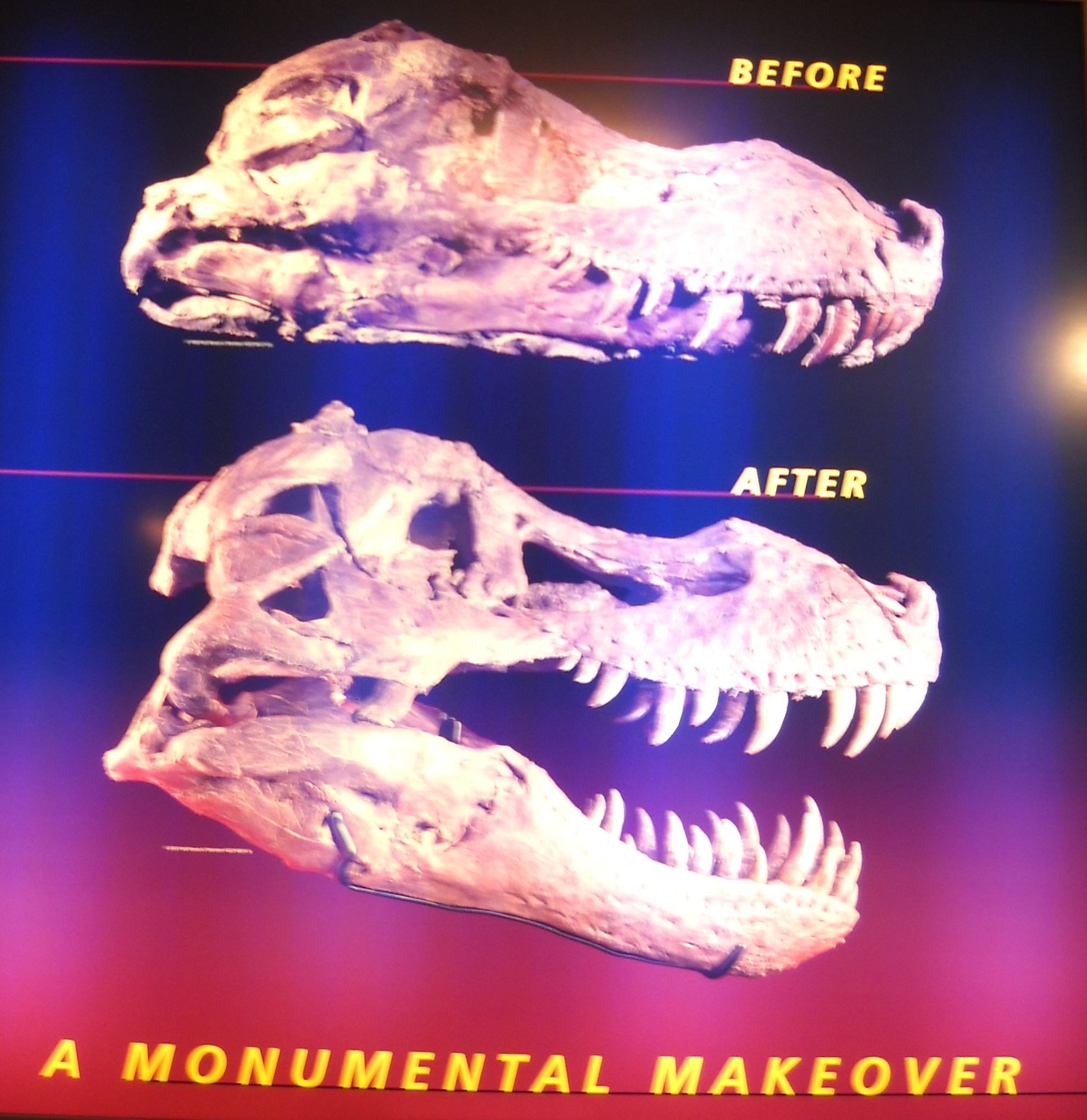
An afternoon with Sue-Field Museum, Chicago,Dec 2010
The world’s largest, most complete, best preserved
Tyrannosaurus Rex ever preserved- 67 million years old.
What does watching Sue make us realize about our existence
I tried asking these questions to a small 3 year old
This Eid, in Tripoli.
http://archive.fieldmuseum.org/sue/#index


Sue was an interesting point to exchange notes with the three year old daughter of my colleague-Santosh.

Janvi turned 3 on October 15 and I tried to see what she thinks of this shape after having gone through some of the commonly seen animals, figures, shapes in pre-nursery help books.

Picasso-Art and sensibility

For colours we went through Picasso’s Blue and Rose periods .

“Will such paintings be appreciated in India” my friend asked me after seeing some Cubist compositions. This made for an interesting discussion on the nature of art in India, the religious symbolism, the miniature periods patronized by Mughals and Rajputs.

“Have you been to a museum?” I asked him and guided him to visit four interesting places the next time he goes back to Mumbai- Jehangir Art Gallery, Chatrapati Shivaji Museum-Formerly the Prince of Wales museum, National Gallery of Modern Art and Bhau Daji Lad Museum.

The first three are within walking distance of Regal but for Bhau Daji Lad he will have to go to Byculla.

See blogs:https://prashantbhatt.com/museums-with-the-children/

“We have Rangoli exhibitions in our city in which freedom fighters are depicted” he modified his initial negative response after some thinking.
* * *
My father first started taking me to museums in the early seventies. I try to pass that tradition on to my children.

Thoughts from “Sue”..Conservation, Evolution

The extended Eid holidays in Libya made for an interesting occasion to go through some Museum themes. Though I started with a workshop approach with a three year old, revising some commonly seen animals shown in her nursery book and then trying to see what she makes of “Sue”, the discussions opened up many interesting themes regarding collection, restoration, curatorial work and what constitutes art in different cultures.

Posted in Art, Diary, Learning, life, photography | Tagged , , , , , , | 1 Comment

Seeing Life at the slow shutter speed

As some friends read the article remembering Lodhi gardens,Delhi
( https://prashantbhatt.com/2012/10/19/our-journeys-together/ ),
they asked me to write about the different sites where we had
so many lovely evenings .

“The next article should be about Hauz Khas”.

Another friend remembered the CP Evenings.

Evenings., Delhi, India. May 2006 .browsing through books, after a beer at Gola

As I remember those times, as a person who has seen medicine and life through imaging-as a radiologist with an interest in photography, and seeking people’s narratives, I recall the many lovely evenings we had discussing the different aspects and nuances of photography, and through that..about life.

Context in photography:

Like life, photography is all about context.

Telling persons to photograph their workplace, in situations which will not be usually visible to others gives a window into worlds which are otherwise hidden. This theme opened up many interesting possibilities while we thought about which professions to engage, from the obvious to some which are not to be mentioned in the ‘decent’ circles.

Life at the slow shutter speed

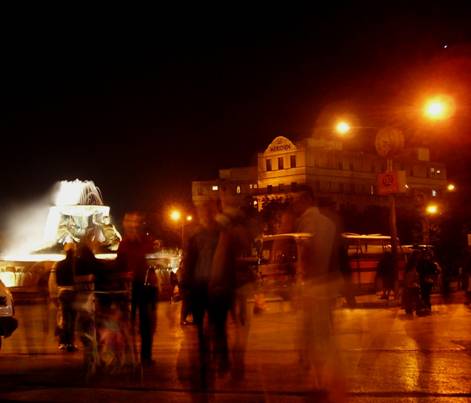
Valletta- Malta…October 2010,..
watching the world go by,
at the Slow Shutter speed


The evenings are a lovely time to view the world at the “Slow shutter speed”. For anything with a shutter speed of less than 1/30 second one needs a stand. For me, the stand is probably the most important part of a photography equipment list. The stand can also be useful in making video recordings of concerts, shows and other performances.

Commercial photography involves studio, portraits, wedding, wild life, products, fashion to name a few.

I found my way through using the stand, in the night..and watch the world pass by quietly, as I tune in to life..at the “Slow-Shutter Speed”.

No hurry…lessons of life from Photography at the slow shutter speed.

The “Slow shutter speed” also taught me something about life, in which different pressures make people keep interrupting others.

There are few who have time to listen.

No time for a father to listen to his child.

No time for a friend to see where his friend is going.

But if you apply the “Slow-shutter” formula to conversations, and waiting for that extra second, a bit more that 1/30 seconds to let other complete their words, and then maybe register what their thoughts, feelings, attitudes are, it adds a richness to the nuances of life.

….It all started in evenings in Delhi, where I first learnt how to watch life at the “Slow-shutter speed.”

Posted in life | Tagged , , , , , , , , | 1 Comment