Exploring Music

As we go through the book “How to Think life Leonardo Da Vinci” and come to section appreciating music set us to listen to some classical music and some famous scores of Western Jazz and Indian movies.

In his book Michael Gelb writes of techniques such as rhythmic variation, key cahnge, rests, and harmonic movement, the compose leads the listener along paths of motion, stillness, and melodic hights and lows, all leading to the raising of musical expectations and fulfillment.

As a project to try and listen to the key moments of momentum- building and release we went through The Story of Prince Kalendar
Interested persons can go through the links provided for the composition and the legend which goes with the masterpiece.

Rimsky-Korsakov – Scheherazade: The Story of the Kalendar Prince [Part 2/4]

http://www.candlelightstories.com/2009/03/27/arabian-nights-the-story-of-the-first-kalendar-son-of-a-king/

Other interesting compositions which we tried to appreciate with their links are given below.

What a wonderful world-Loius Armstrong

Duke ellington things ain’t what they used to be

Charlie Parker-Moods

Benny goodman sing sing sing

Ravi Shankar George Harrison Collaborations. I am missing you

Nat King Cole…After Midnight once more

Blues Guitar Lessons

http://www.youtube.com/user/SonicJunctionLessons/featured?v=jE2Aeiwqqf0

Sitar –

Ravi Shankar – and Chatur Lal Raga Mishra Pilloo in Thumri style

Ravi Shankar-Allah Rakha…speaking on Talas,…Tabla solo in Jhaptal

Flute- Dhun Dadra- Indian Classical -Pandit Hari Prasad Chaurasia, Ustad Zakir Hussain

Santoor-Pandit Shiv Kumar Sharma and Ustad Zakir Hussian

Nature of knowledge

The discussions following this book have opened up interesting vistas to explore. Why did the Renaissance take place when it did?

..what a modern Leonardo application would include

What has scientific knowledge which has led to the destructive wars of 20th century or ideologies like Fascism got to teach us.
Remembered the Dada movement, which gave rise to movements like Surrealism.

A dada composition-Art Institute of Chicago

Many lovely hours spent listening, learning, appreciating.

We also remembered two guitar teachers of my son Sagar who has been playing guitar for 6 years now

Maben Oswald..of Orlem, Mumbai

Of Artists and Creators

http://prashantbhatt.blog.co.uk/2009/06/24/of-artists-and-creators-mumbai-6382750/

See blog

Tony Pace..of St.Venera , Malta

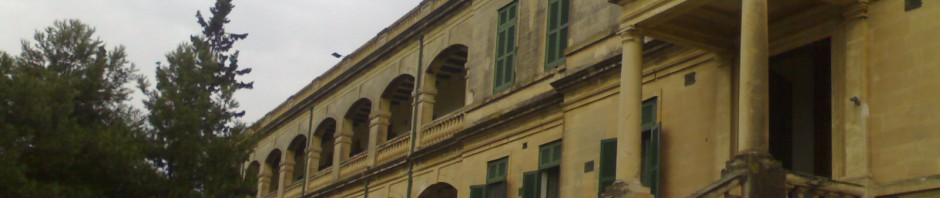
Walks in Malta again

Memories through compositions

As we spent a cold evening of subzero temperatures ( Minus 5, feels like Minus 10 with wind my son looked up the weather
charts) the theme of musical knowledge, culture and memory came alive. Where were you or your parents or grandparents
when the melodies like Dil Ki Nazar Se of Raj Kapoor were composed?

Is there something like musical cultural memory.

From the answers that came alive on a cold winter evening, the answer is Yes.
What those answers were, will make for a much longer and interesting composition.

See blog
Posted in life | Tagged , , , , , , | 5 Comments

..what a modern Leonardo application would include

Discussing “How to think like Leonardo Da Vinci” by Michael Gelb with my son as part of our Reading sessions opened new insights.

Why did the Renaissance take place when it did?

For 1000 years prior, European accomplishments in the realms of science and exploration were negligible. Throughout the Middle Ages, the vast majority of human intellectual energy and effort was diverted to questions of doctrinal minutae and “holy” war. Instead of exploring new lands, innovations, and ideas, the best minds engaged in debates on how many angels could fit on the head of a pin.

My sons smiled at this and we went on to a reason which came from the realm of biology and public health.

The seminal event occurred in 14th centry when the Black Plague swept through Europe. Almost one half of the population was destroyed in a rapid and hideous fashion. Priests, bishops, nobles and knights died in the same proportion as peasants, serfs, harlots and tradesmen. Devotion, piety, and loyalty to the church provided no protection, shaking the faith of people from all walks of life. In what was at first an almost imperceptibly subtle shift of consciousness , answers were sought outside of prayer and dogma.

What would a modern Leonardo tell in his application.

We have been following the dictionary project for some years. After reading a passage we go through some words and discuss them.

Going through the application of Leonardo written to Ludovio Sforza in 1482 , we went through the military engineering capabilities which he wrote about

– I can make cannon, mortars, and light ordinance , of very beautiful and useful shapes

– I can supply catapults, mangonels, traps and other engines of wonderful efficacy

What would a Modern 21st century Leonardo present as his capabilities.

That brought us to the modern war machines and use of drones.

Drone (Oxford dictionary)- An unmanned aircraft.

Innovations in science

Gene- A unit inside a cell which controls a particular quality in a living thing that has been passed on from is parents.
Probably a modern Leonardo would have applied telling of his capabilities to make better drones or innovate stem cell therapy.

Intra-personal innovation

As we finished Part One of the book -How to think like Leonardo, we decided to use humor and art in our everyday lives as a tool to gain insight. This was inspired by the part one of Viktor Frankl’s book “Man Search for meaning” in which he writes how even in the dire circumstances of concentration camps the inmates used the methods of drama and humor to lighten up their atmosphere.

The book on Leonardo helps open many interesting discussions as we continue our readings.

Other posts of interest

The reading lists have opened many interesting journeys for us

Reading lists in Mumbai…Searching for books

“Go to the bookstores at Girgaum Chowpatty and find these titles” one experienced bookshop owner and lover of books at Kalbadevi opposite Metro cinema suggested to me as I tried to see where I could find the remaining five books.

Chess-Tables-Reading lists

Walks and Readings in Malta…Remembering Crossgates…George Orwell-

“ I have never been back to Crossgates. In a way it is only within the lst decade that I have really thought over my school days, vividly through their memory has haunted me. Nowadays, I believe, it would make very little impression on me to see the place again, if it still exists

Walks and readings in Malta

Posted in Diary, Health Policy, Learning, life | Tagged , , , , , , , , , , , , | 2 Comments

Reading groups and conversations..to examine communities

Examining life at the slow shutter speed.
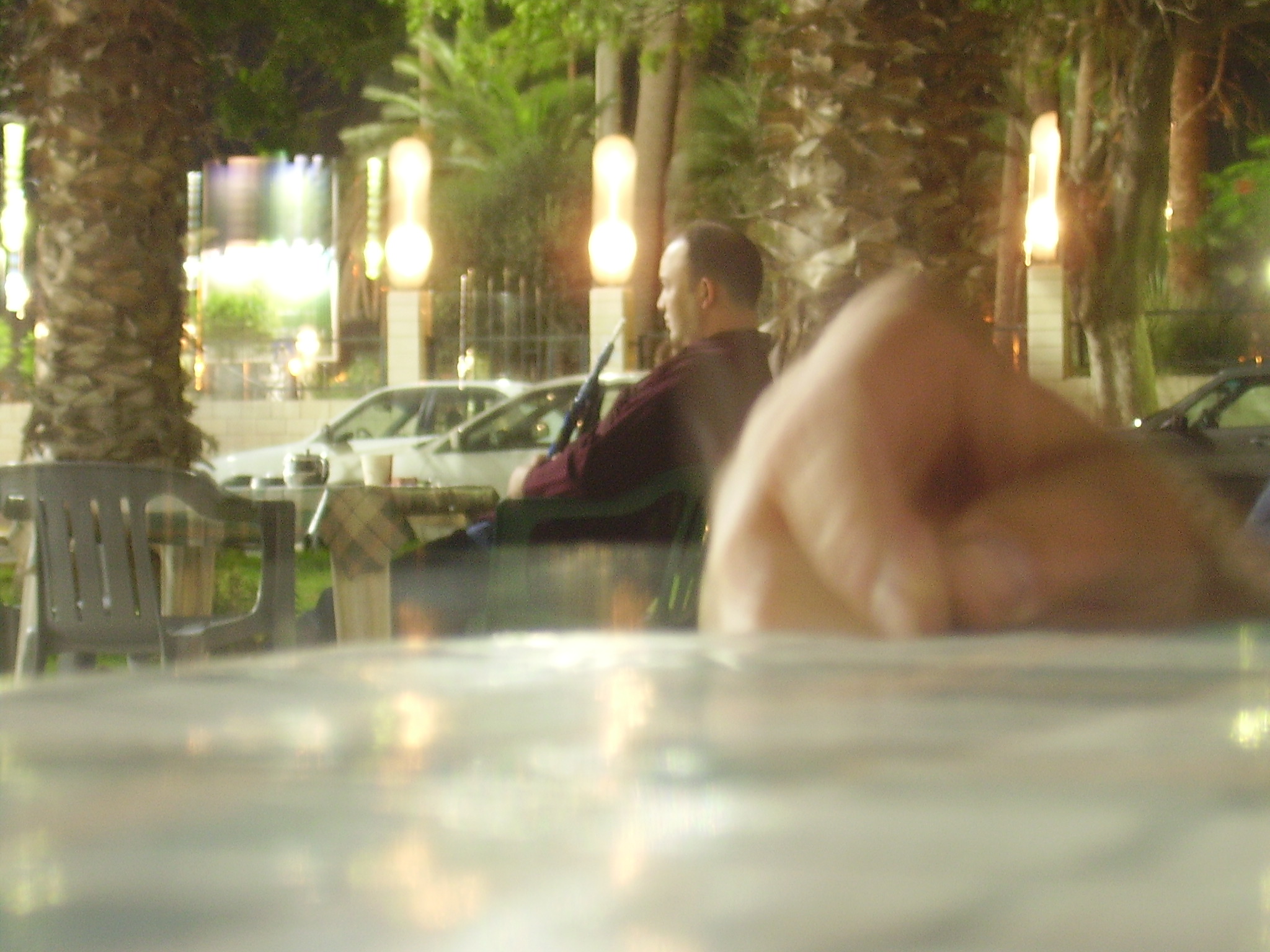
Coffee -Mediterranean charms, Regilla in Tripoli

Examining communities first hand opens many horizons and connections.

The first hand interaction with peoples and ideas of different nationalities and regions when living in a cosmopolitan city like Tripoli adds a richness to life.
How work, faith and migration shape identity were aspects that formed part of the connections which we explore.

While the Indian Hindus celebrate Diwali,there are Christians who are now observing the 40 day fast before Christmas and recently Muslims celebrated Eid.

Then there are Christians of different schools-Orthodox Christians from Central-Eastern Europe.

Here is where I also met a person who does not go into a Church having been brought up as an atheist and practicing a more strict brand than some from India who still go into religious places, looking for cultural connections. The philosophy which develops from these made me re-examine Proust’s words “In Search of Lost Time” in a different manner.

Reading groups

One of my readers queried and asked me to expand further about how much difference there was between “Bhajan” and “Bhojan” in the Friday group. That I will leave to the conscience of the people who participated to answer to each one of themselves.

There was another interesting regular group which we had in Tripoli before the 2011 uprisings which we are continuing in some forms now…This was the informal “Tripoli Reading Group” an attempt to form a “Consciousness-Raising” forum.

Friday evening on the terrace

Many were the pleasant evenings we spent discussing how interpretations of different thought currents evolved. Some of the professors raised our level.

“We have to learn from the Frankfurt school, thank them for opening these issues, but also move ahead,” one veteran told on one pleasant evening in Tripoli, sitting on the back terrace.

Oral History …some conversations in faith and marriage

How did cross cultural, inter-faith marriages affect your life?

This was an interesting line of inquiry as we engaged in life-story interviews with some Libyans who have spent a long time in the West but have returned to participate in re-building their country.

I let my wife find her own equation with Islam” one friend who married a lady from Panama once told me. “She did declare her Islam, but I did not force her,” the firebrand thinker-citizen who also talked about lack of political tradition, Republicanism or established legitimate structures in Libyan society and the strong tribalism and tendency to settle disputes in extra-constitutional ways told me.

“For me it was important that I give all that I have to my wife and children,” another veteran who left all his savings of over 2 decades of work in UK to his family, divorced and returned to his homeland told about how Islam made him give up all for his wife and children.

He is nowadays trying to find out the different levels of curriculum and learning in young students of English so that he can orient his tuitions accordingly.

Webs ..remembering an afternoon at Funduq Kabir

As people rise to re-claim their stolen destinies, our “Reading Group” re-examined the meaning of Proust’s “In Search of Lost Time” as applied to faith, work, migration in the context of post-revolutionary Libya.

It all started one quiet afternoon when three of us met for coffee at Grand Hotel-Funduq Kabir and started our discussions.

“Keep it informal, as otherwise other politics of organizational culture, who will be the President or Secretary start taking precedence,” the veteran of such groups over three decades told. Many were the interesting webs we wove in these discussions, from “thanking Frankfurt School” to searching for meaning and faith in tribalism, identity and the exploration of indigenous people. The webs which we wove were rich and intricate….it is through these connections that we came to hear…

“ Yes we are Muslims, but we are not Arabs. We are the original inhabitants of this land…we are the Berbers.”

Examining communities first hand opens many horizons and connections.

Posted in Diary, Learning, life, photography, Walks | Tagged , , , , , , , , , , | Leave a comment