Reflections on our Republic Day 2013

“What are the reading lists of your reading group” one veteran queried as the Indian community gathered in the house of the Indian Ambassador to celebrate Republic Day after a gap of two years.

In the year gone by

This celebration is special and I still remember the turbulent 2011 days when only few die-hard medical staff remained in Tripoli and we would sometimes go to the doors of the Indian embassy only to find a single Palestinian running the show. The Indian staff was in Tunis.
In early 2012 one charge-de-affairs was sent on an initial mission. I still remember him multi-tasking with great efficiency, from door keeper to record keeper to making entries to doing some consular work to giving diplomatic dispatches on the rapidly changing complex scenario on the ground.

Last year, See blog : https://prashantbhatt.com/2012/01/27/reflections-on-our-republic-day/ our reading group had discussed the word Proletariat on the occasion of the Republic day of India and tried to contemplate on the meaning of this word for millions of Indian Diaspora.
We had compared two famous essays-Chris Harman’s “The Prophet and the Proletariat” and Ronald Barthes’ “The Poor and the Proletariat”.

Ronald Barthes analyzed Chaplin Man as being interesting and complex because he is still outside the revolution.
He argues that the Poor Man essayed by the legendary comedian is successful precisely because this character “is always just below political awareness…still outside the Revolution.”

Although ‘fascinated by the problem of breadwinning’, Chaplin-man is “as yet unable to reach a knowledge of political causes and an insistence on collective strategy.”

A film such as Modern Times is powerful because it foregrounds the humanity of its worker protagonist:
“Other works, in showing the worker already engaged in a conscious fight, subsumed under the cause and the Party, give an account of a political reality which is necessary, but lacks aesthetic force. In other words, it is the visible space between the aesthetic and the analytical that makes a work truly revolutionary in the sense of being ‘politically open to discussion’

( As quoted in Literary Radicalism in India.Pages 143-144 by Priyamvada Gopal)

We again revisited the meaning of proletariat in today’s world on the 64th Republic Day of India.

Revisiting “Chaplin Man”

All the “King’s” men..the Indian community gradually re-organizing…

Who is invited and who is ‘not-invited’ to the evening reception is a buzz which keeps on in some circles of the Indian community. However, some medicos who serve the population, both Libyan and Indian noted that even the morning celebrations at the Indian ambassador’s house usually have only the more elite and well-to-do members of the Indian community. In the ten years I have stayed here I have still to see some workers who live in the camps to come to such a gathering though the morning flag-hoisting does not require a special invitation.

Some Indian camps around Tripoli have been attacked, the workers beaten up and some vehicles have been looted. Security around Tripoli remains a big issue. It is even more perilous if one tries to go towards the Nafusa mountains or South-Sebha region. In Benghazi and Derna regions there have been evacuations of foreigners due the current unrest in North Africa. Though the main targets are the nationalities whose armies are now waging war in North Africa, as a precaution some medical workers have left Benghazi.

In the past months there was intense fighting in BenWalid and some workers still take refuge in the quarters associated with the Church in Medina as they find themselves jobless and homeless in a foreign land.

Some people still face arbitrary transfers and harassment as they wait for their long-term dues and gratuity to be cleared.

“It is not possible for me to go without my gratuity. This is my life’s saving. However, if I resign,then I will be further delinked from the different bureaucracies. If I do not resign, then they say that they will process as it is done for others.That is a time consuming process” one veteran told of his worries, not having seen his family for almost two years, when they were evacuated and he chose to stay behind.

These circumstances, sometimes tragic, sometimes comic, give a flavor of what it is for some Indians who are not connected to big companies or in powerful positions in government sectors.
Ronald Barthes’ “Chaplin Man” came back talking to me in many different ways as I heard the talks of persons from Ben walid, Sebha, Jadu, Benghazi.

Mass observation

In work and play, education and prayer

In the past year we continued the theme of observing people in work and prayer and took interviews of persons of different faiths. Though the initial Mass observation project which started in UK in 1930s involved Christians, in Tripoli region we have expanded this to involve Muslims, Hindus and Christians of different churches.
Revisiting Historiography is an interesting theme we have started engaging in as we go deeper than the usual questions of “Hello..how are you? …How is your work..”

Adding Mass observation to the theme of “Tripoli Reading Group” made an interesting mix as we revisited some Oral History works of the great American Writer Studs Terkel and dissected the difference between the Marxist historiography and the Subaltern historiography movement of Antonio Gramsci and Ranajit Guha.

See the following blogs for further details

Remembering Studs Terkel

Remembering Studs Terkel-I want to conserve the blue of the skies…”

In Search of the Unknown Worker

Which historiography..In search of the Unknown worker.

Dissecting meanings of “intellectual terrorist”

“You are an ‘intellectual terrorist’” one friend told me a few weeks ago.

Over a few meetings he made me listen to a virulent recording of a RSS ideologue who talked about Hindu Rashtra and repeatedly told about the subversion done by “Intellectual terrorists”.
While some friends started attacking the virulent speech even before it was complete I told them to be a bit patient and let her run through her great arguments. After listening to the whole speech silently, (though I guess the hearing had been arranged especially for me as I had been labeled ‘intellectual terrorist’ before the hearing) I asked our learned friends

1. If we take this logic of ‘intellectual terrorist’ further won’t we probably be labeling even Mahatma Gandhi in the same vein?

2. Do these persons go into the complexities of what drives internal migration to big cities, the type of feudal exploitation which makes workers prefer to rough it out in slums?

3. If we carry this logic to the Indian Diaspora won’t they be in a big disadvantage in areas where people of different faiths are in dominant position?

We shall continue the discussions further.

Amartya Sen’s “Identity and Violence” and “The Argumentative Indian” will be essential reading for the persons who are quick to label. Hopefully after going through those works and trying to understand the complexities, they will be a bit less quick in labeling persons.
Religious Historiography

As we went beyond labeling, after some heated discussions, I opened another chapter of our reading group…the Nature of religious Historiography.

Charles Darwin ‘s Origin of Species spelled out the revolution which has provided enough evidence against the “Creationism” theory. How will the “Hindu Rashtra” people explain the historiography of mankind in terms of their religion? This led to some agitation amongst the members of the “Reading Group” (some may never return) as they realized that the explanation of even the Indian civilization cannot be completed logically by subscribing to some of the mythological texts which may give good moral metaphors but do not explain things logically.
Add to it the historiography of Chinese, Western, Jewish, Moslem traditions and the gaps are so glaring that any logical person will try to look for answers other than the traditional religious historiography to try and understand the evolution of the different societies.

Which Historiography?

The celebrations of the Indian community on the Republic day are unique and very relevant to the Libyan Arab society today as they try to draft and agree upon a Constitution. If what is happening in neighboring Egypt is any barometer things will take time to settle down. Is it right to try and force things and blame every wrong on a new government.
Some in Egypt seem to be playing the game in a manner which reminds one of the dictum
“Play the game as I say, otherwise I will take my ball home”

The new dynamism of the staff at the Indian embassy has given an enthusiasm amongst the community. However, there are concerns of security, arrears and new contracts, both at individual and company level. Meanwhile through methods such as “Mass Observation” and “Reading Groups” we will continue to interrogate the different layers and flavors of Tripoli and Mediterranean region.
For those interested you can see the blogs tagged

Mass Observation https://prashantbhatt.com/tag/mass-observation/

Tripoli Reading Group https://prashantbhatt.com/tag/tripoli-reading-group/

Arab Spring https://prashantbhatt.com/category/arab-spring-libya/

And also visit the Archives for articles under different headings. https://prashantbhatt.com/archives/

Posted in life | Tagged , , , , , , | 4 Comments

Negro Journeys

OLYMPUS DIGITAL CAMERA

How does the African Negro relate to the American Negro? This theme has been discussed in essays of James Baldwin and continues to be an interesting theme especially in the context of the February 17 revolution in Libya.

See blog https://prashantbhatt.com/2011/09/02/shafshoofa-maleshi-tripoli-is-free/

On the occasion of the second inauguration of US President Barack Obama we went through the “I Have a Dream” speech of Martin Luther King Jr, which has served as an inspiration for millions. Video: “I Have A Dream” by Dr. Martin Luther King, Jr.

On a quiet evening in Mississauga, we went through some excerpts of the essays of the great writer James Baldwin which have the spiritual energy of protest literature.

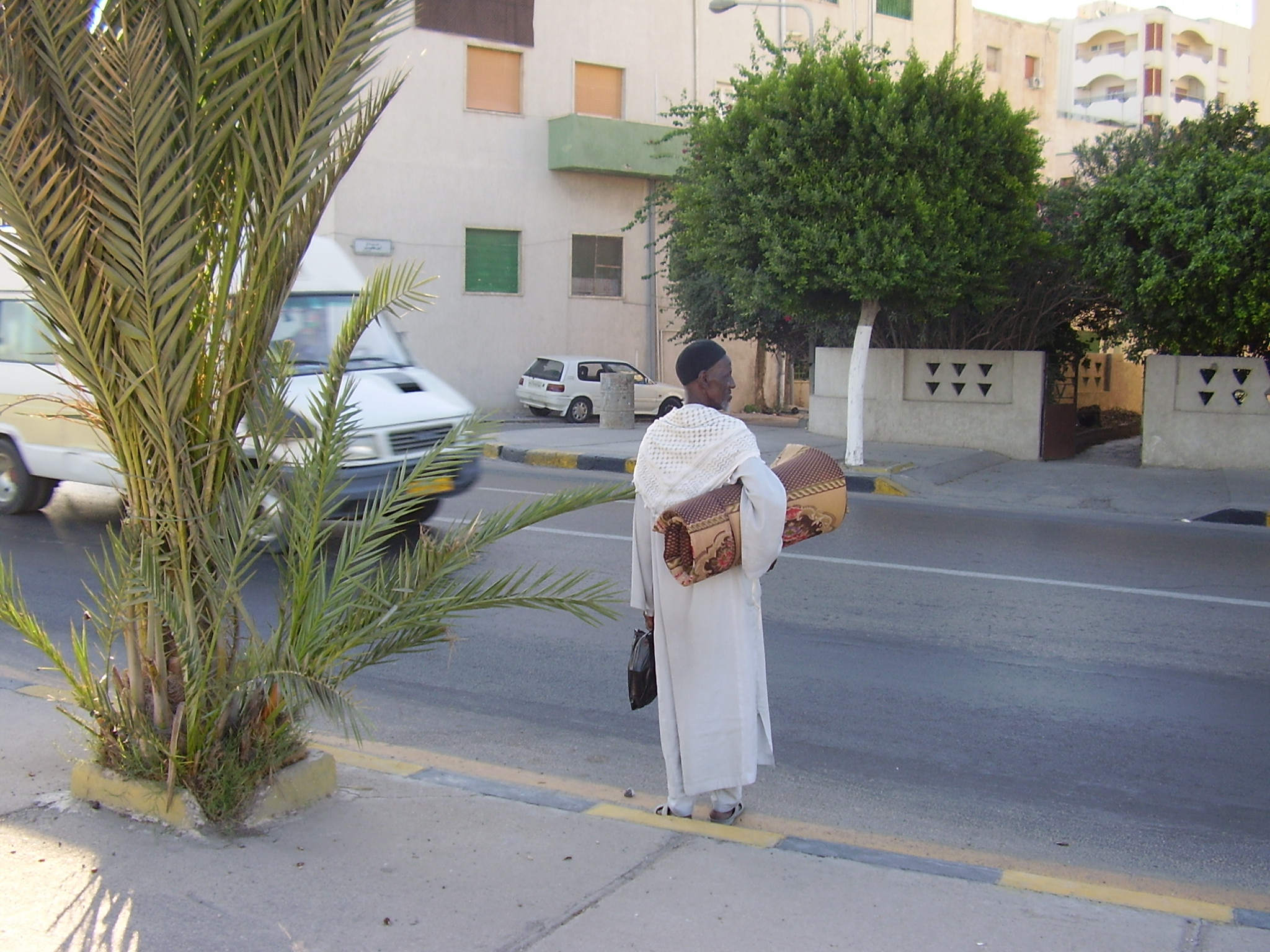
I first came across Negroes when I started staying in Tripoli in 2003. The San Francisco church at Dahra was the place where my friend, a Nigerian football player Carlos, opened many different worlds to me. This started a journey which has been full of richness and discovery. During the turbulent upheaval of the Libyan chapter of the Arab spring in 2011 there were many indiscriminate killings of workers from Sub-Saharan Africa and the question of race comes forward again and again in Libyan Arab society.

What can one learn from the writings of James Baldwin, who began as a boy preacher in Harlem, in a writing style clearly marked by the rolling-voiced, call-and-response excitment of the African American church? Having seen the energy of the African choir in Tripoli’s churches makes one feel that air of excitement.

Readings from “Notes of a Native Son”

“But as for me and my house” my father had said, “we will serve the Lord”. I wondered, as we drove him to his resting place, what this line had meant for him. I had heard him preach it many times. I had preached it once myself, proudly giving it an interpretation different from my father’s…..All of my father’s texts and songs, which I had decided were meaningless, were arranged before me at his death like empty bottles, waiting to hold the meaning which life would give them for me. This was his legacy: nothing is ever escaped. That bleakly memorable morning I hated the unbelievable streets and the Negroes and whites who had, equally, made them that way. But I know that it was folly, as my father would have said, this bitterness was folly”

The essay tells about acceptance and injustice, of equal power and to fight against injustice with all one’s strength. This fight begins in one’s heart which one has to keep free of hatred and despair. The moral force of keeping oneself free of hatred and despair have been the underlying message of many fighters for justice ranging from Thoreau, Tolstoy, Gandhi, Martin Luther King and are as relevant in present times as then, especially in societies like Libyan Arab society which is undergoing many changes.

The essay ends on the introspective note….

“This fight begins, however, in the heart and it now had been laid to my charge to keep my own heart free of hatred and despair. This intimation made my heart heavy and, now that my father was irrecoverable, I wished that he had been beside me so that I could have searched his face for the answers which only the future would give me now.”

Immigration, instititutional injustice, and related themes

Stay in Tripoli, Libya, opened the theme of the African Negro to me. The community work of the Nigerian footballer Carlos, be it the making of papers for persons caught in prison or illegal immigrants trying to cross over to Europe from North Africa opened many windows to my otherwise cocooned existence. The church was where I came to know of many such stories. Another interesting person was the driver of a prominent diplomat who helped drive him across to Tunisia and then was sent back to face the turmoil and also negotiate the various layers of health care system dealing with his renal disease.

Readings from Alas, Poor Richard

In his essay “Alas, Poor Richard” James Baldwin writes

“Time brought Richard, as it has brought the American Negro, to an extraordinarily baffling and dangerous place. An American Negro, however deep his sympathies, or however bright his rage, ceases to be simply a black man when he faces a black man from Africa. When I say simply a black man, I do not mean that being a black man is simple, anywhere. But I am suggesting that one of the prices an American Negro pays- or can pay-for what is called his ‘acceptance’ is a profound, almost ineradicable self-hatred.”

The essay tries to interrogate the question of what an African, facing an American Negro sees, but says it is too early to tell with what scars and complexes the African has come up from the fire. It ends with the hope of reconciliation and fusion to survive the wilderness of pain and hatred.

Cultural interfaces

Remembering some interfaces which the African Negro has to face made me recall an afternoon at “The Peace Lab”-Halfar Malta and the work of Father Mintoff and some conversations at the Art Gallery of Mississauga on the occasion of the 50th anniversary of Jamaican independence.

See blogs

Conversations on Identity

Conversations on Identity

Rastafari

Rastafari-some conversations on identity

Of journeys and fathers

In remembering spiritual fathers of protest and civil liberties movements, and the different journeys which African Negroes have to take in the context of the turmoil of transition in present day North Africa, we reflected on the message of hope and the fight to be free of hatred and despair while going through the passages of James Baldwin.

JUNE 2015

President Obama had to make this Eulogy for Charleston

Clementa Carlos Pinckney, state Democratic senator and senior pastor

at the Mother Emanuel A M E  in Charleston was murdered on June 17 2015

Nine persons participating in a Bible study group in the historic church were

massacred in what is said to be a hate crime.

Posted in Arab Spring-Libya, Learning, life, Spirituality | Tagged , , , , , , , , , | 4 Comments

Niagara Walk

The Niagara park area had less visitors in winter, than in the peak summer season. This gave us some time to reflect on the persons who were instrumental in making this area into its present form.

Niagara-Table Rock area-Jan 2013

We found different ways of change after looking up the meaning of Metamorphosis. As new year season passed and school started, we revised the meaning of Metamorphosis to try and understand the different themes related to art, science, perception which we are going through while studying the book- How to think like Leonardo Da Vinci.
Metamorphosis is a change, sometimes regarded as magical. It also means the changing of a caterpillar to a butterfly, or any other natural change.

https://prashantbhatt.com/2012/12/25/christmas-eve-discussions/

..what a modern Leonardo application would include

Exploring Music

Walking to Metamorphosis

In the blog-Skype Parenting https://prashantbhatt.com/2012/09/11/skype-parenting/ we had discussed some themes of developing joint work

– Keeping a joint journal
– Having Shared memories
– A pet
– The school newsletter
– The family newsletter

We looked up the meaning of Metamorphosis and used it in the context of the story of some landscapes we saw in the Niagara region where we went a few days back, in the snowing season.

Getting to know a bit of the history of the place adds to the flavor of the trip. This is an approach which made us review the ancient ship wreck found in Xlendi area which is now housed in the Gozo citadel of Malta, or go and see the Big Foot Museum in Loutolim, Goa. Visiting museums is a legacy passed on to me by my father who first started taking me to museums in early seventies. One has to pass on something of one’s parents to one’s children. Older cousins also told me how my paternal grandfather would take them to the garden tombs in and around Delhi.

See blogs-

Museums with the children

Museums with the children

An afternoon at Lodhi Gardens

An afternoon at Lodhi gardens.-Delhi

Seeing life at the slow shutter speed

Seeing Life at the slow shutter speed

Our journeys together

..our journeys together

Remembering Sir Casimir Gzowski

Niagara-Park-Near the inscription of Casimir Gzowski

The Niagara park area had less visitors in winter, than in the peak summer season. This gave us some time to reflect on the persons who were instrumental in making this area into its present form. We walked to the Table rock region where we saw inscriptions telling of how this area was a private property till 1885. Sir Casimir Gzowski was the first chairman of Niagara Parks Commission . Born in Russia of Polish parents, he was forced to emigrate following participation in the Polish uprising of 1830. He came to Canada in 1841. An exceptionally able engineer he first served as a government construction superintendent. He later organized a company which built the Grand Trunk railway from Toronto to Sarnia (1853-57) and the International bridge across river Niagara at Fort Erie in 1873. He was the founder of Canadian Society of Civil Engineers in 1887. A colonel in the Canadian militia he was appointed honorary aide-de-camp to Queen in 1879 and knighted in 1890.

Getting to know a bit about the history of a place adds a different feel. Though the site is a natural wonder, there are persons who made it what it is today. Gzowksi was one of them.
This has been an interesting project which has taken me to different locations, with many interesting persons. Every journey has its surprises. Last year Father’s Day we had an interesting walk with a veteran of Malta.

Cemeteries are used in spiritual traditions for most unique prayers.
The Non-Catholic cemetery beyond Floriana on way to Msida

Cemeteries are used in spiritual traditions for most unique prayers.
The Non-Catholic cemetery beyond Floriana on way to Msida

This was a most unique Father’s day, in which we paid homage to some father figures and remembered our legacy and heritage. Some senior members of the community guided us through the different parts and told beautiful intricate stories of the times gone by.
See blog-Father’s Day Walk https://prashantbhatt.com/2012/06/19/fathers-day-walk/

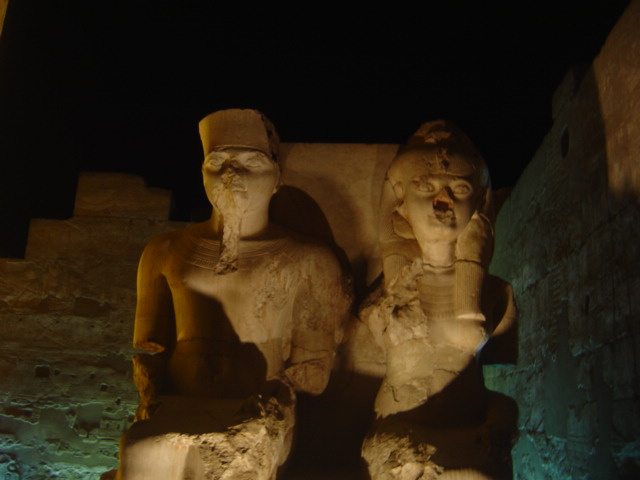
Remembering a visit to Thebes…Journeying different parts of the world,

14 1 13 Thebes-Dec 2004

getting to know a bit about the history of the people is a lovely way to grow as a human.

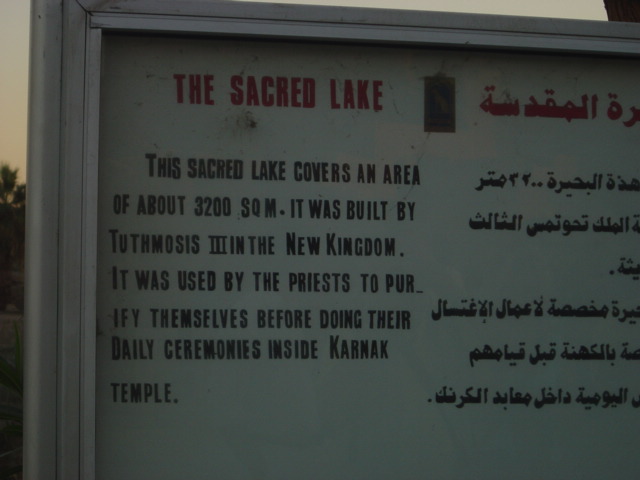
As I remembered Thebes-the persona of Howard Carter came to us more distinctly when we passed the hill where his house was, after seeing the valley of Kings in Luxor area which houses some of the famous tombs like Tutankhamen. Remembered a visit to Karnak temple complex -there is a sacred lake there, believed to be build by Tuthmosis III in the New Kingdom It was used by priests to purify themselves before doing their daily ceremonies inside Karnak Temple. The temple complex also houses what is believed to be one of the earliest zoos known to man.

14.1.13 Thebes-Karnak Dec 2004

On the gravestone of Howard Carter in Putney Vale cemetery, London the following words are written
“May your spirit live, May you spend millions of years, You who love Thebes, Sitting with your face to the north wind, Your eyes beholding happiness” and
“O night, spread thy wings over me as the imperishable stars”.
– – –
As we saw some old photographs and remembered the trips to Luxor, Egypt, Floriana-Malta, Xlendi-Gozo and went through the new videos-photographs with the theme of metamorphosis and history …something magical happened. Such trips make one realize the truth in the words that life is not measured by the time spent but the cherished moments lived.

Posted in life | Tagged , , , , , , , , | 2 Comments