Walks : Kariya Park and Mindfulness Metta Reflections

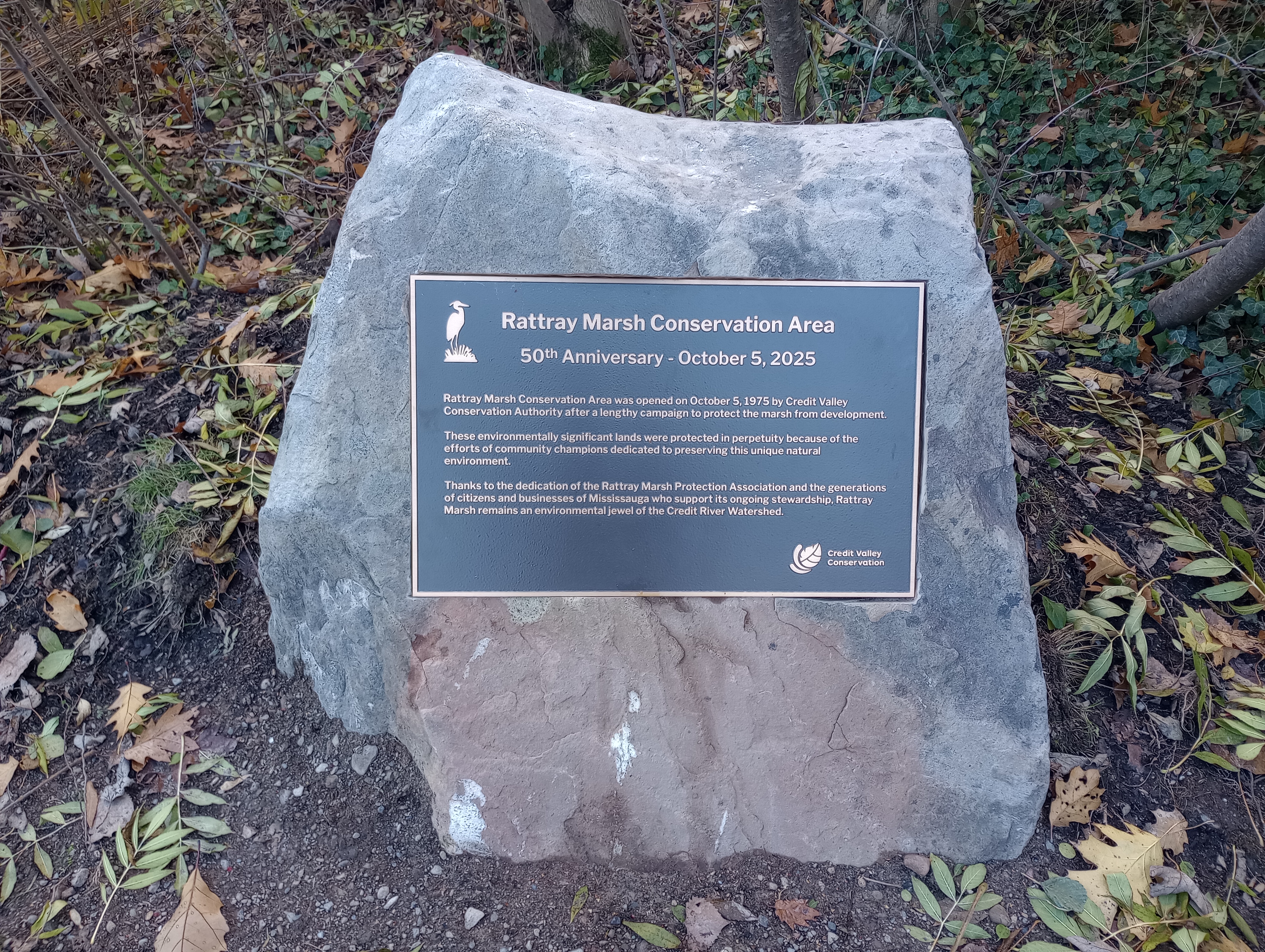
Last week we walked at Rattray Marsh. It was a good preparation for the book for December 2025, A Walk in the Park by Kevin Fedarko.

Reading Diary- Kariya Park 2025 Nov

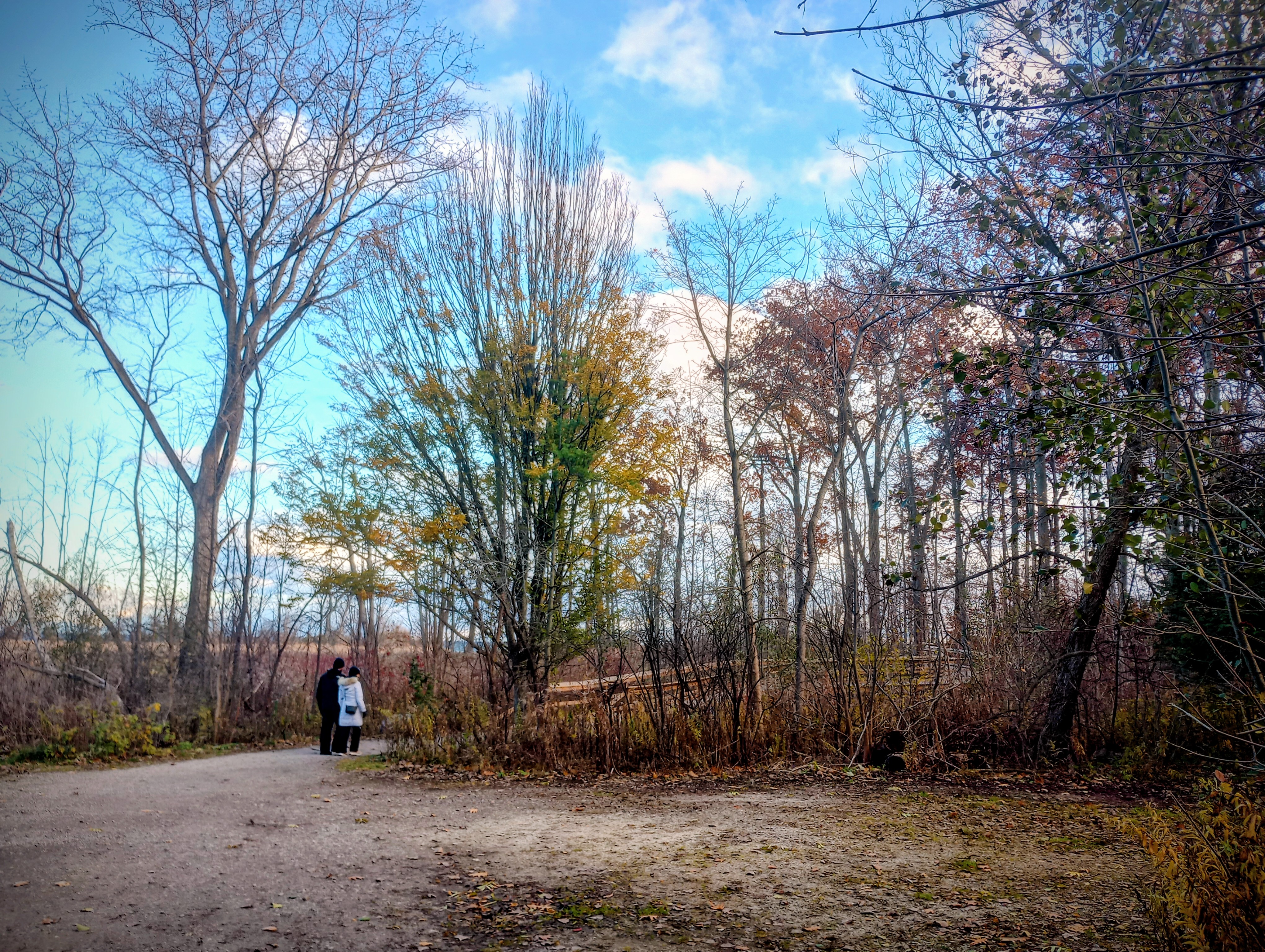
Went to Kariya Park-Mississauga and made notings of seven elements of Mindfulness and also looked at the diary which I have been keeping with my sons-Sagar and Sahil from Malta days-2010-2012.

Geological Time and Walks 

My first experience of walking in childhood in Sahyadris which are volcanic in origin and around 60 million years old. In the Mumbai days, children joined the Natural History society and we used to go for walks to Sanjay Gandhi National Park- Goregaon area.

Rattray Marsh-50 years of Conservation-1975-2025

7 Points of Mindfulness Exercise

Seven Points of Mindfulness Exercise

1- Sights

2-Sounds

3-Smell

4- Taste

5- Touch

6-Time

7- Mind

Eg

1- Sights      of waves in the pond at Kariya Park

2-Sounds     of geese and breeze near pond

3-Smell        scent of pond early winter

4- Taste       tea in morning

5- Touch      cold bench in park

6-Time        Geological Time-through Readings of Fedarko book

7- Mind       Metta Meditation-May all the persons coming to this Park

                   Be safe, happy and at ease

                   May all the persons of the book club by safe, happy and at ease

                   May all the persons of the Natural History Society-Goregaon -Mumbai be safe

                   Happy and at ease

             Gratitude- for the persons who maintain this park.

Earlier Perspectives

Remembering walks in 1970s-Pune- Sahyadris

Ophir to Bassein-Reading discussions-2018

Worksheet for Metta Meditation- Living Kindness

Posted in life | Tagged , , , , , , , , , | Leave a comment

Beyond Clocks and Calendars

Last week, I had a heart to heart talk with an old friend. In this blog, we touch upon Ontological time. As we shared about how our families have evolved over the decades I mined my reading journals. He shared pictures of his daughter’s marriage in UK. My mind’s eye went back to the sweets celebrating his own marriage in India.

We deepened our friendship in the Delhi campuses. Movies and walks together, book discussions are a way of life for me. For example, Junoon (Directed by Shyam Benegal-1978), based on the story- Flight of Pigeons by Ruskin Bond – set in the 1857 mutiny helped me understand metaphors and time.

Book Clubs and Ontological time

Clocks and calendars are one way of managing time. Another way is to just be.

Book Clubs get a sense of lived experience of time beyond clocks and calendars.

My teachers in St. Vincent’s High school, Pune,India introduced me to Oliver Twist by Charles Dickens in grade 3, in 1970 s.  My uncle helped me see  Salman Rushdie in a different way -Midnight’s children-Shyampur area of Rishikesh-Haridwar region.

IF DELHI FALLS, RUTH WILL BE YOURS

Remembering Miriam Labadoor,

Flight of Pigeons-Ruskin Bond/Junoon-Shyam Benegal

Literature has helped me see beyond basic structures of the works and seek metaphors. “Flight of Pigeons” by Ruskin Bond, which was adapted into the film Junoon-1978, directed by Sham Benegal is one of my favourites.

Junoon-1978- Director Shyam Benegal ; Story-Ruskin Bond-Flight of Pigeons- Set in the 1857 Mutiny

Ruth – Nafisa Ali; Miriam- Jennifer Kendal, Javed Khan- Shashi Kapoor

Source https://alchetron.com/Junoon-(1978-film)

The Metaphor: The Inviolable Institution of Family vs. The Raw Power of Obsession comes alive in this gambit which the mother plays to ward off Javed Khan (played by Shashi Kapoor).

The family as a sacred institution and the unexpected, strategic power wielded by the female characters within it came alive in this dynamic.

The Family as a Fortress of Civilization

The Labadoor household, even as captives, represents an institution of order, law, and civilized conduct amidst the chaos of the rebellion.

  • Javed Khan, despite his wild obsession and military power, recognizes the authority of this institution. He understands that a forcible abduction would be an act of pure barbarism, placing him outside the bounds of any recognized social or moral code, even the one he is fighting for.
  • By not abducting Ruth, he is, in a twisted way, paying homage to the very structures of civilization (marriage, family, promise) that his rebellion seeks to redefine but not entirely destroy.

The Strategic Power of the Feminine

This is where the true metaphor for female power emerges. It is not the power of physical force, but the power of nuance, negotiation, and institutional leverage.

Mariam’s Gambit (The Mother): Buying Time  Her promise is a masterstroke of strategic desperation. She uses the only currency she has left—her daughter’s future—to buy the one thing they need most: time. She metaphorically transforms a potential violent seizure into a conditional, contractual agreement.

The Core Metaphor

The metaphor is: The formal, institutional power of the family (represented by the mother’s word) can, for a time, checkmate the raw, masculine power of military force and obsession.

Javed could have taken Ruth by force, but that would have been a hollow victory, destroying the very concept of the “prize” he sought.

By engaging with the mother and accepting the terms of the promise, he is paradoxically acknowledging the superior authority of the social institution she represents, even as he holds her physically captive. It is a metaphor for the enduring power of social contracts over the temporary chaos of rebellion.

Understanding Ontological Time

Ontological time refers to the subjective, lived experience of time that exists beyond the objective measurement of clocks and calendars.

Earlier Perspectives: Remembering Heart of Darkness at Mitiga airport-Tripoli

The Nellie, a cruising yawl, swung to her anchor without a flutter of the sails and  was at rest

The first lines of Conrad’s –Heart of Darkness

MITIGA | Prashant Bhatt’s notes

Gargarish Cemetery-Tripoli (picture taken 2009)

We used to have a book club in Tripoli, where we discussed works like Heart of Darkness by Joseph Conrad, in a more intimate way, having seen on the ground, the unfolding of a society coming out of 42 years of dictatorship (Gaddafi regime 1969-2011). For a book club member, this concept manifests in the deeply personal and collective journey through a shared text.

The chronological hours spent reading alone in a quiet room are transformed when brought into the group; they become a tapestry of individual reflections, emotional responses, and intellectual discoveries that are woven together during discussion.

In this shared space, time is not linear but expansive, stretching to accommodate the resonance of a powerful metaphor or contracting during a moment of collective insight.

The meaning of the book is not fixed at the moment the last page is turned, but continues to evolve and live within the group, shaped by each member’s unique perspective and the dynamic interplay of their interpretations. This lived, qualitative time—the duration of shared understanding and the building of a communal narrative around the text—is the essence of the ontological experience, where the act of reading together creates a timeless, meaningful connection that exists independently of the clock on the wall.

CURRENT BOOKS

We read some portions of Robin Sharma’s – The Monk who sold his Ferrari- and in which as part of the discussion we dissected three questions

1- where we came from

2- why are we here

3- who are we as a group or persons

Those discussions and readings led us to Dave Matthews -song- Gravedigger.


DISCUSSIONS WITH AN OLD FRIEND-ACROSS DECADES

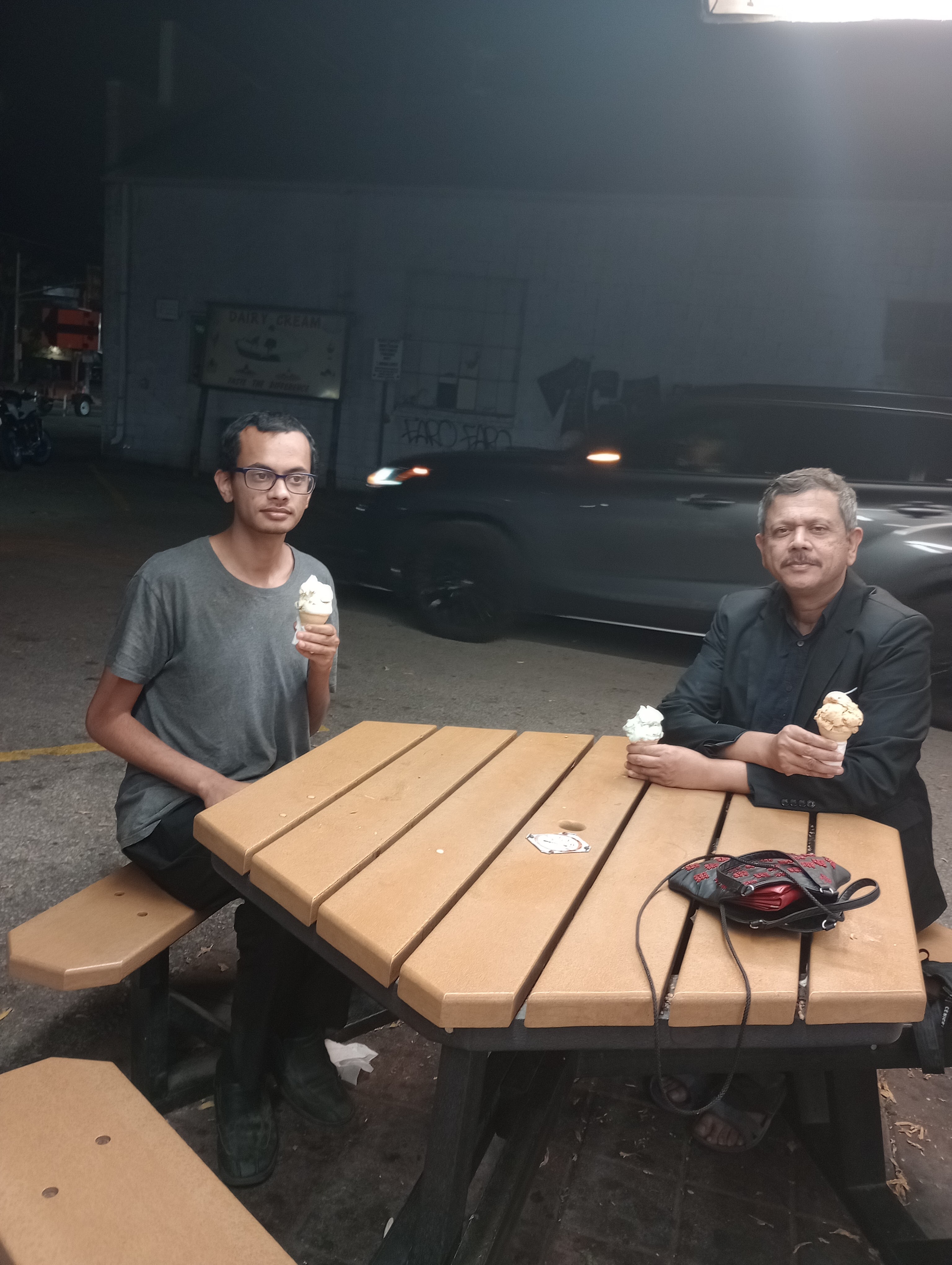
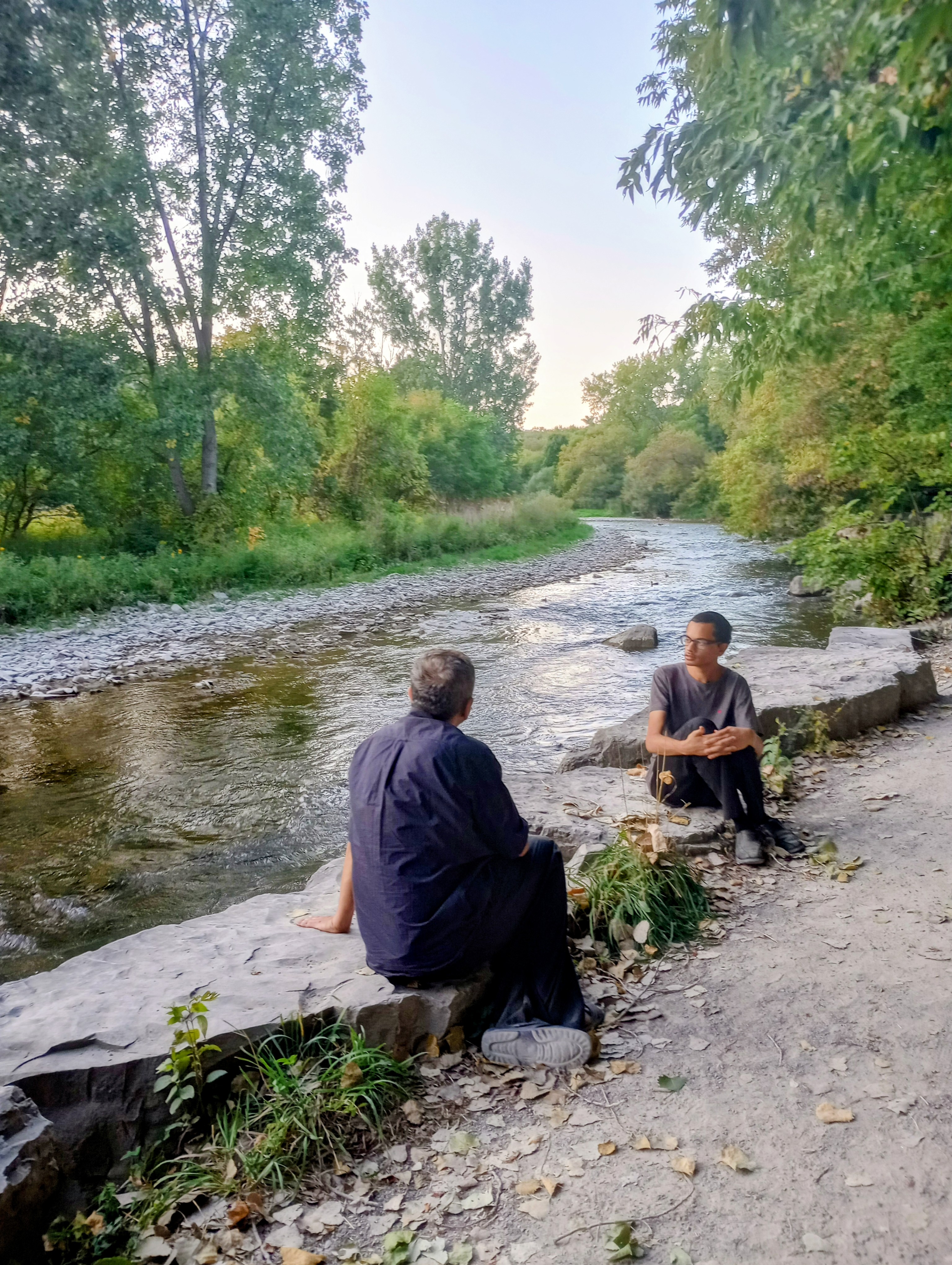
Last week, sitting in High Park, Toronto, I reconnected with a friend. We first came to know each other when we were in our late teens, early twenties, doing undergraduate studies. We have stayed in touch over the decades. Remembering the times when we used to go to see the New Wave Parallel Cinema movement movies at Shakuntalam theatre, a precursor to the many book clubs I have been a part of – in Delhi, Tripoli- Libya, Canada- made me relook at the Metaphors one can learn from the movie Junoon (1978).

Earlier Perspectives- Dissecting Pinjar – by Amrita Pritam, written in 1950

See Blog

Amrita Pritam wrote Pinjar (The Skeleton) in 1950.


Key Details

DetailInformation
TitlePinjar (English: The Skeleton)
AuthorAmrita Pritam
Year of Publication1950
LanguagePunjabi
GenreNovel, Partition Literature

The novel is a landmark work of Partition literature, telling the poignant story of a Hindu woman’s life during the violence and upheaval of the 1947 Partition of India. It was later adapted into an acclaimed Hindi film in 2003.

We discussed this book and movie in Tripoli Reading Group-2015

Pinjar- 2015-Tripoli Reading Group

Aj Aakhan Waris Shah nun,

Kiton Kabraan Vicchon Bol

Te Aj Kitab-e-ishq daa

Koi Agla Varka phol

Today, I call Waris Shah,

“Speak from your grave”

And turn today,

The book of love’s next

Affectionate page

Ik roi si dhi Punjab di

Tun likh like mare vaen,

Aj lakhaan dhian

Rondian, tainun Waris

Shah nun kaehn

Once, a daughter of

Punjab cried

And you wrote a wailing

Saga

Today, a million

Daughters, cry to you,

Waris Shah Rise !

Pinjar-by Amrita Pritam..Arc of development of characters | grace readings

WORKSHEET-DISCUSSION QUESTIONS

1- In the blog, which piece of literature introduced him to the world of books in grade 3. How does the sense of Ontological Time develop in book clubs through discussion of the work-Junoon /Flight of Pigeons set in the 1857 Mutiny of India.

2- What was Miriam’s Gambit using the Family insitution and nuance of feminine power to Counter Javed Khan-the barbaric obsessive power.

3- How do works like – Heart of Darkness -Joseph Conrad (1890s Congo Africa) and Pinjar-Amrita Pritam (1940s-Partition of British India) help see the family institution and the effects of forces of Colonialism

4- Read a passage from a book and discuss how the story will be different if told by the perspective of another character.

5- Go to a Theater and watch a movie- and develop a sense of Ontological Time- being without clocks and calendars.

DOWNLOAD WORKSHEET

Posted in Art, Everyday History, Letters, Parenting, Reading Journal | Tagged , , , , , , , , , | Leave a comment

Central Island Toronto 2025 Fall: On Songs of Identity and Archetypes

Bronte Outer Harbour-Lakeshore-Ontario-Walks in Fall-2025
Toronto Central Island-Walks in Fall-2025- A Thinking Place

On Friday 10th October we went to Central Island, Toronto. We listened to Manna Dey songs while driving. Later, we did a reflection on the root Ragas of one of the songs. The song, Yaari Hai Imaan, has roots in Raag Bhairavi and Raaj Khamaj. The music directors Kalyanji-Anandji wove these elements skillfully into the song.

Reflection points-Memories, Thoughts, Sensations, Feelings

Memories- we remembered similar walks in Malta-Oct 10-2010-in Upper Barrakka gardens area and the ramparts overlooking the bay. On reflection on this at Caldense Bakery, Symington, Toronto, I felt the joint energies of friends. I experienced the power of friendships and associations. 

My father was one of my best friends ever. He lived by the principle that a son is a son till 16, after that he is your friend. He remains, one of my best friends ever. Family Photographs, Shafshoofa Maleshi, and Humber are three blogs. They tell of some associations which have enriched life in many ways. 

Friends and Brotherhood

2024 December-Dehradun-India

Last week, I had an interesting discussion with a family member around his birthday. We recalled the family journeys through Shimla, Himachal Pradesh. We talked about our walks and talks together through the decades. We remembered what it was like when our fathers were alive. 

We remembered the meals which our aunts made for us and the shared camaraderie of brotherhood. How conventional marriage affects life and expectations and on the roads traveled and not traveled. 

This made me look back at the walk and story discussion I had with Sahil in Bruce Trail-Tobermory in the Spring of 2021, on Mysterious Persons

How does the world look like, feel to the character

This is one of the purposes of description

Professor Tim Spurgin- Art of Reading

Angry Young Men

Caldense-Symington-Toronto-Thinking Places-Oct 2025

The song Yaari Hai Iman- was part of the movie “Zanjeer” (1973) which in many ways defined Indian culture. Prakash Mehra directed the seminal film. It crystallized the “Angry Young Man” archetype. The movie forever changed the landscape of Indian Popular Culture.

In the series “Angry Young Men” writer Javed Akhtar discusses the director’s hesitation. The concern was about portraying a hero-protagonist who does not sing and dance. The financiers and directors trusted the writer duo Salim-Javed. They made the film in the way conceived by the duo. The gritty urban narrative centered on Inspector Vijay Khanna. He was a brooding, honest police officer. His childhood trauma and burning wish for justice defined his identity and life direction. These forces deeply resonated with the Indian youth in the first post-independence generation.

Songs of Identity

Song-Yaari Hai Imaan

Singer-Manna Dey

Music- Kalyanji-Anandji

Lyricist- Gulshan Bawra

Ragas- Bhairavi Khamaj

Angry Young Man Archetype

Film- Zanjeer -1973

Portrayed by-Amitabh Bachchan

Writer-Salim Javed

Director-Prakash Mehra

This made me remember two other memorable movies which portray the Angry Young Man -Archetype

Film- Ardh Satya -1983

Portrayed by- Om Puri

Character-Anant Velankar

Writer- D A Panse (story); Screenplay and Dialogue: Vijay Tendulkar

Director- Govind Nihalani

Film- Albert Pinto Ko Gussa Kyon Aata Hai

Portrayed by: Naseeruddin Shah

Character-Albert Pinto

Writer- Story and Screenplay- Saeed Akhtar Mirza

           Dialogues-Saeed Akhtar Mirza and Kundan Shah

Director- Saeed Akhtar Mirza

Summary and Worksheet

On a beautiful fall day of October 2025, father and son went to Central Island Toronto. Later they reflected on cultural identities shaped by songs and stories of Indian cinema. They discussed family journeys and deepened their understanding of “How does the world look like, feel to the character”. I also recalled talking with a dear family member on his birthday. We shared nostalgic memories of our family journeys from decades ago.

Posted in Diary, Learning, Reading Journal | Tagged , , , , , , , , , , , , , | Leave a comment