Which historiography..In search of the Unknown worker.

Just as every country has a tomb for the unknown soldier, every country should have a tomb for the unknown worker.  As part of exploring “Everyday history” to understand reality of working people in terms of their concrete lived experiences, we examined the theme of peasant consciousness. On the occasion of Naxalbari day-(25th May is observed as Naxalabari day by  revolutionaries in India)  a landmark in peasant struggles in India. The issue of consciousness of peasants took us into the issues of historiography. In this three part blog series we will discuss different issues relating to effects of colonialism on peasant struggles, lessons we can draw. This is especially relevant in the context of today’s Arab Spring where we saw in Libya how the genuine people’s struggle for freedom had a much altered dynamics due to protracted bombing by NATO.

To see articles relating to ground level view from perspective of common people

See articles:  Tripoli is “Free” http://epw.in/epw/uploads/articles/17458.pdf
Friends of Bouazizihttp://www.chowk.com/Views/World/Friends-of-Bouazizi

Peasant struggles and consciousness were the focus of our discussions. A Canadian of Iraqi origin was explained the context of the peasant’s struggles in India in response to extraction of surplus, rack-renting by landlords, moneylenders and the state.  He could empathize with this and said that he had such examples in his home country Iraq. The Aali-azarchi movements which lasted about 3 years before being violently suppressed were a constant headache for the semi-feudal landowners and the state. The nine-day strike of Kirkuk oil workers in 1946 was suppressed brutally.1956 (Suez Crisis) had a massive impact on Iraq, with demonstrations against the Iraqi regime who were seen as British stooges. The Palestinian issue also helped radicalisation. Some still wonder why there wasn’t a revolution in 1956!

( http://www.reocities.com/pract_history/scud.html)

The Marxist historiography viewpoint

Marxist literature has contributed to the debate of peasant consciousness. According to Marxist definition, consciousness is not something temporary or transient. It is a historical consciousness generated by long –term class exploitation of the peasantry. Those who support this theory of peasant consciousness have their own followers.However, given that peasants can come together and raise the banner of revolt on certain issues, have factions and fight with each other and are also differentiated even when considering a narrow category such as “middle peasantry” , terms such as peasant consciousness’ have to be used with considerable care keeping in view the situation and context

The viewpoint that peasant struggles took place in response to extraction of surplus based on Marxist theories of class conflict treated caste as temporary aberration. Sociologists who have studied caste in rural India have argued that caste has taken new forms and have been strengthened in certain contexts.

( L.S.Vishwanath-Peasant movements in Colonial India. An examination of some conceptual frameworks)

The Subalternist historiography viewpoint

The paper by L.S.Vishwanath also discussed in detail the second major conceptual framework for understanding peasant movements put forward by Ranajit Guha. Guha argues that in what he terms “primary” and “secondary” discourse, the elite have appropriated to themselves the historiography of the peasantry.

Primary discourse- The colonial rulers presented their own viewpoint describing the peasant revolves as “terrible insurgencies” which should be crushed immediately.

Secondary discourse: The Indian elite appropriates to itself peasant

history by putting forward its own view and claims credit for providing the leadership.

Tertiary: Guha also puts forward the view that there is a third type of discourse, namely, ‘tertiary’,

in which the radicals appropriate peasant history to their ideology.

(Ranajit Guha: The prose of counter insurgency:Subaltern studies Volume II-page 15)

History from below

In other words, the main thrust of Guha’s argument is that instead of the elites (Indian or foreign) and radicals appropriating peasant historiography, the ordinary peasants should be allowed to project their own viewpoint. In the whole tenor of Guha’s formulation, it is implied that a historiography of ordinary peasants is necessary and this will give an impetus to peoples’ historiography or history from below.

Rejecting text book view of society

Efforts of scholars like Guha to write peoples’ historiography as distinct from elite historiography is somewhat similar to the efforts of social anthropologists to study social institutions, politics, rural economy, etc, from below at grassroots level through village studies. The ‘textbook’ view of society is rejected by such exercises.

(summarized from L.S.Vishwanath’s article

http://www.cscsarchive.org:8081/MediaArchive/audience.nsf/(docid)/42F2D883D457269B6525724B003EB8F3

What is the history of your organization or community?

Is the history of your organization or institution just a rhetoric of what certain “Board members” say or do? Does the common patient have any say in your institution’s running? Does your institution ever survey them for opinions?

Is our history in Arab spring only limited to what some “Big Leaders” said or did? How many million dollars were transferred? Or do you know of a Teddy bear which a child left behind while fleeing the conflict?

These are some questions which we will examine as we go through paths -commemorating the heroic sacrifices of peasant martyrs in India. These links are international, worldwide and enduring. One has to search for the links.

In next blog we will examine some critics of the different theories and related discussions.

Through these discussions we seek to explore the meanings and hopes for the Unknown Worker.

Posted in Arab Spring-Libya, Learning, life | Tagged , , , , , , , , , , , , | 4 Comments

Everyday history -Burnout dissected

This Friday, our weekly meeting of “Everyday History Society” had a very interesting extended discussion on the issue of Burnout which we had examined in brief previously

See blog: https://prashantbhatt.com/2012/05/20/check-burnout-forum/

Dr.V.Natarajan (Nattu Bhai) summarized the article findings and discussion of McManus et al –Stress Burnout and doctors: attitudes to work are determined by personality and learning style. (BMC Medicine 2004:2:29)

Radiology department-LBMC, different professionals,                                           managers, doctors, dentists,Staff nurses, radiographers                                               of different nationalities and backgrounds have varying                                    approaches to Issues..                                                                                                                Our Front desk Manager-                                                                                                    Mohamed Shweki has an interesting style..                                                                         will not get Burnt out easily ..   see blog-                                                                          Learning From Shweki-https://prashantbhatt.com/2012/04/08/learning-from-mohamed-shwki/ 

Some interesting points which emerged from the subsequent discussions

Attitude of service helps

Dr.Emad Tabana who originally trained in Iraq and has seen the Yemeni , Libyan, Canadian systems of medicine related his change in attitude which led to improvement.

“Till 4th year I used to faint at the sight of blood. One day, I was in the casualty and many persons with serious injuries were brought in. I wanted to help them out, and I spent a long time doing so. After a few hours, when I was immersed in helping the wounded I realized that my clothes were full of blood. But I was no longer afraid of blood. From that day, my attitude was not to focus on my fears but to try and help the patients.”

Does our Exam system foster a particular style of learning?

“To pass the exams one should know the examination system, to practice the subject one needs an understanding”..This old aphorism has been going on in different medical circles in some form or other.

If one does not know the MCQs in the Question bank of the past 10 years, one is not going to be able to even qualify for the entrance in Post graduate courses.

If one does not know the over 30 differential diagnosis of Solitary Pulmonary nodule one cannot hope to pass your MD exams.

But if you have to run a practice or manage a department, these MCQs and Differential diagnosis are not going to help.

So where are we going to find the balance.

Probably it depends on which phase and level of practice one is.

Interesting framework for discussion

The meeting was interesting as the article gave a useful reference to discuss

different issues relating to learning, personality, work stress and practice as

related to modern medicine.

These can be applied to any field.

Main headings

The following are some of the main headings under which they approached

Those interested can go through the main article

BMC Medicine 2004, 2:29 doi:10.1186/1741-7015-2-29

Approaches to work

Surface disorganised: Feeling overwhelmed by work. For example, being unsure what is needed to complete a task, finding it difficult to organise time effectively, reading things without really understanding them.

Surface rational: Preference for order, detail, and routine. For example likes to know precisely what is expected, puts of a lot of effort into memorising important facts when learning something new.

Deep approach: Integrative approach that leads to personal understanding. For example, tries to relate new ideas to situations where they might apply.

Workplace climate

 Choice-independence: Perception of control over what one does and how one does it.

  Supportive-receptive: Perception that help is available in the workplace and colleagues are understanding.

 Workload: Perception of heavy workload and having to cope alone.

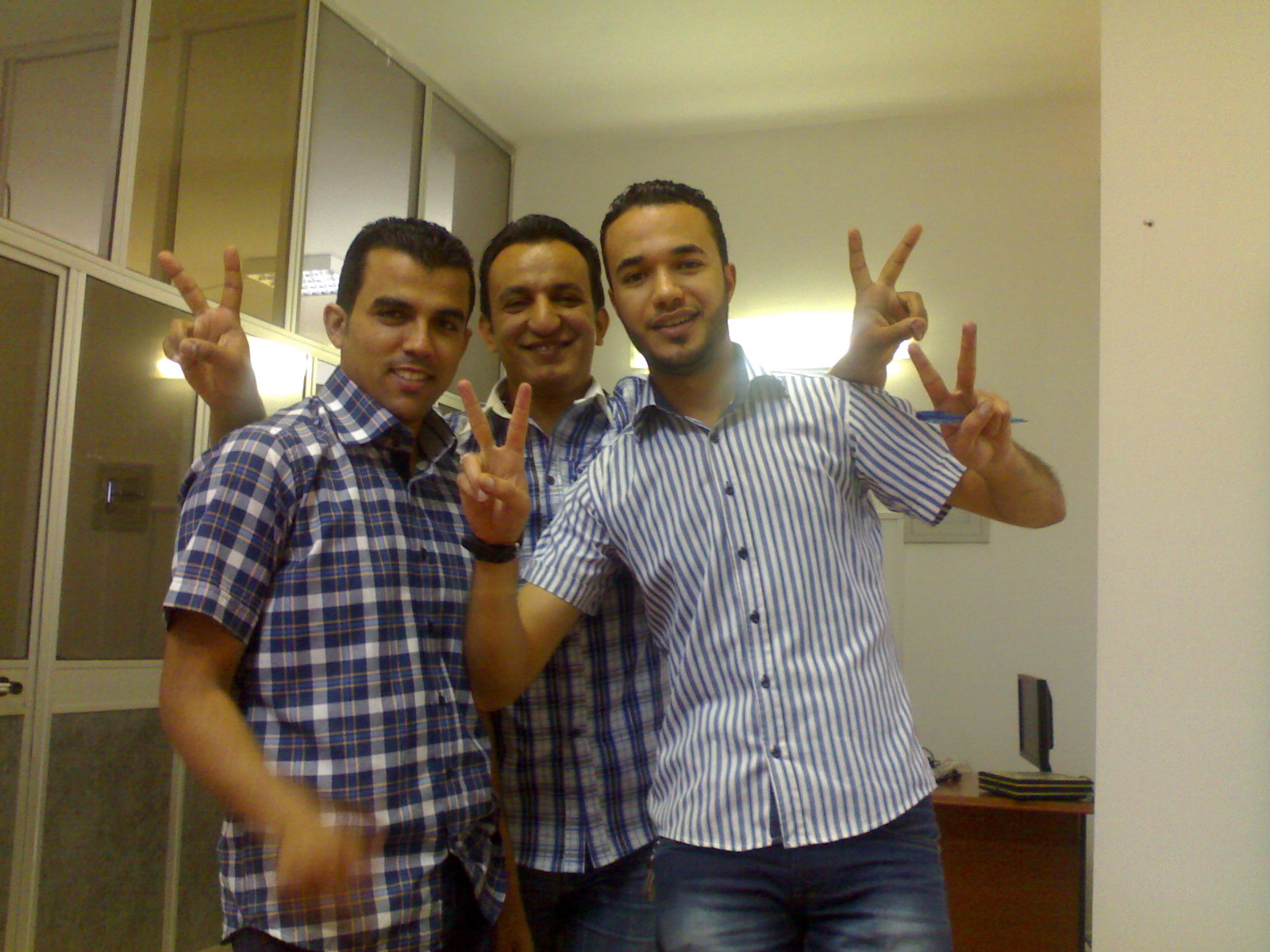
Many components are required to run a                                                                                 healthcare institution :                                                                                                                  The Information Technology and Accounts team                                                                              in our organization has a mix of young and not-so-young                                                     and each have a different energy which make a creative whole. 

The three separate components of burnout. Note: burnout on the MBI is indicated by higher scores on the emotional exhaustion and depersonalisation scales, and lower scores on the scale of personal accomplishment.

 Emotional exhaustion: Reduced energy and job enthusiasm; emotional and cognitive distancing from the job.

 Depersonalisation: Cynicism; lack of engagement and distancing from patients; treatment of patients as inanimate, unfeeling objects.

 Personal accomplishment: A sense of efficacy and effectiveness; of involvement, commitment and engagement; of capacity to innovate, change and improve.

Differences in motivation and process of the surface, deep and strategic approaches to learning assessed in the Study Process Questionnaire

Surface

 Motivation      Completion of the course Fear of failure

Process           Rote learning of facts and ideas

Focussing on task components in isolation

Little real interest in content

 Deep

 Motivation                   Interest in the subject

Vocational relevance

Personal understanding

Process                        Relate ideas to evidence

Integration of material across courses

Identifying general principles

Strategic

 Motivation                  Achieving high grades

Competing with others

To be successful

Process                        Use techniques that achieve highest grades

Level of understanding Patchy and variable

Some interesting quotes from the article

The child is the father of man….William Wordsworth

Genes are not destiny, so neither personality nor learning style are destiny,

Nurture interacts with nature.

The education forms the common mind,

Just as the twig is bent, the tree’s inclined…..Alexander Pope

Concluding thoughts of  Sir William Osler (1849–1919), one of the most distinguished

physicians of the nineteenth and early twentieth century, who recognised that only

some doctors are happy in their professional lives:

“To each one of you the practice of medicine will be very  much as you make it –

to one a worry, a care, a perpetual annoyance; to another, a daily joy and a life

of as much happiness and usefulness as can well fall to the lot of man.”

 Everyday History themes

This article forms a series of different trends of Every day history

observed in our group.

Some other suggested reading for those interested are as follows.

For “Mass Observation themes” see blogs

Mass Observation –Tripoli

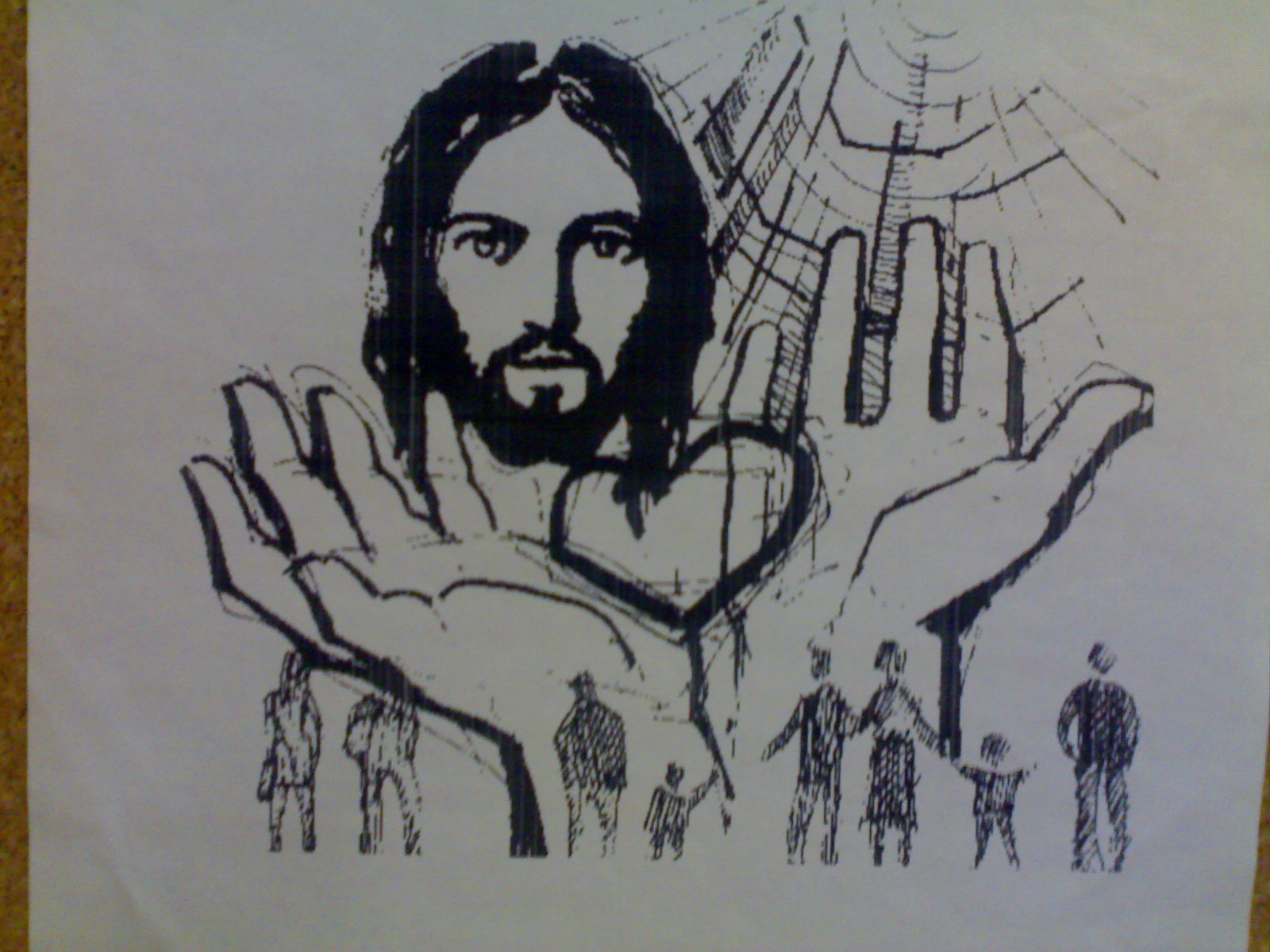
A poster at the San Francisco Church-Dahra-Tripoli:                                          Examining spiritual traditions as relevant to the common people                                       we explore their faith and meaning which different                                               expatriate communities find in them.                                                                                   In themes relating to subaltern historiography we are not                                      dismissive of faith based groups as is the case observed in                                                   some other forms of historiography.
For some interesting insights –see blog
https://prashantbhatt.com/2011/12/30/tripoli-reading-group-year-end-meeting/ 

Conversations in Faith and Belief

https://prashantbhatt.com/2012/04/13/conversations-on-faith-and-belief/

Musings around Easter-Remembering St.Augustine of Hippo

https://prashantbhatt.com/2012/04/29/musings-around-easter-remembering-st-augustine-of-hippo/

Mass Observation –Malta

Exploring Spiritual Traditions-Ta Pinu monastery Gozo

https://prashantbhatt.com/2012/05/15/exploring-community-spiritual-traditions-ta-pinu-sanctuary-gozo/

Conversations on Identity-Workshops in Malta

https://prashantbhatt.com/2012/03/02/conversations-on-identity/

For “History of Humanity series” see blogs

Remembering Hay Market

https://prashantbhatt.com/2012/05/01/the-eight-hour-day-remembering-hay-market-in-tripoli/

Remembering Studs Terkel.

https://prashantbhatt.com/2012/05/18/remembering-studs-terkel-i-want-to-conserve-the-blue-of-the-skies/

For “Management related issues in context of Libya-see articles

On Motivation

https://prashantbhatt.com/2012/05/13/who-is-motivated-lessons-from-dog-biscuit/

Pygmalion Effect

https://prashantbhatt.com/2012/04/23/first-line-managers-pygmalion-effect/

Cascade Effect

https://prashantbhatt.com/2012/04/25/cascade-effect-in-organizations/

For issues related to Arab Spring-Libyan experiences

Using “Life Story interview guidelines interview series” see articles

One year on-What is the Change https://prashantbhatt.com/2012/02/19/one-year-on-what-is-the-change/

Friends of Bouazizi http://www.chowk.com/Views/World/Friends-of-Bouazizi

Shafshoofa Maleshi  http://www.chowk.com/Views/World/Shafshoofa-Maleshi-Tripoli-is-Free


Saluting our Ladies with the Lamp  http://www.tripolipost.com/articledetail.asp?c=12&i=8357


Next theme-concluding thoughts

The theme of Burnout forms part of a series of examining our

Conditions which was started by the review of Aneez Ismail’s article

“Asian Doctors in the NHS:Service and betrayal”.

British Journal of General Practice, October 2007.

See blog https://prashantbhatt.com/2012/04/03/april-fools-day-musings/

This forms part of an attempt to have more informed discussions in

Our Reading groups and Everyday history society fora.

After some preliminary discussions on the nature of peasant movements

On the occasion of 25th May-which is observed as Naxalbari day in India

we will examine the different types of historiography in relation to working

people’s movements. In this we explore the themes of Structural Functionalism

as espoused by Radcliffe Brown, the Indian peasant struggles and conceptual frameworks

provided by Marxist historiography and the counter-point of Subaltern historiography.

The works and critic of the innovative thinker Ranajit Guha come to mind.

For this the root article which will form a framework for discussion is L.S.Vishwanath’s

“Peasant Movements in Colonial India An Examination of Some Conceptual Frameworks”

Economic and Political Weekly January 13, 1990

– – –

Posted in Arab Spring-Libya, Health Policy, Learning, life | Tagged , , , , , , , , | 4 Comments

Check Burnout Forum

As part of our reading group, for the past week, we have had some interesting

discussions and readings on the theme of “Burnout”

Issues  of burnout in medical professionals-Doctors, paramedics, nurses,

managers in health set-ups came out.

Key features of Burnout

There is a difference between Burnout and middle-age crises, depression

though there may be overlap.(many smiles..)

An interesting article on this theme which will be discussed further in

our group -BMC Medicine 2004, 2:29 doi:10.1186/1741-7015-2-29-

lists the following components

Emotional exhaustion: Reduced energy and job enthusiasm;

emotional and cognitive distancing from the job.

Depersonalisation: Cynicism; lack of engagement and distancing from patients;

treatment of patients as inanimate, unfeeling objects.

Personal accomplishment: A sense of efficacy and effectiveness; of involvement,

commitment and engagement; of capacity to innovate, change and improve.

The different components of a health care system

While the obvious focus can be on doctors, as is the target group of the above mentioned

article, there is a scope of broadening the forum by including Nursing, paramedical,

managerial persons. On asking their concerns, the following points came through

A radiographer- He pointed out how the routine puts him off, and now he

has been doing the same thing for almost a decade

It does become a bit difficult, especially at the end of a long day

when an overbearing person comes with the backing of management

to push things down the throat of a tired technician

Nursing– They just give us orders, not giving us the respect which is due to

a person who is involved in patient care.

“Just give me the pethidine” one senior doctor says in a harsh tone

Managers– In health care industry, we are dealing with people.

These are not commodities, and hence complex human issues are involved

The delivery is done by experienced medical professionals who

have their own base. It is difficult and frustrating to balance these

factors, while also meeting certain targets and parameters set up

by the “Board of Directors” . We are caught in between powerful

professionals with their years of experience (and egos) and powerful

finance board directors

– – –

Hopefully this forum will evolve to start a more fruitful discussion on issues concerning

Burnout and how to check it.

Posted in Health Policy, Learning | Tagged , , , , | 8 Comments