Exploring Worker Poets

Reading groups can be an effective way to delegitimize the hegemonic discourse of predefined social roles and labor divisions (both inscribed into the acceptance of the normality of the working days’ time-schedule). As long term expatriate workers we found many rich avenues in study of Art history, Managerial issues, exploring themes of literature, history and faith.

(In this three part series we will discuss the technologies of government in manufacturing anti-citizens, the narrative of alternative life-stories as a way of generating identity and the role of cultural production as an act which delegitimizes the hegemonic discourse of predefined social roles and labor divisions)

For previous entries see blogs

Easter discussions again

https://prashantbhatt.com/2013/03/17/easter-discussions-again/

Migrant Nights

Migrant Nights

THE TRIPOLI READING GROUP.

It all started with a routine medical consultation which blossomed into a meeting a Funduq Kabir –Grand Hotel in which one of the teachers started talking about Subalterns.
Over the years, we have searched for subalterns, medical refugees, persons displaced due to war and conflict in Subsaharan Africa and Libya.

“Keep the group informal so that later on, there are no fights over who will be the president or secretary,” the initiator told, having seen many such groups. Over the years, we have had some rich exchanges, have carried the concept across continents and engaged with persons of different vocations and disciplines who added rich perspectives and nuances to this effort.

Those interested can see blogs under tag of https://prashantbhatt.com/tag/tripoli-reading-group/
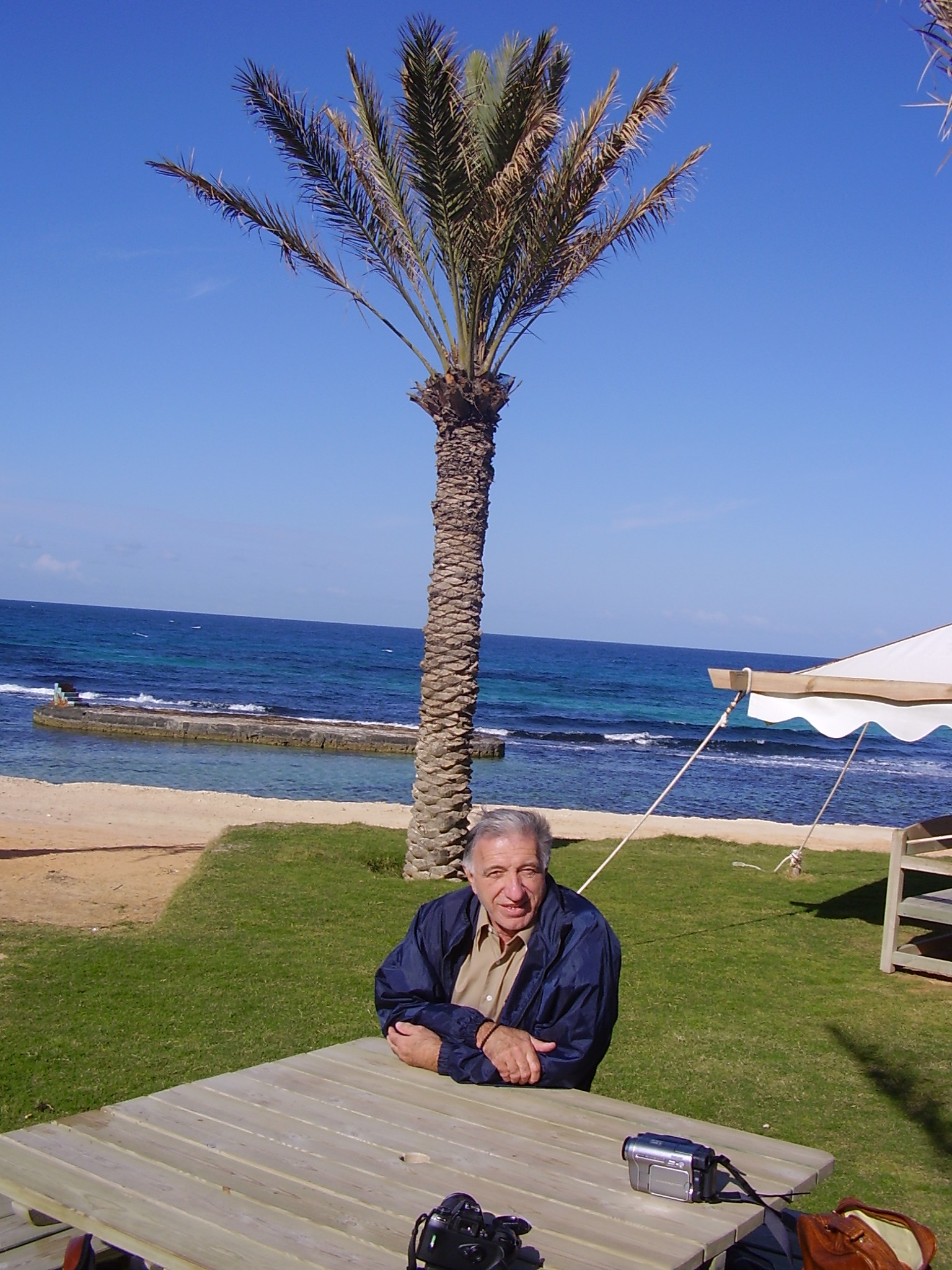
Reading Groups
Over several discussions in Regatta, this veteran doctor, Dr.Dragomir
a surgeon from Serbia explained to me some nuances regarding NATO Missions
and how the civil war affected a full generation and beyond.

EXPLORING ARCHIVES-DELEGITIMIZING HEGEMONIC DISCOURSE

In his archival research on Saint-Simonian workers of nineteenth century France, Jacques Rancière focused his historical interest on a group of exceptional worker-poets who devoted their nights to intellectual production (verse, prose, song). His core argument is that turning upside down the days’ time-zones and proceeding to cultural production was a revolutionary act in itself (more radical than claims for better working conditions), because it delegitimized the hegemonic discourse of predefined social roles and labor divisions (both inscribed into the acceptance of the normality of the working days’ time-schedule)

Jacques Rancière, The Nights of Labor: The Workers’ Dream in Nineteenth-Century France
(Philadelphia: Temple University Press, 1991).

SAFIR..EXPLORING BERLIN WALL MOMENTS.
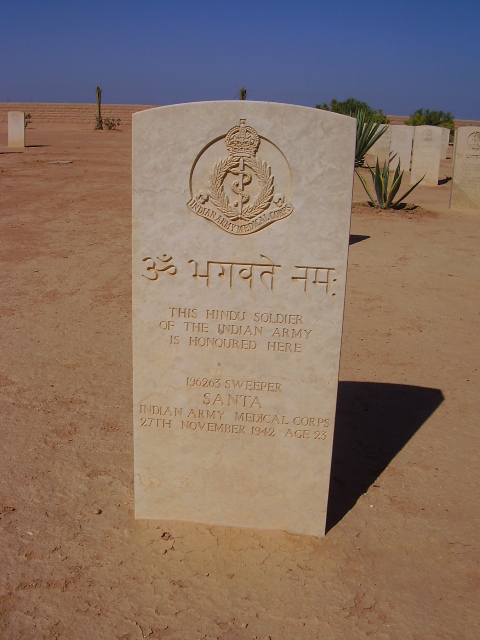
Exploring Legacies
Tobruk war cemetery. This Hindu Soldier of the Indian Army is honored here.
Santa-Indian Army Medical Corps, November 27,1942, Age 23

Over the years, the war and subsequent Freedom, the talk about forming a New State and the layers which one goes through in this, has led to many interesting discussions.

Safir is the Indian food restaurant where we meet. As expatriate workers, we find many interesting undercurrents and a sense of Déjà vu.

Berlin Wall moments- Was the self-immolation of Bouazizi the Berlin Wall moment for the Arab world? How many Billionaires in the post-Soviet era are going to act as models for some of the rebels? What is difference between rebellion and revolution?

How do you end a revolution ? Or is it an on-going process?

REMEMBERING GRANDFATHERS-FRIENDS OF BOUAZIZI

When asked about his grandfather, I felt very close to the soul of this dedicated doctor.

“My grandfather was a simple man, born around the beginning of the 20th century. He worked as a guard in the Mehtiga area. Our family had little money. My father worked as a helper in the homes of Italians.When Libya became free he got a chance to educate himself. He learnt English and even represented the community in a council for local affairs. Some of his work was covered in local newspapers. He could speak and read English better than me, the doctor in his mid –fifties told with a tinge of pride and nostalgia as he remembered his father. Our families lands were taken away to build the military base of Americans in Mehtiga.”

For a more complete nuanced version of these interviews and narratives see the Chapter-Friends of Bouazizi in the book –Shafshoofa Maleshi

Books

* * *

PARTNERSHIP WITH PATIENTS

Partnership with patients-
This blind girl taught us a few things about going into nuances..
Over the years we have collected some interesting narratives
on how patients navigate the layers of health care delivery

As I looked at a book on Picasso and prepared notes to discuss Guernica and its relevance in present day Arab world, the mind’s eye went to the discussion which led to our Reading group.

The seeds of a discussion over tea, initiating the Reading group has had many interesting manifestations which help break the hegemonic discourse of predefined social roles and labor divisions

WHO MOVED MY CHEESE

In coming entries we will discuss / review the processes of
the Exit Interview

While organizations following mature managerial practices use the tool of Exit Interview, we as long term workers in a private organization have used this as a comparative study.

I keep doing the same thing again and again and expect different results

Who moved my cheese

See relevant blogs

The Exit Interview

https://prashantbhatt.com/2012/05/16/the-exit-interview/

Exploring Pygmalion effect.

https://prashantbhatt.com/2012/04/23/first-line-managers-pygmalion-effect/

Posted in Everyday History | Tagged , , , , , | 2 Comments

Migrant Nights

Dissecting layers ..Art in a Migrant Night

Dissecting layers ..Art in a Migrant Night

Alternative life stories made me realize that visa and passports are not what make life, though they do have an important bearing.

In the previous blog https://prashantbhatt.com/2013/03/17/easter-discussions-again/ we had discussed regarding Anti-Citizens, which some workers also term as Non-Citizens.
The limitations of nationalism make some other workers talk about Global citizens.
Whether it is Anti or Non or Global, people do develop life around the places where they work for long.

ALTERNATIVE LIFE STORIES
“Her husband is dead. Her lovers are dead. But she is still going strong” one long term expatriate
Told as she introduced me to this lady who first came to Tripoli in 1968 during the time of King Idris. She was from former Yugoslavia, presently holder of a Slovenian passport, but Tripoli is home to her, a place where she lived and worked for 33 years.
Talking to this lady with a lamp, who served in Central Hospital-or Shara Zawia’s Mustaspha Markaizi as it is known to locals, gave me valuable insights into what has gone into building this institution of healing. She herself was trained and mentored by staff nurses who had served in the 2nd World War in Europe. These conversations and links give a window into the thinking of the managers and planners who tried to bring staff from foreign countries to service the population. Each of them brought their experiences, cultural issues and attitudes and taught the local staff nurses in their own ways issues of ward management and patient care which reflect in these institutions to this day.
The work of staff nurses in arranging the wards, ensuring that supply of medicines, dispensing treatment and preparing them for more complex interventions like surgery cannot be understated.
Talking to this veteran who served in the Libyan health care system for 33 years after having initially trained in Yugoslavia made me realize further the depth and meaning of the African proverb
“He who upsets a thing, must know how to rearrange it.”

(To read the complete narrative see book- In Transit at Dubai International. This book includes narratives of expatriate workers from different continents who have worked in the Arab world for long) https://prashantbhatt.com/books/

The association with different communities and traveling through time made one feel closer to other expatriates and Diaspora who had made Tripoli their home.

MIGRANT NIGHTS
Emilia Salvanou, in her paper “’Migrants’ Nights’: Subjectivity and Agency of Working-Class Pakistani Migrants in Athens, Greece aims to elucidate migrants’ agency towards the marginalizing hegemonic discourse that constructs them as anticitizens.
Among the most interesting forms of resistance elaborated in this context is the narration of alternative life-stories. Through such life-stories and the subjectivities they embody, the hegemonic discourse is substituted by a discursive system which reflects their expectation and which they develop within their communities.

COMPARITIVE RELIGION
Observing different groups practice their faith and retain links with their culture can be observed at different levels in a cosmopolitan city like Tripoli.
GITA READINGS – A BOOK IN DEVANAGRI
Last meeting, Dr.Bachchoo Singh brought a Gita in Devanagri script, printed at Gita Press, Gorakhpur.
“It was given to me by Dr.Gaur, the anatomy teacher at the University who had stayed in Libya since 1974, being one of the first founders of the department.”
Dr.BS himself has been in Tripoli since 1988 and our weekly reading sessions were enhanced by this addition to our library.

A book in Devnagri Script-Exploring links and memories

READING GROUPS- DIWALI IN TRIPOLI

WHY HAS THE GREAT OIL NOVEL NOT BEEN WRITTEN-

Now some of their rich managers are returning and are being welcomed and even dinners are being hosted in their welcome. But their weak links with the local community were exposed when they fled.

The world of Oil , at least for many expatriates is a world of Camps, isolated from the bazaars and mainstream of the local communities.

Hence the observation and question of the writer Amitav Ghosh..

“Why has the great Oil Novel not been written?”

Diwali in Tripoli.


* * *
Alternative life stories made me realize that visa and passports are not what make life, though they do have an important bearing.

Posted in Everyday History, life | Tagged , , , | 2 Comments

Examining Belief and Interest-2 years since Feb 17 revolution

Abu Shafshoofa Tamlek-Graffiti in Tripoli

Abu Shafshoofa Tamlek-Graffiti in Tripoli

One person with belief is equal to 99 with interest.

John Stuart Mill

What are the public health issues in Libya today? In a population with many war-wounded and suffering families coping up, this formed backdrop of our discussions this week.

The 2013 Richard Dimbleby lecture by Bill Gates gave many useful insights into the nature of public health. As specialist medical practitioners , a fragmented myopic view can develop and one can get caught by different market forces. Lingo such as “ turn around time” and “financial balance sheets” can cloud one’s vision of seeing the human being behind the “patient”, the family behind the “client”.

The discussions and readings which followed made us look at the Libyan context of Health on the occasion of the second anniversary of the February 17 revolution.

MEDICAL CULTURE-RECORDING OUR CONVERSATIONS

The introductory segment of the lecture told about Richard Dimbleby’s contribution in exposing the famine in Ethiopia.The brutal famine that Emperor Haile Selassie had been concealing from the outside world was exposed by the documentary, The Unknown Famine. It did what great journalism is supposed to do: shine a light on the dark corners where human misery is hiding

Bill Gates talked about his journey and education in public health in the lecture.

Source: http://www.gatesfoundation.org/speeches-commentary/Pages/bill-gates-dimbleby-lecture.aspx

When Melinda and I created our foundation, we didn’t know very much about global health. We required an education. As luck would have it, one of the giants of the field—one of the men most responsible for eradicating smallpox—happened to live in Seattle, and he offered to help.

His name is Bill Foege, and he is not only a brilliant epidemiologist; he is a man of great morality. His father was a Lutheran minister. When Bill was choosing a career, he couldn’t decide between public health and preaching. His ministerial instincts still come out when he speaks about his health work. He’s one of the most articulate and inspiring leaders in a field where matters of life and death tend to be mummified by jargon and statistics.

I used to read his speeches to remind me who global health is for.

Here is a passage from Bill’s recent book, House on Fire: “In early October 1977, a couple with two small children, both with smallpox, approached the hospital in Merka, Somalia. They asked Ali Maalin, an employee, for directions to the infectious disease ward. A considerate person, he took them to the ward rather than directing them. Although he had been vaccinated, it was evidently not an effective take. Two weeks later, on October 26, 1977, he developed the last smallpox rash that Africa would ever see….” In 1978, smallpox was declared the first disease to be fully eradicated.
Bill Foege has the unique ability to see the forest and the trees, to celebrate the common decency of a man who refused to shun the sick and appreciate the historic majesty of completely eradicating a disease. He continues, quote:

“In medicine, the medical practitioner is obliged to apply the best knowledge of the times to each patient. In public health, the obligation is to apply the best knowledge to the entire human community. The purpose of public health is to promote social justice.

By 1978, public health achieved its first complete success in social justice…for current humanity and for all future generations.”

NATURE OF PUBLIC HEALTH-LIBYAN CONTEXT

Chronic pain, infections are mentioned as two areas of concern in the recently published Libyan Journal of Health. The war injured are both a source and victim of infections.Cross Border care is another issue of concern in this population which routinely goes to Tunisia, (Go-To-Tunis Syndrome) and other Arab and European countries.
Internationally, public health structure is comfortable with chronic diseases, injuries, violence, micronutrients of all kinds, and even issues of war, human rights, and poverty.

GUNS AS A PUBLIC HEALTH ISSUE
HAVING A GUN INCREASES CHANCES OF BEING SHOT!!

In the Libyan population there are many armed people. Security is a big issue. Friends from some European countries have evacuated. In a recent journal article of APHA they found that gun possession by urban adults was associated with a significantly increased risk of being shot in an assault. On average, guns did not seem to protect those who possessed them from being shot in an assault. Although successful defensive gun uses can and do occur, the findings of this study do not support the perception that such successes are likely.
A few plausible mechanisms can be posited by which possession of a gun increases an individual’s risk of gun assault. A gun may falsely empower its possessor to overreact, instigating and losing otherwise tractable conflicts with similarly armed persons. Along the same lines, individuals who are in possession of a gun may increase their risk of gun assault by entering dangerous environments that they would have normally avoided. Alternatively, an individual may bring a gun to an otherwise gun-free conflict only to have that gun wrested away and turned on them.
Read More: http://ajph.aphapublications.org/doi/full/10.2105/AJPH.2008.143099?prevSearch=&searchHistoryKey=

PRIVATE SECTOR CONTEXT

In private sector context in Radiology department, Libyan British Medical Centre we do all follow-up ultrasound scanning of chronic diseases free of charge. Over the years we have a steady flow of patients from Oncology, Infectious diseases Unit, Endocrinology, Chronic renal disease, peripheral vascular diseases, breast imaging. These are patients who require regular follow-up, find themselves facing endless delays and misguided diagnosis in public hospitals. Once they have their charts with us, they can follow-up very quickly and accurately.
Maybe this is a small step, but we do have some regular patients with whom we have formed interesting partnerships. There have been some interesting follow-ups from leading departments in the University and major teaching hospitals.

WAY FORWARD-SEEKING SHARED GOALS

While issues such as security, different tribal and regional factions and their cohorts take up time and attention the question can be that of shared goal.

Peter Drucker once said, “if everyone understands and buys into the goal, if it’s a shared goal, it doesn’t actually matter how you are organized.” He also said “that if people do not buy into the goal, or know the goal, it doesn’t matter how you’re organized.”

There are many roads to the goal, but I think a good starting point is the belief that we can improve, can do better. As the second anniversary of the February 17 revolution comes we can pledge to build on the words of John Stuart Mill

One person with belief is equal to 99 with interest.

FOR A WIDER PERSPECTIVE-SEE THE FOLLOWING POSTS RELATED
TO ARAB SPRING IN LIBYA AND HOW VARIOUS LAYERS OF DIASPORA
AND LOCALS DEAL WITH THE DYNAMICS

2011- War,evacuation, Overthrow, Musings on a Libyan camp

Touch and Go-Evacuations in Tripoli

Evacuations in Tripoli-Touch and Go

Shafshoofa Maleshi

Shafshoofa Maleshi-Tripoli is free

Notes from a Libyan Camp.

How I reached here…musings in a Libyan camp

Year End Diary

Year end diary

2012- The communities are slowly re-organizing

One Year on-what is the change

One year on, what is the change?


Diwali in Tripoli

Diwali in Tripoli.

Thanksgiving in Tripoli

https://prashantbhatt.com/2012/11/23/thanksgiving-in-tripoli/

Posted in Arab Spring-Libya, Everyday History | Tagged , , , | 1 Comment