Readings in a forest

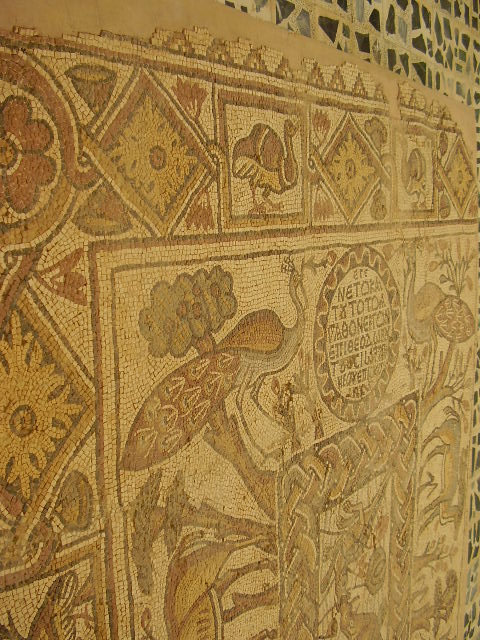
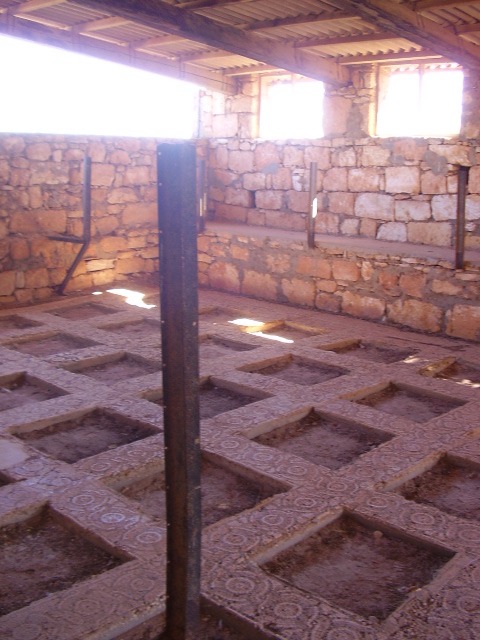
        Exploring the relevance of  cultural  symbols is an interesting theme. In the blog- A Broad Church- https://prashantbhatt.com/2014/01/03/a-broad-church/ we saw the interiors of a Byzantine time church in Eastern Libya. The floor has been excavated and the mosaics have been put as a gallery nearby.

NO SUCH GALLERY?

            “No such gallery of mosaics exist” a local driver who drives a Micro (Mini-bus) insisted when I told him about the existence of a collection of mosaics over a thousand years old. But as we went into the area of the Turkish times fortress, he realized that it was there. Hopefully I touched off a chord in him, which will make him explore things in his area which are a bit away from the routine of carrying people to their work and back. This entire region was once part of Byzantine empire just around a 100 years ago. The church is supposed to be over a thousand years ago.  Here are some mosaics I saw there. This region, is the Eastern Green mountains- Jebel Akhdar – of Libya and has some of the most stunning landscapes I have encountered.

Image


A READING IN A FOREST


  This is one of the readings of the “Walking Book Club” around four years ago, in a forest in Tripoli region. The club also includes laughing ritual- as one tries to release the many tensions of the work-week gone by. In India, it is common to find such morning Laughing clubs in parks and monument-gardens. Laughing and reading in an open space make interesting

http://www.youtube.com/watch?v=SlhvbhHDzr8

Clifford Geetz-The Interpretation of Cultures-Readings in a forest in Tripoli region-Libya-2010

ENRICH YOUR LIFE-WITH A READ A DAY

 In the first entry of this series- 500 words a day challenge-  I went through the origins of the Reading group which first met informally in Grand Hotel-Tripoli (now closed). Having been a regular diarist for over 30 years, I was wondering which things to include and not include in this series of “500 words”.  These entries will mainly be of the Tripoli region.

Other entries in this series are 1. Enrich your life with a read a day

Enrich Your life with a Read a day


2. A Broad Church

A Broad Church


3. The Personal Essay

The Personal Essay


 Image


THE MORNING POETRY SESSION

            This journey of a walking reading club has its origins in the 1970s Pune. In the blog-Walkers in Lullanagar, I wrote of one of the first poets I saw perform live.

https://prashantbhatt.com/2008/08/19/walkers-at-lullanagar/

On the hills of Lullanagar, I came across my first poet-performer. Over the years I have seen many theatre performers. But the first performer I came across was not in a theatre but on the hills of Lullanagar on morning walks.


He had a poetic name. But some people called him “Gabroo”.He used to write poems on the recent happenings in the country. He would put them down in verse and recite. He would recite about the snowfalls in Lahaul which have cut them off from the rest of the country.Or the recent politics of the country or city. At around 12 years of age, I was first introduced to the live form of this expression of events in society, through poems and words, verses and rhymes,all composed beautifully by this sweet man, whom people called ” Gabroo”,


* * *


500words_wide-e1388529158371

Part of the 500 words a day challenge by writer blogger-Jeff Goins.           

http://goinswriter.com/my500words/

For a diarist (regular since 1983) the interesting thing will be being selective


Posted in life | Tagged , , , | Leave a comment

The Personal Essay

In the previous entries we traced some beginnings of our reading group, the journeys taken by persons of different religious faiths due to their working lives and how the different aspects of community evolved through the prayer groups, schools and work-visa issues.

Maidan Jaziyer

Maidan Jaziyer-Tripoli.The mosaic of a city

THE PERSONAL ESSAY

In his essay “Late Victorians” the writer Richard Rodriguez detaches himself from the sentimental clichés and comforts of group identity (whether ethnic or sexual), while at the same time castigating himself for remaining an observer, sitting on the fence. I got this collection of personal essays from the Barnes and Noble book store in front of the Art Institute of Chicago.Remembering where one buys a book adds an interesting personal touch to it. Where one reads it in different times, with different people adds to the flavor. “You are a part time Christian,” my teenage son chides me, as he tries to come to grips to the projects of “Mass observation” which I have been undertaking for several years, mainly in the San Francisco church at Dahra, Tripoli. These have then extended into the cemetery at Shara Mansouri , near the Children’s hospital. There I came upon the tombs of Indian soldiers from the Second World War and introduced me to the space of the Commonwealth War Graves cemetery. But this space –the “Body of Christ” as some spiritual practitioners say goes back to the Khadki cantonment of Pune area in India where I first attended midnight mass as a 3 year old. Having studied in a convent (St.Vincent’s High School –Pune) till 8th standard is probably another link.

Rodriguez talks about ‘sitting on the fence’ and as one reads his beginning regarding St.Augustine – the mind’s eye goes back to a sermon by Father Daniel at the San Francisco church in which he talked about St.Augustine of Hippo and the Christian traditions of North Africa.

To see a fuller version read this blog

Musings around Easter-Remembering St.Augustine of Hippo

St.Augustine had interesting work in the field of education.

In present day North Africa education has become an important aspect for expatriate communities caught in the conflicts and revolutions. One veteran summed it up like this-In first year the workers will return, in the second year the families will return, in the third year the teachers will return. The community has gone back by three years.
What type of student are you dealing with? I asked one parent.

Musings around Easter-Remembering St.Augustine of Hippo

“St.Augustine writes from his cope of dust that we are restless hearts, for earth is not our true home. Human unhappiness is evidence of our immortality. Intuition tells us we are meant for some other city.”

PORTRAIT OF A CITY

“Late Victorians” is also a masterly portrait of a city (San Francisco) , a time and a plague. It exemplifies the mosaic technique of constructing a coherent essay from the seemingly fragmented materials of daily life. The daily walk used to be a regular feature once, but now it is better to walk within Abositta rather than go into the open spaces and arcades around Maidan Aljazier as we used to do in earlier times. The sketch of a city waking up, and also in different times of the day, is an interesting way to relate and reflect.

* * *

500words_wide-e1388529158371

Part of the 500 words a day challenge by writer blogger-Jeff Goins.

My 500 Words: A Writing Challenge


For a regular diarist the interesting thing will be being selective
Posted in life | Tagged , , , , | 1 Comment

A Broad Church


           We met over the reception of our hospital, and then he gave me a beautiful gift- a view into the Tripoli of the 1990s before the days of the embargo and then the following times. Before the informal –Tripoli Reading Group- met in the Grand Hotel for a coffee some more experienced members of the community helped sketch some pictures of the aspirations and issues of the community.

A BROAD CHURCH         

Image


  A Broad Church-The flooring of a Byzantine time Church in Eastern Libya.

Seeing the tiles and mosaics of many centuries ago makes one reflect on the

different mosaics of life of expatriate communities. Some seniors helped me map these journeys….


            Walking through the St.George Church of Medina and seeing first hand the Greek Orthodox tradition , their chants and hymns was a life-changing experience. When the church was renovated I saw Indian workers carrying out the tasks. I recorded some of these in my diaries. The community of expatriate workers is a broad church with workers from different continents coming and building a new life over here. The different issues faced in different stages and phases of life as seen through the prism of an expatriate worker without any formal government or corporate support were a learning experience.

LESSONS FROM JEEVAN –

Together- Developing perspectives,mapping journeys

The journey of Jeevan from Karnataka makes me recall a journey of one “Bomma” whose story is written and traced by Amitav Ghosh in his book “In an Antique Land”. In an in depth anthropological study, Ghosh traced the journey of the worker-slave ‘Bomma’ around a thousand years ago. Through his different researches, Ghosh surmises that this person was probably from what is modern day Tunisia, he lived and worked in Egypt before going to the Western India via Aden. He lived in what would be modern day Karnataka, and had a successful and influential relation with his employer and would do trade-journeys for him to Aden.


We, workers from the Indian subcontinent, have done a reverse journey of sorts, and live in North Africa having trained and gained initial work experience in India. Given the different professional, managerial attitudes of private organizers, we have refined our approach and realized over the years that –Together, we can map out a better journey


For a more detailed version see this blog

https://prashantbhatt.com/2012/10/21/learning-together-lessons-from-jeevan/


THE INDIAN SCHOOL

            “The drafting of the constitution of the Indian school was done in the house of a person who worked in the Man-Made River project and had training as a lawyer” the veterans sketched a picture of the Tripoli of the 1970s when the community efforts crystallized around a school. These nuances come through our weekly walks at Abositta Ferasiya and the many discussions we had. In 2013 when one saw the brave efforts of some community organizers to re-build the school, one can trace the links with similar efforts around 40 years ago.

            We met over the reception of our hospital, and then he gave me a beautiful gift- a view into the Tripoli of the 1990s before the days of the embargo and then the following times.

A COMMUNITY DIARY

            Maintaining a community diary can be a great way to enrich one’s perspective. In these journeys I was helped by seniors who helped map many journeys, told about the constitutions and buildings where they prayed, their children studied and where they went to put their papers in order for the yearly “Akama”.(Visa)


500words_wide-e1388529158371
Part of the 500 words a day challenge by writer blogger-Jeff Goins.

My 500 Words: A Writing Challenge


For a regular diarist the interesting thing will be being selective

Posted in life | Tagged , , , , , | 1 Comment