A letter to a loved one who has passed away

A LETTER TO A LOVED ONE WHO HAS PASSED AWAY

The legendary basketball coach John Wooden writes in his book “Coach Wooden’s Pyramid of Success” about the concept of writing a letter to a loved one who has passed away. He would write a letter to his wife, and then file it away every month. Over time, this led to an interesting collection and rhythm.

13-walks-by-alaknanda-garhwal

Walks by Alaknanda-Garhwal Himalayas-India.Near the bridge connecting
Srinagar and Kirtinagar. The priest in the Bilu-Kedar temple nearby knows our family for generations. A nice place to write a
letter to a loved one who has passed away.

In the previous entries, I have written about the letters, notes which helped shape my habit of keeping diaries, journals, and using them to facilitate Reading groups. My grandfather-a political science teacher- was the first person who would write letters to me from Moscow in the seventies, correct them and return with suggestions. When he returned to Pune in 1979, we would go for morning walks together. The introduction to the magic hour when night turns into day, is a gift given to me by my father. Writing letters to them now, when they have passed away for many years, made me examine the debates between Freud and Jung and look closer at the works of playwrights such as Trevor Griffiths.

TO MY FATHER-A MEDICAL DIARY

The work diary and pharmacokinetics notes of major drugs which you used to keep and revise regularly continue to shape my work. In remembering the numerous institutions to which you were exposed in your career as a military doctor, I start with the time when we went to Christian Medical College Vellore in 1973 to specialize in Cardiac Anesthesia. In that exposure to concept of super-specialization, I realized the need to be an expert in one body of knowledge as knowledge is ever expanding and one cannot know everything.

Applying this concept to the field of medical radiology, for the past several months, I have streamlined the running of a department using the Operating systems of Magnetic Resonance Imaging. In Radiology drugs are not used as often as in Anesthesia. Ours is the field of Differential Diagnosis. Hence I have kept a monitoring chart of universal differential diagnosis and keep a regular log of the number of cases which fall into each category. This has helped me bring into sharp focus, the types of referrals, the referring doctors, their preferences and helps to quickly streamline the many Imaging protocols involved.

TO MY GRANDFATHER- A SOCIAL SCIENTIST

The habit of the library and reference which I saw you follow even in the post-retirement years has helped. In the years post-2011 war years of Libya, I have consciously kept a larger digital library as if one has to move out of an area quickly, one cannot carry many physical books.

You must not be aware of this concept of Digital Library as this was not present at the time of your physical life. Nowadays, one can access many great works of literature with the click of a button. There is a device known as “Kindle” in which one can carry thousands of books. After the war in Libya in 2011, I have made this a conscious effort.

Interestingly, many of the great classic works like those of Aristotle, Plato, Marx, John Stuart Mills are available for free downloads. Some others like Tolstoy, Dostoyevsky, James Joyce, Virginia Woolf are available for less than 3 dollars. You would have really enjoyed this device very much. Apart from Kindle device, one can even install this system on any computer and carry your library anywhere with you.

REINVENTING SOULS

The writer Trevor Griffiths writes about his development as follows

“I did not invent myself, the world invented me.”

As I followed the concept of Coach Wooden of writing an imaginary letter to a loved one who has passed away, I thought what I would write to my father- a medical doctor and my grandfather- a social scientist. Both of them loved knowledge and the written word in their own ways, but were from very different worlds. Through their examples, their work-ethic and explorations into specialized fields of knowledge, they inculcated a love for the written word in me.

This made me re-examine the debate between two great schools of psychology. Jung’s primary disagreement with Freud stemmed from their differing concepts of the unconscious. Jung saw Freud’s theory of the unconscious as incomplete and unnecessarily negative. According to Jung (though not according to Freud) Freud conceived the conscious solely as a repository of repressed emotions and desires. Jung agreed with Freud’s model of the unconscious , what Jung called “the personal unconscious” but he also proposed the existence of a second , far deeper form of the unconscious underlying the personal one. This was the collective unconscious, where the archetype themselves resided, represented in mythology by a lake, or body of water, and in some cases a jug or other container.

This concept of Jung can be applied to the words of the playwright Trevor Griffiths-I did not invent myself, the world invented me. He goes on to tell how he came out of teaching, the campaigns for nuclear disarmament, and the New Left circles. Griffiths tells about the active back history pushing him forward. When he got to confronting producers and production units and the BBC and all that stuff, he didn’t feel that he was on his own,

“I felt shoulder to shoulder with a hell of a lot of people.”

MY FATHER’S MEANINGLESS WORDS

In the first blush of youth, in the urge to carve one’s own identity, the younger new generation keeps trying to challenge the works-concepts of their previous guiding generations. As I look back to the walks-discussions I had with my father and grandfather and now write to them imaginary letters after many decades, there are many moments to pause and smile at one’s foolishness. Or shall we say, this is what youth is. This is the concept written about by the writer James Baldwin in his great essays- Notes of a Native Son (written on the passing of his biological father) and “Alas Poor Richard” (written on the passing away of his spiritual father). Baldwin wrote about seeking answers from his father, and finding empty bottles in which answers will be filled in by experiences of life, now that his father is no more there to stand by him. Following the concept of Coach John Wooden of writing letters to a loved one who has passed away is an interesting way to bring one back into the mode of their thinking. This is what probably Jung meant by his concept of collective unconscious or what the writer Trevor Griffiths seeks to explain when he remembers his New Left circles and says-

“I did not invent myself, the world invented me.”

500words_wide-e1388529158371

Posted in life | Tagged , , , , | 2 Comments

A Teddy Bear


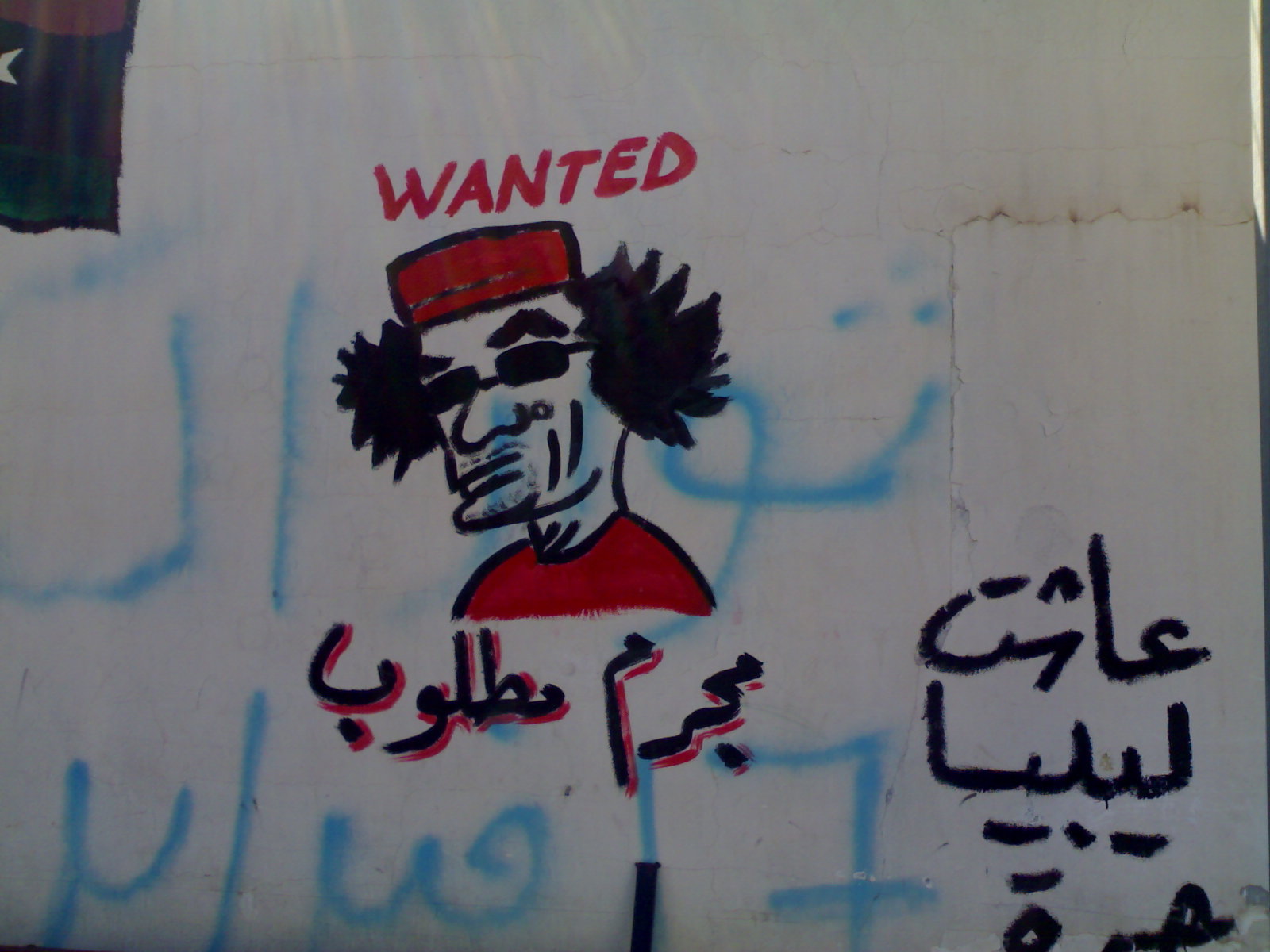
The breakdown of value systems in times of strife is witnessed at many layers in the rapid changes taking place after the Arab spring. Are we witnessing the Berlin wall moment of the Arab world? On seeing the oligarchs of that post-Soviet world, or the Maliki of Iraq, some are prompted to ask is it worth it. Continuing our journey with an imaginary Bloom-who according to some analysts –is the presiding figure of literature of the 20th century-a man known more intimately than most characters, we went down a few steps in Tripoli. Tolerating humiliation at his work to provide for his family, he returned home to face further humiliation.


Yesterday was the birthday of one such “Leopold Bloom” of Tripoli, with whom I have had many interesting walks and discussions. He was also a co-witness of the events during the failed and successful uprisings of February and August 2011, having chosen to stay behind rather than desert the community where he has practiced medicine. While many ‘wise-cracks’ joke and like to talk about their millions, the lack of their connection-roots in the community made me re-think the writer Amitav Ghosh’s question-


“Why has the great oil-novel not been written?”


Ghosh goes on to think of some of the reasons by telling of the multilingual multicultural world of oil, where many expatriates live in the relative security of their camps. The novel is a literary form of a single language, single place. The changing world of oil, with many continents touching , the boats to Lampadusa from Africa, to the net-calls to Philippines or Canada or Bangladesh make it a challenge for any writer to put into a single work.


VALUES


For it is not unusual in human beings who have witnessed the sack of a city or the falling to pieces of a people to desire to set down what they have witnessed for the benefit of unknown heirs or of generations infinitely remote; or, if you please, just to get the sight out of their heads.


Ford Madox Ford-The Good Soldier

In previous entry we revised some notes of works of fiction which trace the Indian nation and focus on things beyond official histories.

THE GOOD SOLDIER


Ford Maddox Ford wrote about the breakdown of value systems before and after World War I. The conventional belief systems were being challenged. In this period came narratives which were full of dichotomy. One such story of the friendship between two couples-the Good Soldier-the narrator discovers after nine years that Mr.Ashburnham has been having an affair with his wife Florence. Leonora (Mrs.Ashburnham) knew this. He was the only on in the dark!


” And I have given a wrong impression of Edward Ashburnham if I have made you think that literally never in the course of our nine years of intimacy did he discuss what he would have called ‘the graver things’. ”


THE SACK OF A CITY


Image


It all started long time ago, when my uncle first taught me how to focus on any written work with the aim of making notes, catching the key lessons and meanings in a work. His habit of making notes and then gifting these books to friends and relatives developed into many interesting things.


Witnessing the “Sack of a city” made our relation with Africa even more intimate.


During the first uprising of February 2011, we went for walks around Tripoli and came to know some more intimate things.


“This building is the office of the Green Book in Tripoli,” one of my Night Watchman group friends told me as we walked through Shara Baladiya.


“The policemen are burning files, as they fear what happened in Egypt is going to happen here,” he said as we went past the UN offices down to Grand Hotel.


“The garbage cans are being used to block the roads so that heavy armor vehicles cannot enter the neighborhood.”


The first uprising was brutally suppressed, but one friend, a medical doctor, vowed-


“It started at Fashloom and was suppressed here. It will rise again in Fashloom and end here too.” A specialist in ENT, he spent some months preparing for the ‘second round’.


That made some doctors study some other professions.


“I am in Zuwara, clearing up the mountains,” one of the technicians in my department told me on the second day of the August uprising.


“Do not come near the bridges near Aboslim,” another friend warned.


While friends who see only news clippings from the comfort of their drawing rooms, made some ‘well-wisher’ calls from across continents, some “Night-Watchmen” came alive in many creative ways. One radiologist friend came with his son from Misrata.


“Did your father not tell you to be away from the fighting,” I asked an IT engineer whose father is a military man in his fifties.


“He was fighting next to me and guiding us on the formations used by these forces whom he knew well,” the IT engineer answered.


The middle class logic of people from more secure places reflected in the question- Did your father not tell you to be away from the fighting- made me a bit ashamed.


WHAT ABOUT THE MAIN PLAYERS


A historian once commented that these writings of what common people went through during the uprisings do not tell of the main players on the ground. But then there are many more informed and able writers who can write about these ‘main players’. I would like to write the narratives of common people


As I make notes, a habit first inculcated in me by my uncle, I remember the words of Ford Maddox Ford


You may well ask why I write.

And yet my reasons are quite many.


MY TEDDY BEAR

“Mummy! Is it so dangerous in Libya that people have to start praying for them?” Samira asked her mother on returning from school. The teacher had told the students to close their eyes and pray for Robert’s uncle who was trapped in conflict ridden Libya. The students closed their eyes and prayed. Samira did not tell anyone in the class that her father too was in Libya. Each time she had talked to her father or asked her mother, they had downplayed the issues relating to the war. “I am safe. The fighting is more than a thousand kilometers away from where I live” her father had reassured her. He did not mention the thousands who had disappeared in Tripoli region. Nor did her mother mention that there had been no salary transfers since this conflict started. 

“What is the thing that you miss most ?” Samira’s mother asked her one day. Their life had been going on smoothly till this conflict started. “ I miss my teddy bear” she told her mother. In their hurry to leave, they had forgotten to pack her teddy bear.


Papa, do get my teddy when you come” she rang him up the next day.


Only the day before, her father had cleared the house of things which were too disturbing,reminding him of his family and life before the conflict. One of the things he had discarded was Samira’s teddy bear.


If we ever form a museum with artifacts of things which remind us of the conflict, other than guns, flags and posters we will keep a teddy bear in it. In that teddy bear are hidden stories of a childhood in Tripoli.


500words_wide-e1388529158371

Part of writer Jeff Goins 500 words a day challenge

For those interested in reading further see the following blogs
https://prashantbhatt.com/tag/500-words-a-day/
https://prashantbhatt.com/tag/tripoli-reading-group/

Posted in life | Tagged , , , , , | Leave a comment

Notes with my uncle

Obtaining knowledge for the pleasure of knowing is fundamental to the human experience. This is knowledge not to pass exams or get a job or earn money, but obtained just for the pure joy of knowing. The pursuit of knowledge is a joy for its own sake.

In the notes and readings which I made with my uncle, sitting in holidays in Pune of the nineteen seventies, I was introduced to the joy of reading, of knowledge not to pass any exams, or get a job or present at a business meeting, but for the pure pleasure of knowledge for its own sake. This has led me to read ethnography and see its traces in daily life, the Reading group evolving into many different areas- An Everyday History Society, or the work-diaries and weekly walks which I keep with some persons whom I have come intimately.

The power of words to convey a reality from distance came through letters from Moscow, written by my grandfather.

The dynamics of keeping notes was introduced to me by my uncle, a mathematician.

See blog- The Man who taught me to make notes

With the person who taught me to make notes

11-Lodhi

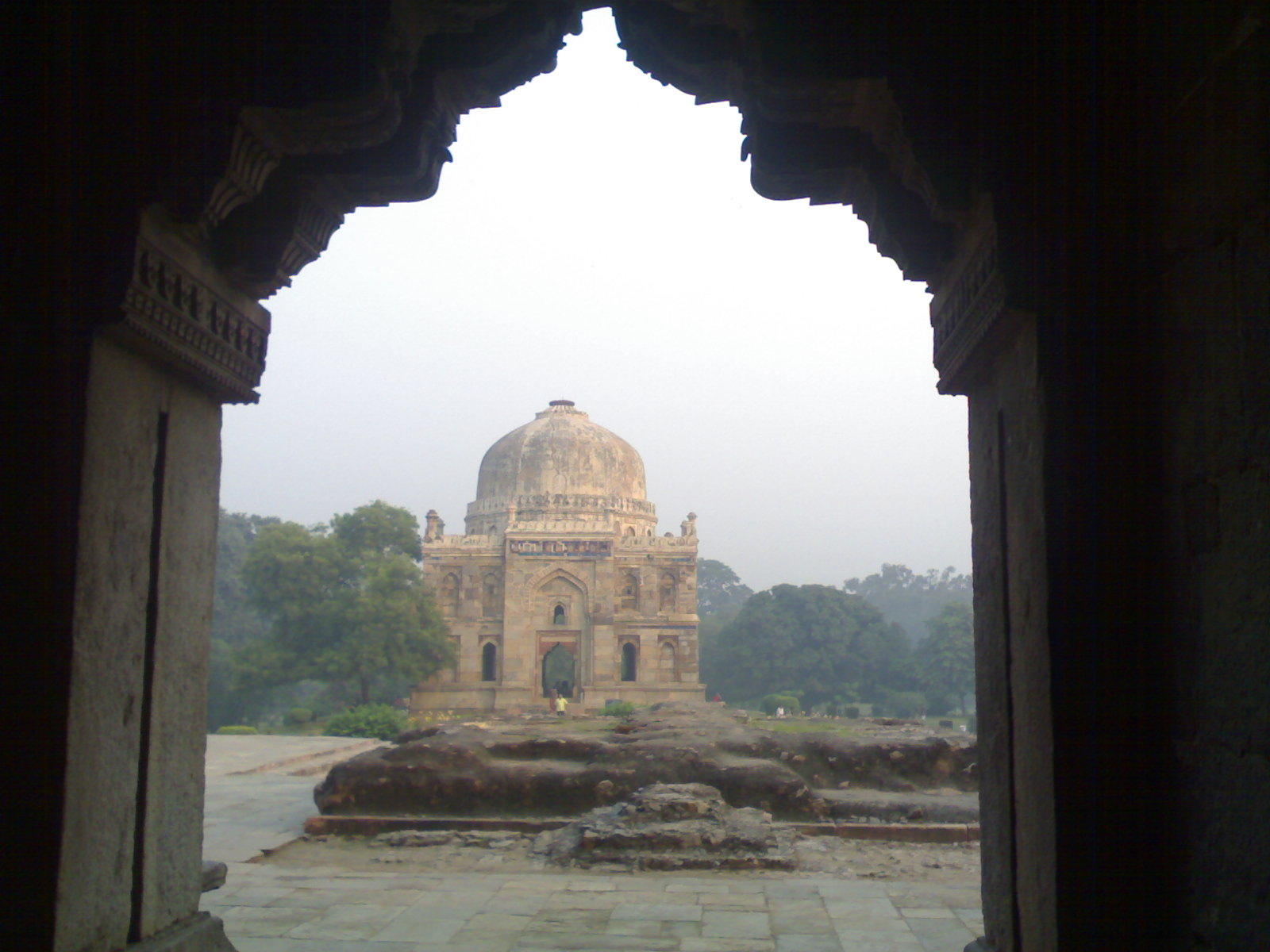
Lodhi gardens, Delhi.A view of Sheesh Gumbad,from Bada Gumbad

FREE LANCER- While I remain a free lancer of sorts, not officially attached to any teaching institution, three persons who were associated with academic universities helped shape my perspective towards knowledge-systems of science, mathematics, knowing, society- my father-a medical doctor-specializing in Anesthesiology, my grandfather-Professor Ganesh Prasad Uniyal-a professor of political science, and my uncle-Professor Ram Prasad Nawani-a professor of mathematics and a lover of knowledge.

See blogs- https://prashantbhatt.com/family-photographs/

* * *


You may well ask why I write.
And yet my reasons are quite many.

Ford Madox Ford. The Good Soldier (p. 6).

WHIGGISM AT LODHI

The habit of making notes, discussing them, brings issues into sharp focus.

I still remember a beautiful evening we had together at Lodhi Gardens-Delhi, in which my uncle told of the essays on Whiggism in Indian freedom movement and the comparison between similar trends in UK. This led me to see the intellectual predecessors of the Liberal party in Britain and the parallels in India.

“These writings of your grandfather are valid even today, as they are not just some gossip, but properly researched articles,” he said, sitting in front of the Bada Gumbad area of Lodhi gardens at dusk.

Four generations of our family have walked at Lodhi gardens –Delhi.

See blog https://prashantbhatt.com/2013/05/24/exploring-the-seeds-of-time/

VALUES AND IRONY

Through notes we tried to see the relation between Irony and Dichotomy.

Walks at Lodhi led to notes on the change in the tone of talk.

“People have become very aggressive when it comes to money matters,” my aunt used to say, remembering the more peaceful days of Delhi when her husband would ride a bicycle to Krishi Bhawan, and they would walk from Lodhi gardens to Humayun Tomb on pleasant winter afternoons. “Nowadays, you here about road rage and persons who do not move a file without some money.”

Irony is a mood which comes across as the generation which saw the second World War when they were students, the birth of the Indian nation and its development through the fifties and sixties saw their children’s change of tone.

NOTES AROUND OUR INDEPENDENCE DAY-2013

Last year, around our (Indian) independence day, we went through some works of fiction which convey a reality which official histories avoid.

PARTITION AND INDEPENDENCE
Partition which came with independence is still a very emotive topic in the subcontinent. The summer of 1947 was unlike any other in Indian history, seeing the migration of around 15 million people and murdering of around 1 million. Nehru’s “Tryst with Destiny” speech does not address these aspects which were dealt with by writers such as Khushwant Singh in “Train to Pakistan”, Bapsi Sidhwa in “Ice-Candy Man” or Salman Rushdie -”Midnight’s children” in different ways.
The village of Mano Majra in Khushwant Singh’s -Train to Pakistan and the inner life and voice of the character -Juggat Singh -is unraveled in many layers through the narrative.
https://prashantbhatt.com/2013/08/11/on-our-independence-day-part-1/

CORRUPT LAYERS
Money still has to change hands to get simple but essential things like Birth and Death certificates(DC). Corruption is the legacy of the Licent-Permit Raj days .
“This is the way it is. One cannot say congratulations at getting the DC of your father, but then at least I am glad that your work was finished without further delay, ” a senior government official told me of his not wanting to intervene for such a petty matter.
Otherwise, the official waiting period of three weeks would have imbalanced many things.
https://prashantbhatt.com/2013/08/13/on-our-independence-day-part-2/
DIASPORA EXPERIENCE
What does Indian independence mean for millions of diaspora?

Around 9 million diaspora from the subcontinent were living all over the globe at the end of 20th century, according to historian Judith Brown. Edward Said spoke of how Orientalism failed to identify with human experiences, failed to see it as human experience and in opposition to this, narrative asserts the power to be born, develop and die. Barbara Gardner writes of how Indians cover the globe, and with their physical move from the homeland, the life-stories continue but often bring questions about the place of Indians in the world today, questions about assimilation into new cultures.

DIASPORA AND DIS-ASSIMILATION

WHY READ FANON
The many readings I had with my uncle, the walks with my father and grandfather have probably evolved to quiet evenings, reading and re-reading Frantz Fanon on evenings in Tripoli. Fanon was a medical doctor , a psychiatrist, whose work deserves close attention, especially in the context of the rapidly changing scenario post the Arab spring in Tunisia, Libya, Egypt and the wider region.

As one watches the ferocious attacks on Islamists in Egypt which some journalists call a “Death match” between the military and the Islamists, the ripples are felt across the region. This gives the answer to a question one of my friends asked me a few weeks ago- Why Read Fanon in the context of Indian Independence.

Fanon’s best hopes for the Algerian revolution were taken hostage and summarily executed, first by a bureaucratized military rule that violated his belief “that an army is never a school for war, but a school for civics. . . ,” and then by the rise of fundamentalist groups like the Islamic Salvation Front.
https://prashantbhatt.com/2013/08/23/why-read-fanon/

* * *
NOTES OF KNOWLEDGE
Obtaining knowledge for the pleasure of knowing is fundamental to the human experience. This quest which was shaped by a mathematician and thinker, the man who taught me to make notes, has evolved through the decades into many directions. Besides keeping a medical diary, a work diary, and interviews with patients and their relatives on their ‘encounters’ with the health-care delivery systems, we also spend time reading the novels of Indian subcontinent through partition, emergency, diaspora experiences or the works of Ibn-Khaldun and Frantz Fanon to make sense of our evolving world.
It all started long time ago, when my uncle taught me how to make notes.


500words_wide-e1388529158371
For those interested in reading further see the following blogs
https://prashantbhatt.com/tag/500-words-a-day/
https://prashantbhatt.com/tag/tripoli-reading-group/

Posted in life | Tagged , , , , , | Leave a comment