Remembering Charlie Andrews (CFA)

12th February is the feast of Charlie Andrews, the Christian missionary and close friend of Mahatma Gandhi. Viewed by some scholars as the alter-ego of the Mahatma, C F Andrews went on to do things in Fiji and Caribbean which Gandhi himself could not do physically. In Richard Attenborough’s “Gandhi” there is a scene in which when CF Andrews comes to bid goodbye, Gandhi says-..(paraphrased) –Between us there are no goodbyes. You will always be with me in my heart.

He was an educator and participant in the campaign for Indian independence, and became a close friend and associate of Mahatma Gandhi. He was instrumental in convincing Gandhi to return to India from South Africa, where Gandhi had been a leading light in its Indian civil rights struggle. C. F. Andrews was affectionately dubbed Christ’s Faithful Apostle by Gandhi, based on his initials [C.F.A.] For Andrews’s contributions to the Indian Independence Movement Gandhi and his students at St. Stephen’s College, Delhi named him Deenabandhu, or “Friend of the Poor”.(Wikipedia)

This week we spent some time as Diaspora living in North Africa recalling the formative experiences of Gandhi as a leader of Diaspora in South Africa. Before Gandhi was famously thrown out of the first class compartment in Pietermaritzburg he had argued with the ticket collector that he was the only coloured lawyer in South Africa. Many of Gandhi’s formative experiences as a fighter for Civil Rights for Indian Diaspora in South Africa can well be seen as a dress rehearsal for the struggles he made in India. The Transvaal March was a prelude to the Dandi March.

SIMON OF CYRENE
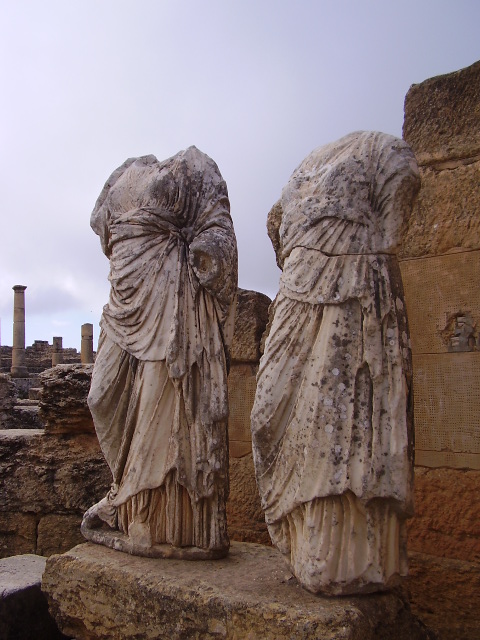
Cyrene-Modern Day Shahat in Eastern Libya

Cyrene-Modern Day Shahat in Eastern Libya

I remember the priest at the Anglican church of Medina-Father Vasihar once tell us that a man who was from present day Libya was told to help carry the cross when Jesus was being crucified. This is told in Mark Chapter 15, verse 21. Cyrene is the North African Greek time city which is present day Eastern Libya, and is known as Shahat. The Green mountains stretch into the blue Mediterranean and an afternoon walk through the Greek city ruins makes for many stories to come alive. The Indian school in Tripoli has some students who wrote an essay on their impressions on Gandhi, how the diasporic working people are connected to the Atlantic, which has workers (slaves and indentured workers) on the lands bordering the Atlantic. Gandhi returned from South Africa to India, but his message has been followed by other people who have organized for civil rights in the Atlantic region-most famously influencing Martin Luther King (MLK).

TAKEAWAYS

Through these discussions on the experiences of Diaspora and famous civil rights organizers like Gandhiji and their influence by Christian missionaries like Charlie Andrews (CFA) we see things in a historical and social framework. This is part of a project of “Tripoli Reading Group” to engage our present day contexts.

Other blogs of interest

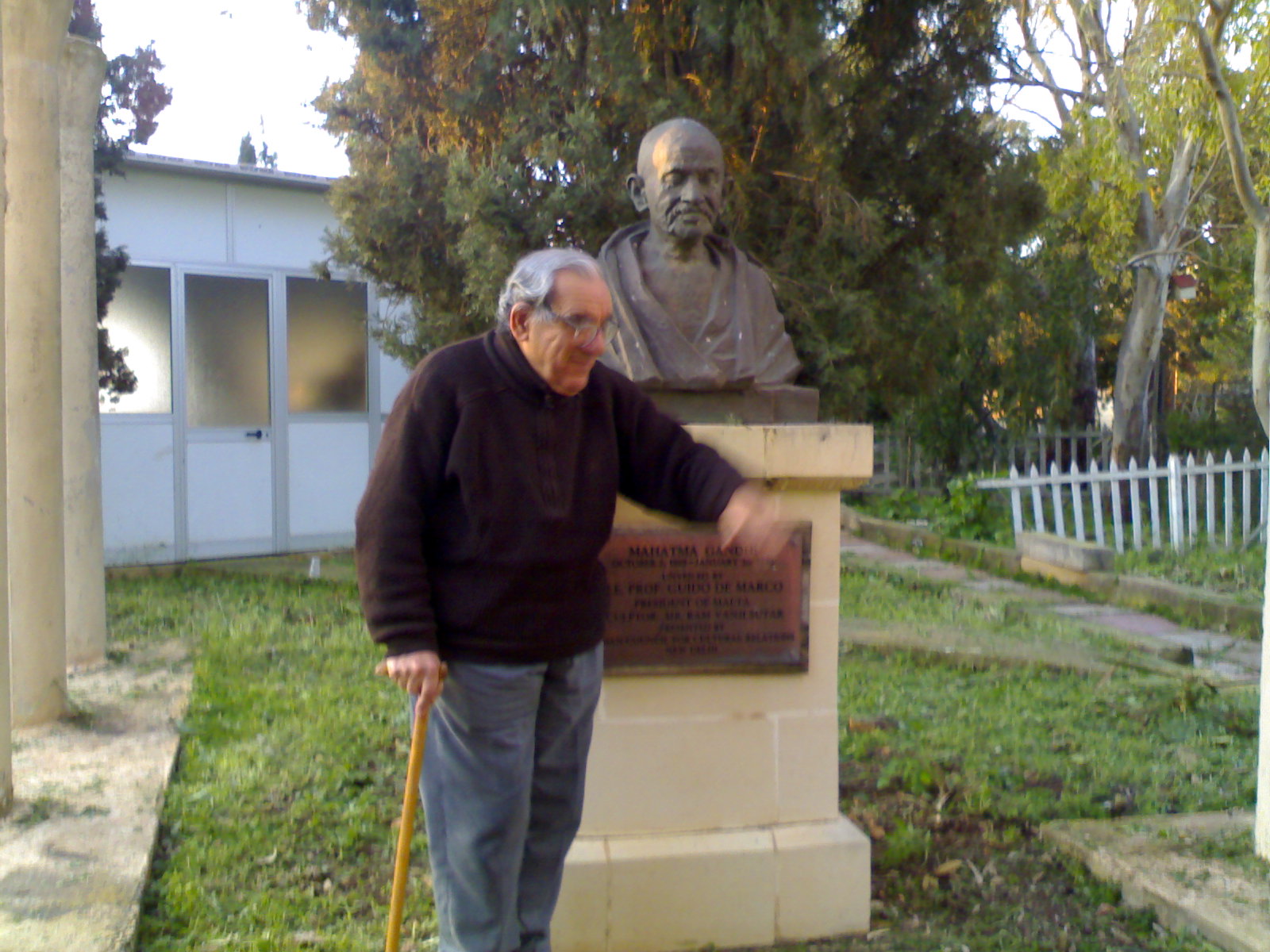
-Father Mintoff of Hal-Far , Malta , a Franciscian Order Monk and organizer for immigrants and refugees is inspired by the teachings

of Gandhi
Conversations on Identity

Father Mintoff at The Peace Lab-Hal Fur, Malta

Father Mintoff at The Peace Lab-Hal Fur, Malta

OF LETTERS AND PRAYERS

If we do not want the English in India we must pay the price. Tolstoy indicates it.
‘Do not resist evil, but also do not yourselves participate in evil–in the violent deeds of the administration of the law courts, the collection of taxes and, what is more important, of the soldiers, and no one in the world will enslave you’, passionately declares the sage of Yasnaya Polyana.
[19th November, 1909] M. K. GANDHI
Of Letters and Prayers-On Gandhi Jayanti

Posted in life | Tagged , , , , , , , | 2 Comments

The past …On our Republic day-Part 2

The past is never the past-
William Faulkner

Image

As I remembered the many journeys-conversations of my father to my son, the truth of Faulkner’s assertion became clearer.

Around our Republic day-(India) I re-sent to my sons living in Canada a letter from a series I had written remembering my father-a doctor in the Indian army. Remembering that first post-Independence generation to a generation who is now part of Indian Diaspora was my way of trying to map journeys of a nation and its people. Rather than speeches, let us see how professionals lived, how families experienced the garden-tombs of Delhi.

Going by the writing cues of Christine Royse Niles-Jeff Goins- (write your Eulogy and write something which you know about) this blog tries to combine both

1.Eulogy- I would be remembered as a writer of details-medical Radiology and the many journeys I have mapped in

my diaries-journals

2.Write something you know of—- I know something about medicine, education and walks..

Some shadows in the garden tombs around Delhi are those of my family

who have walked these for four generations..

Some squirrels with whom we have shared peanuts.

REMEMBERING MY FATHER…AROUND MEDICAL STUDIES AND GARDEN TOMBS OF DELHI

Admission in medical college also introduced me to the garden-monuments of Delhi, the love of which has lasted over the decades. In the initial days of higher studies, the brilliant school students are in for a shock, as most of them are toppers in their school. Higher medical studies are very intense and getting to know the basics of anatomy, physiology, biochemistry of the human body and memorizing it is not easy. In the initial year, I continued staying in Pratap Chowk Delhi cantonment and my father helped me get into the nuances of medicine.

He had a book of anatomy by Grant, which had good illustrations. This book was the one he had studied in his own MBBS days. He also got me a Grey’s anatomy full volume.

“This is the Grey’s anatomy which I had always wanted to buy but did not have the money to buy” he told me gifting me the classic anatomy text and also revealing an intimate family detail. Later on through relatives I came to know that at one phase of his medical studies in AIIMS he had to borrow money from some relatives.
Over the years many such remarks revealed many aspirations of my father.

He saw me read Harrison’s Principles of Internal Medicine and said, ” This is the Harrison which I wanted to read more thoroughly but did not,” thus revealing the need to go deeper into the basics of a foundational text of Medicine.

“What are the signs of Hyperthyroidism” he would try to jog my memory regarding the link between basic physiology and manifestations of disease.

“What are the steps of surgery of Inguinal hernia,” he would take me through the nuances of Applied anatomy .

Being an anesthetist-like my father- is an interesting job as one has to know the basics of Anatomy, apply it to your work in Applied Anatomy and also physiology, internal medicine and many other subjects which form the intricate and beautiful maze of medicine.
Apart from knowledge , and how to approach higher studies, he instilled the ethos of practicing medicine,

“For you this may be one in a hundred patients, but for the patient it is 100%. Always give your 100% to each and every case you study.” That lesson which he taught and instilled in me, has remained etched in my memory and I have tried to live by that credo.
In my second term in medical college, my parents shifted to Pune, where my father was posted as Senior Advisor. That was the time when I first stayed in hostel. That was 194 Old Boy’s Hostel of MAMC. The room was facing the Bahadur Shah Zafar Marg of Delhi, and the garden monuments of Firoz Shah Kotla was nearby and we spent many lovely hours of morning calm there. In lunch time we would feed squirrels. The Ambedkar stadium which hosts football tournaments was close by. I saw many interesting football matches. The Daryaganj Sunday street book sale was another attraction and I got introduced to works of Tolstoy there, and would read them in the lawns of Kotla or India Gate or Raj Ghat.

This was the first time I was living away from the family home. However, in visiting these streets and parks, cultural and civilizational hues of Delhi, I was in a way returning to the same paths which my grandfather (BSB) and father (PNB) had walked and experienced in their own younger days. We are one with the soul of Delhi when we hear the Imam of a mosque call for prayers at Hauz Khas , or sit on the lawns of Qutub Minar, or pray in the Laxmi Narayan Mandir of Mandir Marg, Delhi. Generations of our family have lived, worked, studied, prayed, played, walked in these streets,gardens of Delhi. Delhi is one of the greatest cities of the human civilization, having been capital of India for thousands of years. The legendary Indraprastha of thousands of years ago, to the Mughal rulers like Shah Jahan, to modern times of India’s independence, one can feel many currents in Delhi.

My father had probably prepared me to seek and imbibe these cultural aspects of medicine, Delhi, and life in many conscious and subconscious ways through his examples and words.

* * *

The past is never the past-
William Faulkner

As I remembered the many journeys-conversations of my father to my sons, the truth of Faulkner’s assertion became clearer.

Posted in Diary, life | Tagged , , , , , , | Leave a comment

Grace..Reflections on our Republic Day-Part 1

18-NGMA

National Gallery of Modern Art-Jaipur House, Delhi

“There were worse husbands”

Grace, James Joyce

* * *

Around the time of our Republic day (India) we spent some time reviewing works discussed in our Reading Group.

Our walking-reading book club spends many lovely hours in Abositta Ferasiya. The memoirs of the former Bishop of Scotland- Richard Holloway “Leaving Alexandria” tells his journey and how he became a bishop whom he would have hated when he was twenty years younger.

” There has been a terrible beating up of some Indian camp workers.
What do you make of it?”

We will discuss when we meet, I replied.

GRACE

“There were worse husbands”
Grace, James Joyce

The story of the drunken fall of Tom Kernan in a bar, his rescue by his friend Mr.Power, bringing Kernan back to his wife- an active practical women of middle age and the subsequent planned retreat in Grace by James Joyce formed the back drop of our discussions this Republic Day.

In previous years, we have discussed around our Republic Day –the Prophet and the Proletariat and the attitude towards women in Islamic society, and Ronald Barthes famous essay on Chaplin Man. Chaplin man is fascinating due to the possibilities he represents. He is still out of the consciousness of the Revolution. Still tied down to bread-winning rather than being a conscious party worker.

Around our Independence day-2013 we went through some major works of fiction which have helped shape Indian identity over the past 65 years-through Partition, Corrupt layers, Emergency, Diaspora experiences.
(the links of these blogs are posted below for interested readers)

Why Grace?

“Have a friend with whom you can discuss things,” one veteran, an Anatomy teacher had given this sage advice many years ago. “Life can be very lonely in a foreign country,” he said, gifting me a book from his collection.
Deepak Chopra’s “Seven Steps of God” made me take a journey into knowing the different phases of intelligence. We will discuss the concept of “Devata” as told in Hindu civilization in coming blogs.

The story “Grace” by Joyce starts with a drunken fall. Three friends plan to salvage the life of their friend through a religious retreat. The Protestant origins of Kernan, the Catholic retreat, make an interesting discourse. Where is the Grace in this story? It is definitely not in the drunken fall. Nor is it in the domestic quarrels alluded to by Joyce. Was it in the way the priest was trying to market his sect of belief? Or was it in the sharing of friends.

Kernan, he said, we worship at different altars, he said, but our belief is the same.
Joyce, James

On reading the story one finds the grace in the camaraderie of friends.
Grace catches nuances of urban life. These are relevant in any modern city. Life looked back through the lens of experience. The different shades of faith and practice.

CORINTHIA

As we had arrived a bit early, we sat on the corner facing the Mediterranean and revised Joyce’s story “Grace”. Mr.Suresh, an old-timer at the embassy, originally from Najafgarh area of Outer Delhi was guiding the guests to the hall. He speaks Hindi in an accent which reminds one of route 578 from Safdarjung to Najafgarh, an intimate memory.

The Chaplin-Man, still outside the revolution, tied down in the daily struggles of bread-winning got beaten up in the camp on the outskirts of Tripoli. The positive aspect was that there was some type of security force available after around two hours. They surrounded the camp and brought an end to the incident.

For those interested-also see blog-Notes from an Indian Camp-

The story of the once-Protestant Kernan and his jibes at Catholicism and the comment- We all worship at different altars ..but our belief is the same reminded one of the many debates between socialists of different hues back home in India.
Mumbai, the home to the oldest working class in India, has socialists of many callings and there is a tendency of each group to try and present themselves as the true bearers.

A democrat from UK wished us Happy National day and started talking about “New Libya”.

We heard him out. The code was Silence. However, one of us could not resist asking him his opinion about the recent statements of the Grand Mufti.

……………………….

It was an interesting evening. ..I became the Bishop I would have hated 20 years ago…The words of Richard Holloway came back to us in many ways.
Say Grace…

Other related blogs

On our Republic Day

2012

Reflections on our Republic Day

2013

Reflections on our Republic Day 2013

On our Independence Day-2013
ORIENTALISM -PARTITION NOVELS

On our Independence day-Part 1


CORRUPT LAYERS-EMERGENCY

On our Independence Day-Part 2

DIASPORA AND ASSIMILATION

DIASPORA AND DIS-ASSIMILATION


WHY READ FANON

Why read Fanon?

Around May Day
MUTUAL IMPROVEMENT SOCIETIES

Mutual Improvement Societies

INTERRUPTED CHRONICLES
https://prashantbhatt.com/2013/05/03/interrupted-chronicles/

LANGUAGES AND VOICES
https://prashantbhatt.com/2013/05/07/languages-and-voices/

HOW I REACHED HERE-MUSINGS IN A LIBYAN CAMP

How I reached here…musings in a Libyan camp

Posted in life | Tagged , , , , , | Leave a comment