Year end diary-2014..Remembering walks and readings

This year I had some interesting walks.

Three regions where I walked were –Rishikesh-Landour region of Garhwal in spring, in Toronto-Niagara region in Fall and in Istanbul-Konya region in beginning of winter.

SPRING…ALONG THE GANGA

Walks by the Ganga-India Walks by the Ganga-India

Walks along the river Ganga have been part of a family tradition. Walking beyond the suspension bridges of Laxman Jhula, Ram Jhula, returning to attend the evening aarti at Sri Paramarth Ashram was a different experience from the walks in Fall which I would take later in the year. Writing to a friend now in Malta, got a cherished letter in which he remembered such trips to the Ganga as a child. Walks around Rajaji national park region make for many intimate memories, our family having been associated with this area for several decades.

The Mussoorie-Landour area have a distinct difference in culture, and the feel of the Raj days, stories of the haunted Savoy, or walks in Landour to the Kellog Memorial church(established 1903) gave a different flavor of the mountains.

FALL..GARDEN SOCIETIES OF TORONTO

Sunny Brook Park, Central Don-Toronto Sunny Brook Park, Central Don-Toronto

Many lovely hours spent in Weston family library of Toronto Botanical Gardens , located in Edwards gardens made me familiar with evolution of thoughts concerning the garden societies.

The Burra charter of 1999 – groups and individuals with associations with a place as well as those involved in its management should be provided with the opportunity to contribute to and participate in understanding the cultural significance of the place.
The difference between the manicured Edwards gardens and the adjoining Wilket Creek park which preserves the natural contours is an illustration of different approaches to conservation.

READINGS IN PARKS

Till the weather allowed, spent long hours reading in the gardens. Nadine Gordimer’s –Burger’s daughter, read in Betty Sutherland trail, sifting through the nuances of the struggle against apartheid. Can a white man have an ideology which will make him the supporter of the black cause? The personality of Lionel Burger came through in different ways, through the experiences of his daughter. Loosely based on the life-family of Bram Fischer the novel is described as the most moving and political of Gordimer’s works.

Before submitting the manuscript to her publisher, Gordimer gave it to Fischer’s daughter, Ilse Wilson (née Fischer) to read, saying that, because of connections people might make to her family, she wanted her to see it first. When Wilson returned the manuscript to Gordimer, she told the writer, “You have captured the life that was ours.”
After Gordimer’s death in July 2014, Wilson wrote that Gordimer “had the extraordinary ability to describe a situation and capture the lives of people she was not necessarily a part of”. (Wikipedia)

KONYA..ANATOLIA
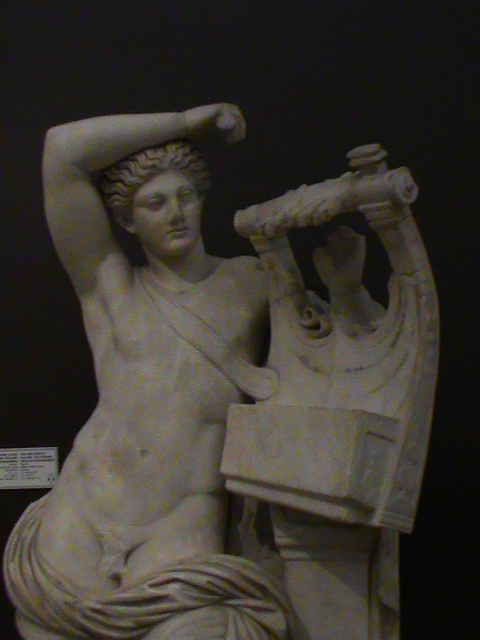
Asclepius-Medicine and Healing-Archeology Museum-Istanbul Asclepius-Medicine and Healing-Archeology Museum-Istanbul

The tombs of Jalaludin Rumi, Shams of Tibriz in Konya, Anatolia, Turkey were a place for pilgrimage in the early winter months. The association of Rumi and Shams is one of the most fascinating in spirituality. Walked through the city of Konya, in night (having missed the train at Pendlik-Istanbul, only to catch the next one-3 hours later) and in the day time, going through the different museums and dioramas created by the museum curators.
Seeing the traditional musical instruments brought back memories of similar performers in Balkans. The history and culture of Anatolia and Balkans is intricately linked with many connections through the generations.
The trips also made me further the concept of Retreat. Dividing themes into three lines-personal, family, professional, one can try to see indepth some aspect of one’s life. Caught in the day-to-day routine, one does not get this chance. Association with persons like Rumi encourage one to keep a spiritual diary. Thinking through concepts of aesthetics, education, and spirituality, in the context of scholars like Rumi, made me think of the non-profits which have become a very big employer in the advanced world. (will elaborate on this concept further –based on readings of Peter Drucker and Bob Buford)

WALKING-READING JOURNALS

Taking walks, reading in parks, trips, and maintaining journals based on these have enriched my life in many ways. Looking back on 2014, I remember these fondly.

Other blogs of interest

2008 Theater Manoel

https://prashantbhatt.com/2009/01/29/theater-manoel/

2009  Museum Imaging

Museum Imaging-Malta

2010..Walks in Malta Again

Walks in Malta again

2011  Year end diary

https://prashantbhatt.com/2011/12/23/year-end-diary/

Writing workshops with Mayank

Writing workshops with Mayank

Walks by Alaknanda

Walks by Alaknanda

What is Satsang

https://prashantbhatt.com/2011/12/06/what-is-satsang/

2012..Father’s day walk

https://prashantbhatt.com/2012/06/19/fathers-day-walk/

2013 Visibility

https://prashantbhatt.com/2013/12/22/year-end-diary-2013-visibility/

Remembering George Eliot

Tree Lightings-Remembering George Eliot

Posted in Diary, life | 2 Comments

Winston Smith-1984..Book Discussions-2014-Part III

Winston Smith of George Orwell’s novel- 1984 is a most unlikely hero.

The phrase Orwellian Nightmare is known to all of us.

We all have faced or know someone who has faced security checks at airports where we cannot object.  The revelations of Edward Snowden tell of an international surveillance mechanism which reminds us of Big Brother.

In this series of Book discussions in the perspective of Management Challenges of 21st century, we have looked at issues of race, immigration through book discussions

The Reading group has helped enrich our lives in many ways.

This group helped evolve a Reading journal, through which I have kept in touch with friends and family across the world.

Their inputs-debates and discussions have further enriched and deepened our perspectives

See blogs- https://prashantbhatt.com/tag/tripoli-reading-group/

1984 …REMEMBERING WINSTON SMITH

George Orwell’s 1984 follows the –Enclosed Universe technique in which a degraded reality is presented. There is no way to know whether this is real or not, unless one has some kind of record-a diary, logbook or chronicle.

Winston Smith, the protagonist is an unlikely hero, frail and in ill-health. He even gives up his lover-partner  to save himself. Over a period of time, he starts to see many discrepancies in the reality presented to him.

This new oppressive rule creates BIG BROTHER –a thought police

Old Dictatorships used to say- Thou shall not

New dictatorships said- Thou shall

Totalitarian dictatorships say- Thou art

-They seek to control all forms of thinking, by Thought police in the form of Big Brother.

The protagonist asks an old timer whether it is true that around 1915 only rich capitalists could wear a hat and poor people could be thrown out of the streets. The person recalling tells that he was once pushed off from the street,but  he could have pushed the person who pushed him. Then, the older man does not remember the exact details.

As his inner questioning grows, Winston starts keeping a diary to see what is real and what is distortion. When prices of chocolates are increased there is a celebration for lowering the prices his inner questioning increases. When the party’s predictions of a military campaign are proven wrong, there is erasure of the old speeches from all records of the –Ministry of Truth.

The diary becomes a tool in the hand of the unlikely hero Winston Smith who records what is happening, and how words-events are being distorted or presented in a piece meal manner to suit certain interests.

KEEPING A DIARY

Reviewing this work with the perspective of –Management Challenges of 21st century– and keeping a Reading journal, are tools of growth and evolution.

Personally-  I have found a department diary, log book, register, roster, and minutes of meetings to be essential tools of survival for a manager of departments.

Managers have to face the different financial, technical people in many settings and there is a tendency to distort things –more of a power-play rather than truth.

In his course on Effective communications- Professor Dalton Kehoe has asked three key questions which determine communications.

  • What is going on?
  • What is going to happen next?
  • How am I being treated?

Here is a brief account to give you flavor.

Management Challenges ..Sifting through the various layers of truth in an Installation. Keeping a diary or log of what is going on, what was agreed upon is an essential management tool.

LSMC RADIOLOGY TRIPOLI-LIBYA Management Challenges ..Sifting through the various layers of truth in an Installation. Keeping a diary or log of what is going on, what was agreed upon is an essential management tool.

ADMINISTRATOR- When is the equipment being installed?

INSTALLING COMPANY- In one week.

RADIOLOGIST- Sir, what about the broken parts which you are not mentioning?

* * *

ENGINEERS-Why did you mention this?

RADIOLOGIST- One week is a misleading answer if the parts of broken

ENCLOSED UNIVERSE…MANY LAYERS AND PERSPECTIVES

We encounter many enclosed universes.  The same event or organization can be looked at from different perspectives. All managers face such issues every day.

Briefly…

A finance administrator may be bothered only about Profits.

A medical administrator may look at only an in-patient, not bothering to see outer referrals and also wanting to be seen as “Nice” in front of others (at the expense of the professional who is actually involved in patient care)

If there is no roster, then no one can be blamed for no-show of technical staff as it is impossible to fix who was supposed to be present.

NEED FOR WINSTON SMITH

Winston Smith  is a hero no one wants to be.

But if one has to know what happened, how it happened, and later maybe leave records for scholars to understand –Why it happened, one has to keep chronicles and diaries.  These are effective tools for day-to-day work lives and also for larger civilization-cultural issues.

Posted in life | Tagged , , , | 1 Comment

We all start by laughing at the Don…Book Discussions-2014-Part II

As a preview to the year end meeting of our Reading Group in Tripoli we discuss the narrative devices of Don Quixote by Cervantes. In the context of –Management Challenges of 21st century, in post 2011 Arab spring countries, one can learn a lot from these narratives.

The Reading group has helped us shape perspective, enrich our lives through many discussions of local contexts. It has also helped me evolve a Reading journal, which helps to keep in touch with friends and family around the world.

Here is how…

REMEMBERING  DON QUIXOTE

Don Quixote by Cervantes is one of the most influential works of literature.

Cervantes gave the narrative tools of -the Wannabe (Don Quixote) as hero and the Sancho as anti-hero.

The novel uses the master narrative plot of “Hero goes on a journey”

Thomas Shippey in his Great course analyzes the immensely psychologically penetrating narrative device of having a Hero and anti-hero which set the plot into motion.  Don Quixote represents the Ego in each one of us, and Sancho Panza represents the Id. To skip the Freudian language , we can put it like this, we have a little of both in all of us . There is one part of us which wants to be a Hero or a Saint while there is another part is a little fat man who sees the virtues of staying alive in a whole skin. One world is the imaginary fantasy world which wants to be a Hero/Heroine, while there is another which says that it is not true, we still have to work and pay our bills.

These narrative inventions of Cervantes are at the heart of the novel, and were there right from the beginning.

SPEAKING THE UNSPEAKABLE….THE FRIENDSHIP SOCIETY

The different sections of the country were  well represented by the styles of dressing.

Things were going on well, with niceties and pleasantries being exchanged till the diplomats made the “mistake” of telling the persons present to introduce themselves and say a few words, so that they come to know each other.

Most of the company directors tried to show how important they and their companies were. Some gave suggestions of holding a fund-raising dinner.

Then one undiplomatic remark set a big discussion.

“You should not only sign declarations and orders, but also follow-up with  hard work and think through the solutions and possibilities.  Otherwise there will be no New  dawn.”

This un-diplomatic remark by  expatriate worker in a meeting organized by an embassy in Tripoli to foster friendship was met with mixed emotions from various quarters.

After a moment of uneasy silence, there was spontaneous clapping to the remarks which came from the heart.

” If I am a true friend, then I will tell you the truth, otherwise it is hypocrisy,” he replied to the critics who told him that though what he said was true, this was neither the place (an embassy) nor the occasion (a Friendship society meeting) to convey such remarks.

Looking back at 2014, I smile and remember that ‘undiplomatic moment’ and choose to use the novel Don Quixote by Cervantes to shape perspective.

Made me remember the words of a senior diplomat.

” Our job is to speak the unspeakable without hurting the other person.”

Obviously our non-diplomat friend had not been trained in these ways.

WE ALL START BY LAUGHING AT THE DON….

There was another evacuation and the community has now dwindled to some old timers. But as I look back at 2014, I remember the words of that long time worker and fellow-reader with mixed emotions.

There was something comical, something tragic about him. In some way, each worker in a foreign land faces these issues in some ways, issues of renewal of contract-visa, of money transfers, or getting their gratuity.

Orders and declarations signed, but not followed up by concrete action.

Or to put it in perspective of Don Quixote- the great influential work of Cervantes as Professor Shippey concluded in his lecture.

“We all start by laughing at the Don, we end by recognizing ourselves in him.”

Posted in life | Tagged , , , , | 1 Comment