
This month is International Overdose Awareness Day (IOAD or Overdose Day), a global event observed on 31 August since 2001. Its purpose to raise awareness of overdoses
“Time to remember. Time to act” is the slogan used by campaigners.
Key facts :
In 2023- 8,049 apparent opioid toxicity deaths (7% higher than the same period in 2022). In the period of Jan 2016 to December 2023 there were 44592 apparent opioid toxicity deaths, most in males (72%) with ages 30-39 being the most affected (29%).
Fentanyl was associated with 82% of these incidents in 2023, an increase by 44% since 2016. (Public Health Agency of Canada; June 2024)
Going beyond statistics: Loving someone in Recovery
Attachment theory and neuroscience have given therapists additional ways to describe and approach codependency.
If you are overly invested in a partner or loved one who is currently in recovery from a substance (alcohol, opioids including heroin and prescription pain, cannabis, nicotine, amphetamines, cocaine, methamphetamine), or a process (eg. Gambling, Internet, Workaholism, Raging, Sex) it is quite possible that you do not feel securely bonded in your relationship.
This may lead the bonding in the relationship to become an inconsistent mix of resistance, rewards, rejection, reinforcement leading to a want to be released from the misery to being related in a more meaningful way. Enter the world of being in an emotional and psychological state in which one is excessively preoccupied with taking care of or controlling another person at the expense of one’s own needs.
Stigma and Secrecy: Echoes of Silence
As a primary school student, I came to know about overdose, after the death of one of the family members of a colleague of my father. This was in Pune, Western India in the 1970s. Over the decades, being in the medical profession, I have known many who have become dependent on prescription medications, recreational drugs and beyond. Every medical campus has such cases, though there is a lot of stigma, secrecy and no open discussion.
These silences in campuses, communities have left an echo, which can be heard in the lives of those affected by addiction.
Resisting the Czar of the Heavens: The 12 step path to Recovery:
“Why don’t you choose your own conception of God”
Ebby T to Bill W- the co-founder of Alcoholics Anonymous
Page 12, Big Book of Alcoholics Anonymous

Coming to the recovery movement from the Oxford group, Bill W tells of how the icy intellectual mountain resisted the Czar of the Heavens, whose creative intelligence and universal mind he had doubted for long. He tells of how Ebby T told him to be willing to believe in a power greater than himself to make his beginning.

St Andrews United Toronto Facade-2015: Meeting Search – Adult Children of Alcoholics & Dysfunctional Families
St. Andrews United at Bloor street, Toronto, has been a thinking place where persons from different walks of life come and share their experience, strength and hope, of how they evolved from Resistance to being open to hear what has worked for others, and to have a personalised program of recovery. For persons who are struggling with finances, family issues, faith, a fellowship where one can share without judgement is a key to recovery.
Third Wave CBT: Acceptance and Commitment Therapy (Hayes, Barnes-Holmes & Roche, (2001).
Hayes and colleagues (2001) researched on the why change occurs using the relational frame theory, on how humans relate to time, each other and space and explained the why of how change occurs in cognitions, behaviour and systems. This was an evolution from 2nd wave CBT which emphasised on cognitions as developed by Aaron Beck and Albert Ellis(1960s, 1970s), and 1st Wave CBT – the Behaviourism of Skinner (1950s). CBT evolved from the Humanism of Carl Rogers (1950s) and the Psychodynamic empire of Freud (First half of 20th century)
Peggy’s Confession: I had your baby
In his book, A Liberated Mind, Stephen Hayes talks about the cultural messaging -just snap out of it- as shown by the messages given by the character Peggy and her dialogues with Pete. He goes on to say how psychotherapy and counselling in the mid 20th century are partly responsible from such cultural messages- which just tell to “Snap out of It” . (Hayes, 2020)
Hayes talks about the cultural messaging in Distraction, Avoidance, Indulgence which are not changing the basics. Acceptance and talking to the parts which one is avoiding has been a way forward to develop context rather than just trying to change the content of thought.
The six core therapeutic processes of ACT are acceptance and willingness, cognitive defusion, present-moment awareness, self-as-context, values, and committed action.
Acceptance means gently holding whatever arises. This could be done by rating one’s presentation after filming as mentioned previously. Present-moment-awareness is a non-judgmental mindfulness exercise. Consider a client with social anxiety who overestimates criticism and has excessive self-focus. The techniques can be used to allow the individual to notice the behaviour of others by observing their verbal and non-verbal cues (Bennett-Levy et al.,2004; Kinnerley, Kirk & Westbrook, 2017; Stoddard & Afari, 2014).
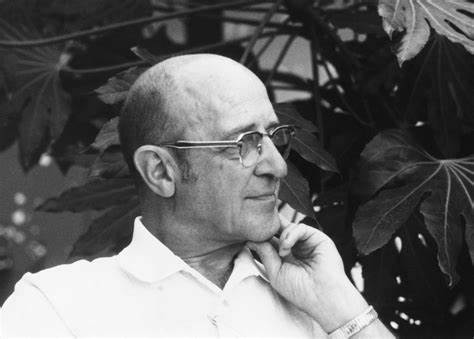
Carl Rogers, one of the key figures in Developing Humanistic Psychotherapy, which broke out of the psychodynamic empire of Freud.
” I have found it enriching to open channels whereby others can communicate their feelings, their private perceptual worlds, to me. Because understanding is rewarding. I would like to reduce the barriers between others and me, so that they can, if they wish, reveal themselves more fully”
Carl Rogers, Speaking Personally
Summary of Themes
1- Overdose deaths are on the increase, they are shrouded in stigma and secrecy
2- Loving someone in recovery can take a toll.
Attachment theory, neuroscience, cutting edge 3rd wave CBT like ACT can help family members who are preoccupied with taking care of or controlling another person at the expense of one’s own needs.
3- Different approaches to recovery can help evolve a personalized program.
See previous article on Anger – the different between the Narrative therapy and CBT -2nd generation – Approach
Dragons and Donkeys | Prashant Bhatt’s notes

Peggy W- Told to “Snap out of it”. This cultural messaging is partly due to the counselling approach in mid -late 20th century, where Cognitive Therapy (2nd Wave CBT) stressed on Reframing and Visualizing differently. Third Wave CBT approach examines the context rather than the content. It is not what you know, rather who knows what you know that helps evolve choices (Hayes, 2020).
Exercises
Creating a Personalized Model of Recovery can be done by first becoming aware of one’s Personal Craziness . You can download the worksheet to define Personal Craziness Index (PCI) and can contact to get help on developing a program of awareness, monitoring and self-regulation.
Resources and Links
Greening, T., & Kirschenbaum, H. (2013). THE DEFINITIVE BIBLIOGRAPHY ON PERSON-CENTERED PHILOSOPHY AND CARL ROGERS. On Becoming an Effective Teacher: Person-centered teaching, psychology, philosophy, and dialogues with Carl R. Rogers and Harold Lyon, 193.
Hayes, S. C., Barnes-Holmes, D., & Roche, B. (2001). Relational frame theory: A précis. Relational frame theory: A post-Skinnerian account of human language and cognition, 141-154.
Hayes, S. C. (2020). A liberated mind: How to pivot toward what matters. Penguin.
Overdose Basics
Overdose Basics – International Overdose Awareness Day (overdoseday.com)
International Overdose Awareness Day – Wikipedia
Opioid- and Stimulant-related Harms in Canada: Key findings — Canada.ca
Public Health Agency of Canada; June 2024. Federal, provincial,
and territorial Special Advisory Committee on the Epidemic
of Opioid Overdoses. Opioid- and Stimulant-related Harms
in Canada. Ottawa
https://health-infobase.canada.ca/substance-related-harms/opioids-stimulants/
International Overdose Awareness Day: 31 August (overdoseday.com)

 Prashant Bhatt's notes